
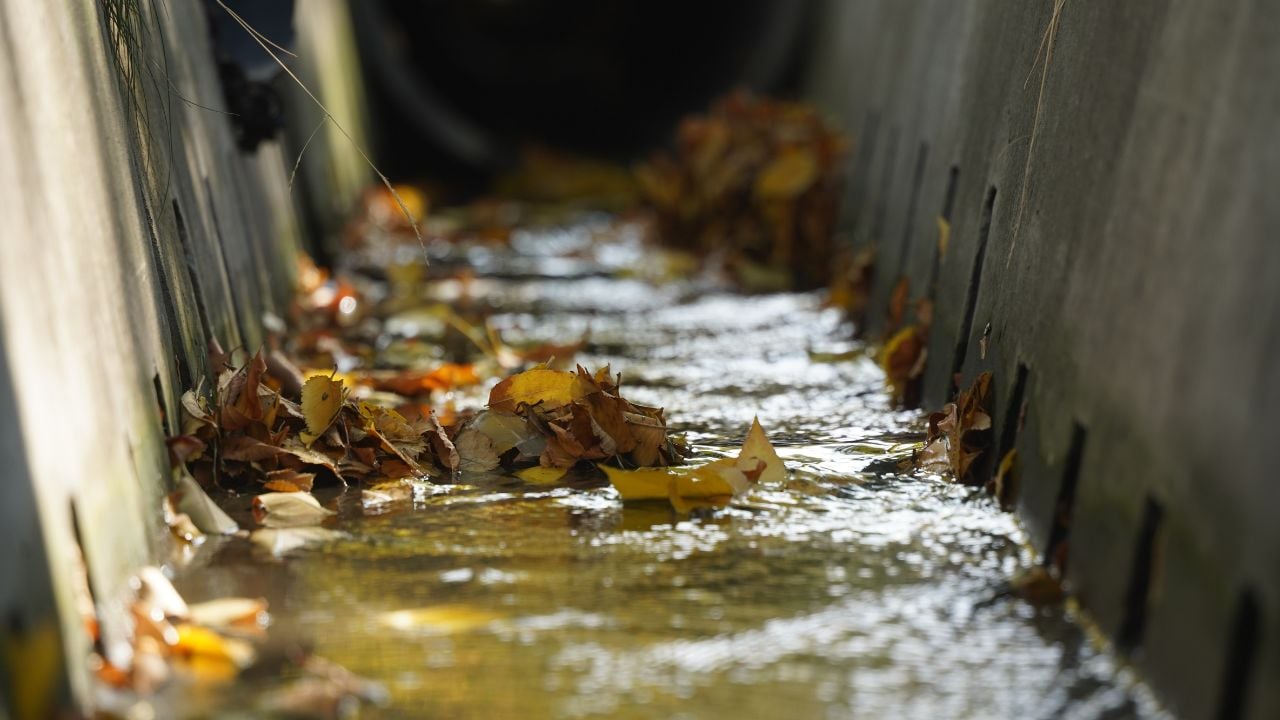
7 Water Rules New Utah Homeowners Find Out About Too Late

You finally own a place with a yard, and like many newcomers to the state, you plan to water it.
But in Utah, it isn’t always that simple. Many new owners find that out after move-in day.
These are the water rules new Utah homeowners find out about too late.
Note: This is general information, not legal advice. Water rights and water share rules vary by irrigation company and are subject to change.
1. Water Rights and the Deed
Under Utah law, a water right attached to a property passes automatically to whoever buys the land, unless the seller carves it out in writing.
State law spells it out.
Utah Code 73-1-11 passes the water right to the buyer unless the seller reserves it, splits it off, or signs it away in a separate document before closing.
Buyers who never ask about that clause find out only when the sprinklers run dry and the water right turns out to belong to someone else.
2. Water Shares, Not Real Estate
A water share in a canal or irrigation company works nothing like the water right above it.
It’s stock.
The same section of Utah law says a share of water company stock isn’t appurtenant to the land, so it never rides along with a sale by default.
A purchase contract has to list the shares by name.
The company still has to move them onto its books before the sale is final.
Skip that step, and the seller can keep every share.
The new owner ends up with a yard and no water to put on it.
Water Right vs. Water Share, in Plain Terms
A Utah water right is the legal claim itself, tracked by the Division of Water Rights under a water right number, similar to how a car carries a title.
By contrast, a water share is stock in the company that delivers the water through a canal or pipeline, tracked in that company’s ledger instead.
Some Utah homes carry both at once, a well right recorded with the state plus canal shares recorded with a private company.
Each needs a separate transfer at closing.
3. Company-by-Company Transfer Rules
Every Utah canal and irrigation company writes the rules for moving shares from one owner to the next.
Nobody standardizes this.
No state law sets the paperwork, the fees, or how long approval takes.
New owners who expect one statewide process usually learn otherwise only when their water company sends back an unfamiliar form, or a transfer fee nobody mentioned at closing.
4. Cost of a Missed Assessment
A Utah water share carries a yearly bill, the assessment every shareholder pays to keep the company running.
If a shareholder misses it, the consequences go further than a late fee.
Utah Code 16-4-301 lets the company suspend water delivery to the delinquent share, or sell the shares outright at public auction to cover what’s owed.
So the water doesn’t come.
The Utah Association of Realtors’ seller disclosure form even asks whether water share assessments are paid in full.
Buyers who skip that question can inherit someone else’s unpaid bill along with the shares.
5. Secondary-Meter Deadline
Secondary water suppliers are already under a hard deadline to meter every pressurized irrigation connection in the state.
House Bill 242, passed in 2022, set the date at January 1, 2030, and the fines start the moment a supplier misses it.
Small, at first.
The fine starts at ten dollars a connection and rises the same amount every year after, reaching fifty dollars a connection by 2034.
New owners in a subdivision without meters yet won’t feel that fine directly, since it lands on the supplier.
Delayed metering still tends to mean murky watering limits once a shortage hits.
6. Cap on Rainwater
Utah homeowners can legally collect rainwater off the roof, a right the state didn’t grant until 2010.
But there’s a ceiling.
Utah Code 73-3-1.5 caps free storage at 200 gallons, two containers of 100 gallons each, with no registration required.
Go bigger, and a homeowner has to register with the Division of Water Rights for free, up to 2,500 gallons.
That water also has to stay on the parcel where it fell.
A new owner who inherits a large rain tank discovers the registration rule only after the tank is already sitting in the yard.
7. Ditch on Your Lot
A ditch, well, or spring crossing a homeowner’s property doesn’t automatically belong to whoever owns the ground under it.
State law runs on prior appropriation, sometimes called first in time, first in right, so the priority date decides who gets water first.
Not the property line.
Finding a ditch or an old well on a new lot doesn’t mean it’s free to use.
Using that water without a filed right is against the law.
Psst! How much do you know about Utah’s water rules? Flip through these cards and see how many you get right.
A Tighter Water Year
A dry year tests Utah’s water rules hardest, and 2026 qualifies.
The numbers show it.
By mid-September 2026, statewide reservoir storage had dropped to just half of capacity, the state’s Division of Water Resources reported.
The agency pointed to a thin mountain snowpack and a hot, dry summer as the causes.
One Davis County-area supplier, the Davis and Weber Counties Canal Company, shut off its secondary lines for the season on September 15.
Less water in the system means more priority calls, the point where senior right holders can force junior right holders to stop diverting.
Shareholders whose canal company issues a priority call find out fast whether their paperwork holds up.
5 Things Utahns Do at a Farmers Market That Confuse First-Time Visitors

Utahns can move through a farmers market stall to stall without asking a single question, trading wooden tokens like it’s second nature.
First-time visitors usually leave with a list of questions instead, mostly about habits that don’t show up at any other state’s market.
5 Things Utahns Do at a Farmers Market That Confuse First-Time Visitors
7 Things a Utah Ski Town Charges Tourists That Locals Never Pay
Jordanelle charges $20 a vehicle for peak-season day use, while a Utah resident can skip that fee with a $125 annual pass good at all 46 state parks.
A visitor pays the $20 every time, and that same split runs through a Utah ski town well past the parking lot.
7 Things a Utah Ski Town Charges Tourists That Locals Never Pay
