

8 Things Illinois Workers Are Legally Owed That Most Never Ask For

Quit your job in Illinois, and the vacation days you’ve earned don’t just disappear. State law treats them as wages.
That’s the kind of thing you might never think to ask your employer about.
Here’s what Illinois workers are legally owed that most never ask for.
Note: This is general information, not legal advice. Wage, leave, and workplace rules are subject to change.
1. Final Paycheck Deadline
A worker’s last paycheck has to cover every dollar earned through the final shift, whether they quit or got let go.
That claim doesn’t wait on the company’s convenience.
Illinois’ Wage Payment and Collection Act says final pay, including wages, earned commissions, bonuses, and any unused vacation time, is due on the worker’s next payday.
It isn’t two weeks later.
The date is fixed by law, not by whatever schedule the employer prefers.
If an employer misses that deadline, a worker can file a wage claim directly with the Illinois Department of Labor instead of waiting for the employer to catch up.
2. Vacation Payout Rules
Illinois treats a worker’s earned vacation time as wages, not as a perk an employer can simply take back.
That distinction shows up clearest on the way out the door.
State rules make clear an employer can’t wipe out vacation a worker has already earned just by writing a new forfeiture policy.
Any unused, earned vacation has to be paid out in the final check.
Earned means earned.
A use-it-or-lose-it deadline can still be legal.
Workers need a fair chance to use the days and clear notice the clock is running, not a surprise sprung after the fact.
3. Meal Break Requirement
Illinois writes workers’ meal breaks into law.
Rest isn’t optional.
The One Day Rest in Seven Act kicks in for any shift of 7.5 hours or more.
It calls for a meal break of at least 20 minutes, starting no later than 5 hours into the shift.
Shifts that stretch past that earn another 20-minute break for every additional 4.5 hours worked.
Employers who skip it are violating the law.
The same law also promises at least 24 consecutive hours of rest every seven days, so a worker can’t legally be scheduled shift after shift with never a day off.
A collective bargaining agreement that already spells out meal periods and days off controls instead of this law.
Everyone else keeps the automatic minimums.
4. Reimbursement for Work Costs
Workers who spend money out of pocket to do their job are legally entitled to get it back.
The law requires it.
Illinois’ Wage Payment and Collection Act requires employers to reimburse necessary expenditures, the reasonable costs a worker takes on for the job that mainly benefit the employer.
A personal cell phone used for work calls counts.
So does gas money for a delivery run, or printer paper someone buys because the office ran out.
Workers get 30 days to submit a reimbursement request with receipts, unless a written company policy extends that window.
A company can set reasonable limits on what it pays, but it can’t adopt a policy that pays nothing at all.
5. 40 Hours of No-Questions Leave
Many workers build up paid days off automatically, whether their employer has a written policy for paid time off (PTO) or not.
It happens one hour at a time.
Under the Paid Leave for All Workers Act, workers earn one hour of paid leave for every 40 hours they work, up to 40 hours a year.
Employers can’t ask why.
A worker doesn’t have to explain a single day of it, whether that’s a dentist appointment, a mental health day, or a day off with no reason attached.
Chicago and Cook County follow separate paid-leave ordinances, so this exact formula covers the rest of the state.
The Math Behind the 40-Hour Cap
A worker clocking a standard 40-hour week under the Paid Leave for All Workers Act reaches the full 40 hours of leave in exactly 40 weeks.
That’s well before the year is out.
Anyone working fewer hours a week earns leave on a slower track.
The yearly cap still stays fixed at 40 hours, no matter how many hours someone works past that point.
Leave earned this way carries over to the next year by default.
An employer can only pay it out instead if the worker agrees to that in writing each year.
6. Access to Your Personnel File
Illinois law owes every worker a look inside the file that decides their raises, promotions, and discipline, not just the right to ask for one.
Many never ask, so many never see what’s in there.
Under the Personnel Record Review Act, a worker can request to inspect and copy their file up to twice a year.
The employer has to produce it within seven working days.
An employer that can’t meet that window gets one extra week, but only by showing why.
The file has to include anything used to decide pay, promotions, discipline, or firing, plus any handbook or policy the worker signed.
Not everything makes the cut.
Letters of reference, ongoing investigations, and information about other employees can stay out of the folder, but the core record of someone’s job history can’t.
7. Protection for Whistleblowers
Illinois law owes protection to any worker who flags something illegal at work, even when they raise it with a supervisor instead of a government agency.
That second part is newer than many people think.
The Illinois Whistleblower Act always barred firing or punishing someone for reporting a violation to police or a regulator.
A 2024 amendment extended that shield to reports made straight to an employer, no outside agency required.
The same update named two more things employers can’t do in retaliation: Blacklisting a worker from future jobs, and targeting someone over their immigration status.
Both are now illegal outright.
A worker who’s punished for speaking up can bring a claim, and the Illinois Attorney General’s office now has explicit authority to sue employers over it directly.
Psst! How much do you know about the fight for American workplace rights? Take our quiz and see how many you can get right.
Quiz
Workplace Rights IQ
Answer these questions on the fight for American workplace rights. We bet you can’t get them all right. Prove us wrong?
What year did Congress create the U.S. Department of Labor as a Cabinet-level agency?
8. Retirement Account by Default
A retirement account can show up for workers even when their employer never offered one.
Nobody signs up first.
Illinois Secure Choice applies once a business has kept at least five Illinois employees in every quarter of the previous calendar year.
The business also has to have operated for two or more years and not already offer a retirement plan.
That employer then has to register with the state.
Eligible workers then get automatically enrolled in a Roth individual retirement account (IRA) at a default 5% payroll contribution, according to the Illinois State Treasurer's office.
More than 25,000 employers are registered across all 102 counties.
Workers can change their contribution, switch investments, or opt out, and the account stays theirs from job to job.
6 Costs That Turn a Missed Illinois Tollway Bill Into Triple the Price
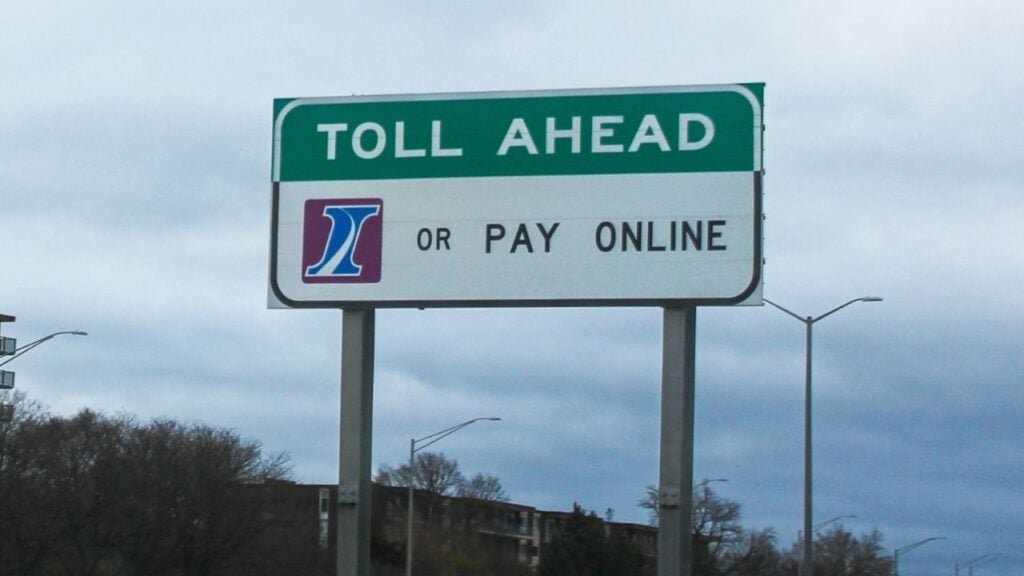
Illinois adds fees to a missed tollway bill fast.
Many drivers don't see the increase coming until the letter shows up.
6 Costs That Turn a Missed Illinois Tollway Bill Into Triple the Price
9 Things That Change the Second You Cross From Indiana Into Illinois
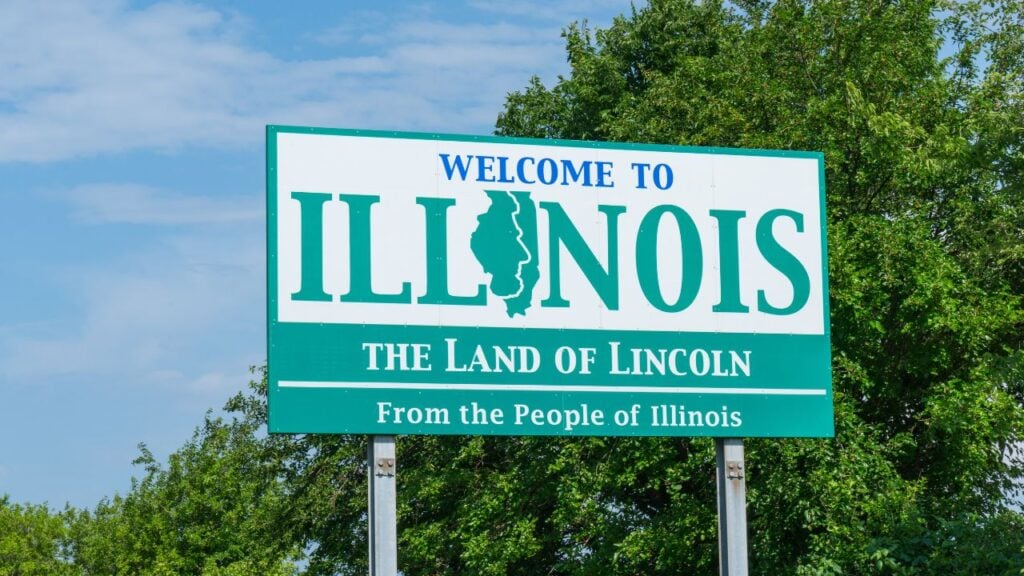
Illinois' rules apply the moment a driver crosses the state line, well before the welcome sign comes into view.
Some habits that work fine in Indiana turn into a problem within the first few miles across the state line.
9 Things That Change the Second You Cross From Indiana Into Illinois
