

8 Documents a North Carolina Private Car Sale Falls Apart Without

Handing over your keys doesn’t finish a private car sale in North Carolina.
A notary’s stamp and a few other documents can decide whether the DMV accepts it.
These are the documents a North Carolina private car sale falls apart without.
Note: This is general information, not legal advice. Titling, registration, and insurance requirements are subject to change, so confirm the current details with the North Carolina Division of Motor Vehicles.
1. Notarized Title
A private car sale’s title in North Carolina doesn’t finish transferring ownership until a notary watches the seller sign the assignment on the back of it.
State law requires the seller to sign that assignment in front of a notary.
Banks, shipping stores, and some insurance offices offer the stamp for a few dollars, and almost every seller ends up at one of them.
No stamp, no sale.
The buyer’s name, address, and sale date belong on that same back panel, right beside the seller’s printed name.
Filling it in is a two-person job, and it has to happen before anyone drives off, not after.
2. Odometer Disclosure Statement
The odometer disclosure on a private sale isn’t optional just because the truck is old and the dash is cracked.
Federal and state law require the seller to certify the exact mileage at the point of sale.
North Carolina’s MVR-180 form covers 2010-and-newer models until they turn 20 years old, and pre-2010 models until they turn 10.
NCDOT lists that disclosure among the required documents for titling a privately sold vehicle, so an application missing it isn’t complete.
A false reading is a federal offense, carrying fines and prison time.
Only the oldest vehicles are exempt, so many sellers fill out the odometer section no matter how many owners the car has had.
3. Damage Disclosure Statement
North Carolina’s damage disclosure statement puts the seller on record about a car’s worst moments before the buyer ever signs.
Reconstruction counts too.
The MVR-181 form asks the seller to disclose collision damage running past a quarter of the car’s value, along with any salvage, flood, or theft-recovery history.
NCDOT’s titling checklist lists the damage disclosure as required for a privately sold vehicle, and an incomplete application won’t move forward without it.
A buyer who finds out about flood damage after the sale has a paper trail to point to.
A seller who lied on that form has a much bigger problem than a refund request.
4. Lien Release
A lien release has to clear the title before a private sale can legally close, if a bank or credit union ever financed the car.
The lender’s name stays printed on the title until it’s paid off, and the seller needs written proof from that lender before handing over the keys.
Without it, the title itself is still legally the lender’s to release, not the seller’s.
The buyer attaches North Carolina’s lien release documentation to the title application.
A seller who’s still paying off a loan has to settle the balance first, or route the sale through the lender directly.
A car changing hands after someone dies works differently, and the state spells out a separate process for that situation.
Psst! How much do you know about North Carolina’s driving and DMV history? Take our quiz and see if you can ace it.
Quiz
NC Driving History IQ
Answer these questions on North Carolina’s driving and DMV history. We bet you can’t get them all right. Prove us wrong?
What year did North Carolina first make a driver’s license mandatory statewide?
5. Signed Bill of Sale
A signed bill of sale is the one document on this list North Carolina doesn't hand the seller a form for.
Dealers work off a standard version, but a private seller and buyer have to write their own.
The buyer's MVR-1 title application doesn't carry a field for the sale price, and nothing else in this stack does either.
A bill of sale is the only place in the entire paperwork trail where that number gets written down.
A simple version covers both names, the vehicle's year, make, model, and VIN (vehicle identification number), the sale price, the date, and both signatures.
That signature line is the only proof either side has.
North Carolina's checklist isn't identical to what a neighboring state expects, and Virginia sellers work through their version of this same stack of paperwork.
6. Proof of Liability Insurance
North Carolina won't register a car until the buyer shows proof of liability insurance.
The buyer needs continuous coverage from a North Carolina-licensed insurer before the state will issue plates.
Current minimums sit at $50,000 per injured person, $100,000 per accident, and $50,000 in property damage.
An out-of-state policy doesn't count.
Buyers routinely call their agent the same day they hand over payment.
A gap in coverage between the sale and the DMV visit is a risk, not a technicality.
7. Passed Safety Inspection
A passed safety inspection has to be on file before North Carolina will register a used car in a new owner's name.
Every vehicle needs one, and cars registered in 19 counties also need an emissions test done at the same visit.
The inspection has to fall within 90 days of the registration date, and the state blocks the registration outright once that window passes.
Buyers who plan to register the same week they pick up the car should ask when it was last inspected.
An old sticker means a trip to an inspection station before the DMV counter.
8. MVR-1 Title Application
North Carolina's MVR-1 title application is the form that finishes a private car sale.
The buyer files it along with the notarized title, the odometer and damage disclosures, the lien release if there's one, and proof of insurance.
The state's Division of Motor Vehicles doesn't ask this form for a sale price.
The form does ask who sold the car and on what date, the same details a bill of sale backs up.
One form, one visit.
The license plate on the car doesn't come with it, so a buyer can't legally drive off on the seller's old plate even for a quick trip home.
Where the Seller's Old Plate Goes
A seller keeps the license plate after a private sale, since North Carolina ties plates to the owner, not the vehicle.
The seller can move it onto another vehicle they own within 20 days, as long as insurance stays active on both cars during the switch.
With no second vehicle to move it to, the seller surrenders the plate to the DMV.
North Carolina requires the plate to go back before that insurance gets canceled, and skipping the order risks a fine.
FAQ
Quick answers to what buyers and sellers ask most about the paperwork behind a private car sale.
What documents do you need to sell a car privately in North Carolina?
A notarized title, an odometer disclosure, a damage disclosure, and a lien release if a loan is still on the car.
Add a bill of sale, proof of insurance, a passed inspection, and the buyer's MVR-1 title application.
Does a North Carolina title have to be notarized for a private sale?
Yes.
The seller's signature on the assignment section has to be notarized before the DMV accepts it.
Do license plates transfer with the car in North Carolina?
No. Plates belong to the registered owner, not the vehicle.
A seller either moves the plate to another car or surrenders it, and the buyer needs a new one.
Do you need a bill of sale to sell a car privately in North Carolina?
North Carolina doesn't issue a state bill-of-sale form for a private sale.
The MVR-1 title application doesn't have a field for the sale price either, so a signed bill of sale is the only place that number gets recorded.
How soon does a North Carolina buyer have to title a car after buying it?
North Carolina gives the buyer 28 days from the sale to apply for a title.
Missing that window brings a $20 civil penalty and exposure to a Class 2 misdemeanor under state law.
None of these documents are hard to gather on their own, and many North Carolina sales clear the whole stack in a single afternoon.
The MVR-1 is the last piece, and a buyer who walks in with everything else already signed usually walks out with a new title the same visit.
12 Documents Every North Carolina Household Should Know How to Find Quickly

A lost North Carolina title comes with a wait and a fee.
A car title is only one paper in a household's whole important-document stack, and many families find out how disorganized that stack is at the worst possible moment.
12 Documents Every North Carolina Household Should Know How to Find Quickly
8 Neighbor Behaviors That Can Hurt a North Carolina Home's Property Value
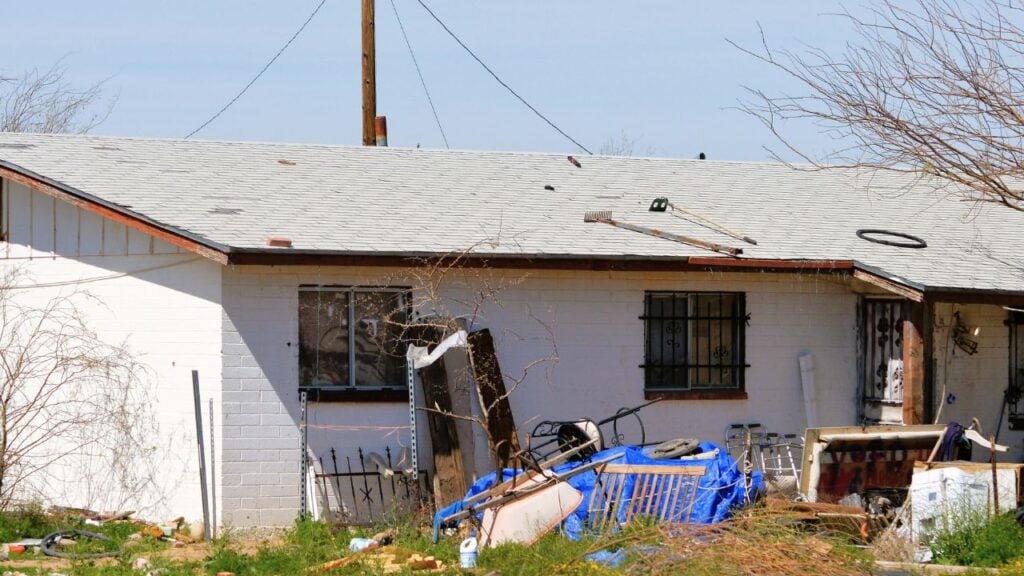
A North Carolina house can lose value without its owner doing a single thing wrong.
The fix usually isn't even on that owner's property line.
8 Neighbor Behaviors That Can Hurt a North Carolina Home's Property Value
