
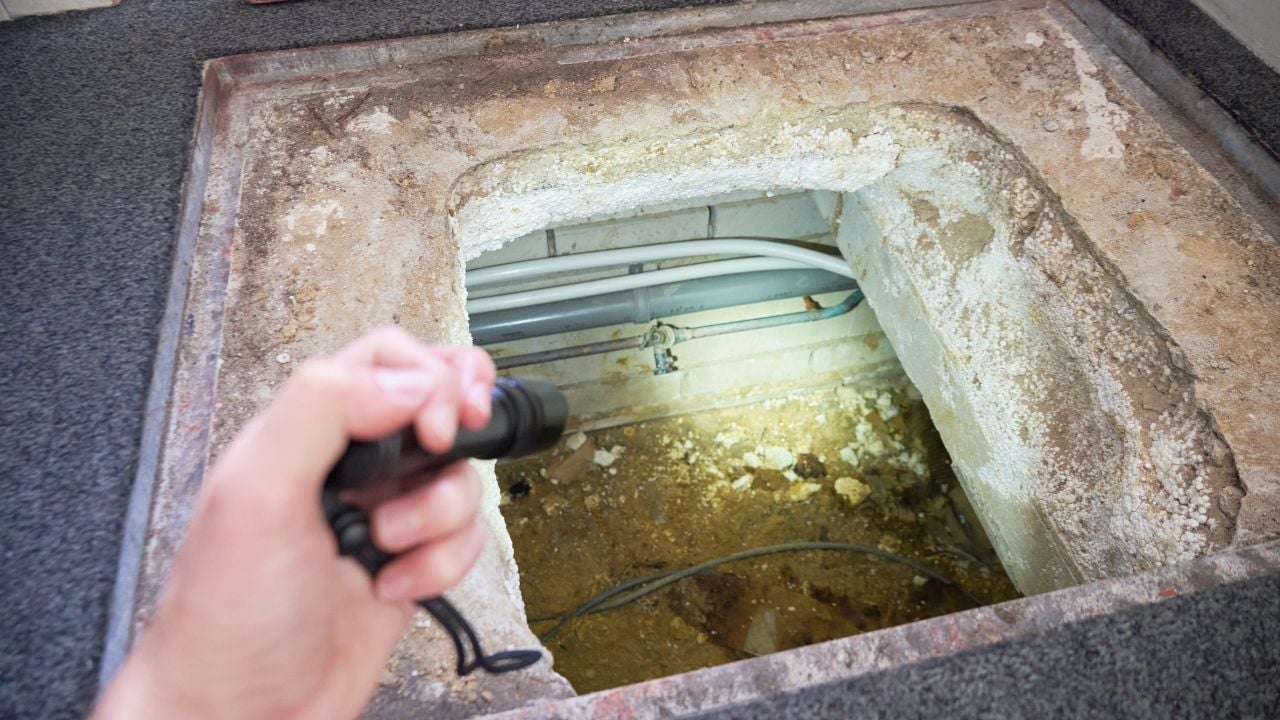
8 Crawl Space Problems That Cost Virginians a Sale

You’ve painted, cleaned and staged every room in your home. Then the buyer’s inspector heads under your house.
Virginia sellers can lose a deal over what’s down there.
Here’s what tends to scare buyers off before closing day.
Note: This is general information, not legal or real estate advice. Disclosure requirements are subject to change, so confirm current rules with the Virginia Department of Professional and Occupational Regulation.
1. Standing Water Underneath
Dry first, negotiate later.
Puddled water under a crawl space is the single fastest way a sale falls apart at inspection.
A Veterans Affairs (VA) loan appraiser has to check any crawl space that holds mechanical systems for excess moisture before the loan can close.
Standing water fails that check on the spot, and a dehumidifier running for a week rarely fixes the drainage problem that put the water there in the first place.
2. Active Termite Damage
A live termite trail under the floor stops a closing cold.
VA-backed loans require a wood-destroying insect inspection before the lender signs off, and an active infestation has to be treated first, not disclosed and left alone.
No treatment, no closing date.
3. Rotting Floor Joists
Soft, crumbling wood.
That’s what a home inspector’s knife finds in a joist that’s been sitting in damp air for years, and it’s a structural flag a buyer’s lender won’t wave through.
Rot underneath a house almost never announces itself from the living room floor above it.
Many sellers hear about it for the first time from a stranger’s inspection report, which is a rough way to learn about that crawl space.
4. Torn Vapor Barrier
A crawl space needs a plastic sheet across the dirt floor to keep ground moisture from soaking straight up into the wood above it.
Torn, missing, or bunched into a corner, that barrier stops doing its job, and an inspector notes it every time.
Cheap fix, easy to miss.
5. Mold on the Framing
Does a buyer walk over mold?
Often enough that a seller should assume yes.
Mold spreading across the framing reads as a health issue as much as a structural one.
It tends to reopen price negotiations even when the rest of the house checks out clean.
Reasonable buyers still hesitate.
6. Blocked Foundation Vents
A crawl space breathes through small vents cut into the foundation, and humid air needs that airflow to keep moisture from settling in.
Leaves, mulch, and old insulation plug those vents more often than owners realize, and a plugged vent looks like nothing from the yard.
A five-minute walk around the foundation catches the worst blockages before an appraiser ever does.
Clear them first.
7. Cracks From Clay Soil
Virginia’s expansive clay soil swells when wet and shrinks when dry.
The Coastal Plain, the Shenandoah Valley, and the basins around Culpeper, Farmville, Danville, and Richmond carry the worst of it.
Chesterfield County homeowners have felt some of the sharpest damage from the cycle, and cracked footings and jammed doors usually follow.
Soil moves, houses crack.
A Cracked Crawl Space Skips Insurance
A standard homeowner’s policy treats crawl space cracks from expansive soil as an earth-movement exclusion, not storm or structural damage.
That leaves the seller footing the repair bill out of pocket, with no claim to file first.
It’s exactly the number a buyer’s agent uses to knock the price down once a crack shows up in the footing.
8. Joists Sitting Too Low
Minimum property requirements (MPRs) for a Veterans Affairs loan set a clearance rule for the joists above a crawl space.
They have to sit high enough above the ground for someone to reach the ductwork and plumbing underneath.
Homes built before that clearance became standard practice can fail an appraisal on this alone, no rot or moisture required.
Digging the crawl space out deeper is an option, but it costs money and rarely happens before a closing deadline.
Measure early.
Psst! How much do you know about Virginia? Take our quiz and see how many you can get right.
Quiz
Virginia IQ
Answer these questions on Virginia geography and history. We bet you can’t get them all right. Prove us wrong?
Virginia’s official state soil, named after a river and a Virginia Indian tribe, is called what?
A Buyer's Inspection Fills the Gap
Virginia's disclosure act tells buyers to exercise whatever due diligence they judge necessary before closing.
An independent inspection is how a buyer answers that instruction.
A crawl space is one of the cheapest places on a house to have looked at closely before an offer goes in.
It stays cheap compared with what a renegotiated price costs a seller later, once every item on this list has a dollar figure attached to it.
A few hundred dollars now beats a lower closing number.
Ask before you offer.
Sellers who fix these eight problems before listing rarely see them come up again once a buyer's inspector arrives.
Sellers who skip that step usually meet the same list again, this time written into the contract as a repair credit.
8 Signs a Virginia Home No Longer Fits the Person Living in It

About 18.4% of Virginians are 65 or older, according to the Census Bureau, and that share keeps climbing.
These are the signs a Virginia home no longer fits the person living in it.
8 Signs a Virginia Home No Longer Fits the Person Living in It
8 Vacation Day Rules Virginia Employees Follow Even When Nobody Requires Them

The vacation request goes through, but the guilt, second-guessing, and urge to stay available come along for the trip anyway.
These are the vacation day rules Virginia employees follow even when nobody requires them.
8 Vacation Day Rules Virginia Employees Follow Even When Nobody Requires Them
