
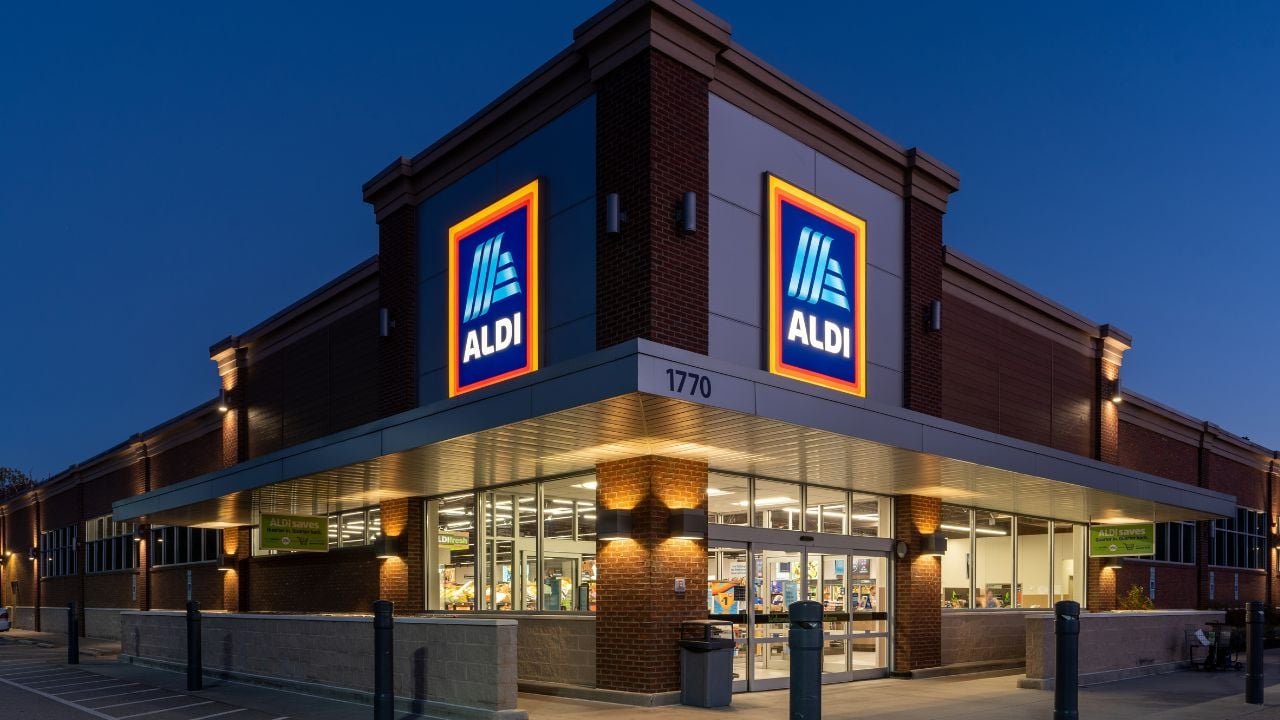
8 Aldi Rules Pennsylvania Shoppers Get Wrong at the Register

Aldi checkout lines move fast, and first-timers often feel it.
Here’s how Pennsylvanians new to the process can avoid slip-ups at the register.
Note: This is general information, not tax or legal advice. Sales tax rates and municipal bag rules are subject to change.
1. Register’s Tax Split
A candy bar rings up tax-free at any Aldi register in Pennsylvania.
A bottle of flavored water two shelves over doesn’t get that same pass.
Even regulars miss it.
Pennsylvania’s tax code exempts most grocery staples along with candy and gum.
Soft drinks, sports drinks, and flavored water don’t get that same break.
The rate itself moves around too.
Pennsylvania’s 6% base rises to 7% in Allegheny County and 8% in Philadelphia, local taxes layered on top of the state rate.
Two shoppers with identical carts can walk out paying different totals, just because of which county’s Aldi they’re standing in.
The Math on Your Aldi Receipt
Aldi shoppers in Pittsburgh pay Pennsylvania’s 6% state tax plus Allegheny County’s 1% add-on on a taxable item, a total of 7 cents on every dollar.
The same taxable item at a Philadelphia Aldi carries an 8% bite instead, since the city adds 2% rather than 1%.
A bag of pretzels or a candy bar skips all of it, taxed at zero everywhere in the state.
2. Philadelphia’s Bag Rule
Philadelphia’s Aldi stores can’t hand over a plastic bag at checkout, not even a thin one for a single item.
City law banned single-use plastic bags at checkout back in 2021.
Only Philadelphia enforces it.
An updated ordinance added a minimum 10-cent charge on every paper or reusable bag a store hands out, a rule that took effect in January 2026.
A compliance check later that year found many stores still weren’t following it.
That’s on top of whatever Aldi already charges for its reusable bags.
Most of Pennsylvania never runs into that rule.
Everywhere else in the state, Aldi’s registers skip straight to the usual bag prices, since the city ordinance stops at Philadelphia’s border.
3. Cart Deposit
Every Aldi cart stays locked until a shopper feeds the slot a quarter.
Return the cart to a corral, and the quarter pops back out.
The coin comes back every time.
Just a deposit.
The system is core to Aldi’s low-price strategy, since it means no employee spends a shift chasing loose carts across the lot.
Skip the quarter, and the trouble follows the shopper straight to the register.
Aldi’s checkout leans on that same cart again at the belt, where it catches everything the cashier scans.
Without one, the shopper ends up bagging straight off the belt by hand while the next customer waits.
Many regulars keep a quarter clipped to a keychain for exactly this reason.
4. Bagging Your Order
Aldi cashiers never bag a single item.
No bagger, no exception.
Scanned groceries drop into a second cart below the belt, and the shopper wheels it to a separate counter to bag everything alone.
Who tells you that before you’re standing at checkout with an empty bag in hand?
Aldi also prints many of its barcodes oversized, or on more than one side of the package, so a cashier barely has to hunt for it.
That’s the trade-off for how fast the line moves.
A first-timer wheels up to checkout and starts bagging one item at a time before the cashier even finishes scanning, and the line backs up fast.
Psst! How much do you know about Aldi’s history? Take our quiz and see how many you can get right.
Quiz
Aldi History IQ
Answer these questions on Aldi’s history and ownership. We bet you can’t get them all right. Prove us wrong?
In what German city did the Albrecht family’s mother open the small grocery store that eventually became Aldi?
5. No Checks at Checkout
Cash, debit and credit cards, and contactless pay like Apple Pay and Google Pay all work at Aldi's registers.
Electronic Benefit Transfer (EBT) cards, Supplemental Nutrition Assistance Program (SNAP) benefits, and other state benefit cards work too.
One common form of payment never makes it through, though.
Personal checks are off the list, confirmed by AARP, the retiree advocacy group, on its list of retailers that dropped them altogether.
Shoppers who reach for a checkbook mid-transaction find out the hard way, holding up the next cart while a cashier explains the policy.
Bring plastic or cash instead.
6. No Card to Scan
Aldi skips the loyalty card altogether.
There's no rewards app to pull up, no phone number to recite, and no points ticking away on an account tied to the register.
That's on purpose.
Running a loyalty program costs money to build and maintain.
Aldi would rather put that money into lower shelf prices than a scan-to-save system, according to an analysis of the chain's no-frills model.
Shoppers get it wrong by asking the cashier to look one up anyway.
The search always comes up empty.
7. Self-Checkout Switch
Aldi decides self-checkout store by store instead of running it the same way everywhere.
Some Chicago-area Aldi stores had their self-checkout kiosks removed in 2025, and online shoppers guessed theft was the reason.
No two stores match.
Aldi confirmed the change to Supermarket News, denying that self-checkout was disappearing chain-wide even as it acknowledged pulling the kiosks from select stores.
That store-by-store call is the rule shoppers miss: A location can lose its kiosks without warning while a store minutes away keeps every one running.
A shopper used to scanning their order at one Aldi might find only staffed lanes the next time they visit.
8. One Return, Two Payouts
The Twice as Nice Guarantee is how Aldi backs an unhappy purchase.
Bring back the packaging and whatever's left of the product, and Aldi replaces the item and refunds the money, not one or the other.
Many shoppers expect a choice.
There isn't one, according to Aldi's guarantee page, which spells out both halves of the payout.
A receipt only matters for a cash refund.
Without one, Aldi issues a gift card for the item's current price instead of turning the shopper away.
9 Things Pennsylvanians Change the Week Fall Truly Arrives

One chilly morning is often all it takes to flip Pennsylvania's routines from summer to fall, and the deer season prep is only the start of it.
Nine habits change almost overnight once that first cold snap lands, long before the leaves catch up.
9 Things Pennsylvanians Change the Week Fall Truly Arrives
9 Pet-Related Disagreements That Turn Pennsylvania Neighbors Against Each Other

Once Pennsylvania labels a dog dangerous, its owner carries $50,000 in liability insurance, pays $1,000 a year to register it, and reports any escape within 24 hours.
Almost nobody learns those numbers until a dispute with a neighbor forces the issue, and that's just one of the fights dividing Pennsylvania neighborhoods.
9 Pet-Related Disagreements That Turn Pennsylvania Neighbors Against Each Other
