
7 Rules Montana Ranch Roads Follow That Aren’t Posted Anywhere

A Montana gravel road can run for miles without you seeing a single sign.
But the law still applies out there, and a newcomer can easily miss how.
Here’s what to know before you turn off the pavement.
Note: This is general information, not legal advice. Road, livestock, and hunting laws are subject to change.
1. Unposted Speed Limit
A ranch road with no speed sign on it still carries a speed limit, and it’s higher than you’d guess.
Montana’s code sets it at 70 mph in daylight and 65 at night on any public highway that isn’t an interstate, a four-lane national highway, or an urban district.
The state defines a public highway as any publicly maintained way open to traffic, and a county gravel road fits that definition.
Daylight runs from half an hour before sunrise to half an hour after sunset.
So, a washboard road past a hayfield legally allows 70 mph at noon.
That doesn’t mean you should.
You also have to hold a careful and prudent speed for the conditions, and the numbers are only a ceiling when loose gravel or a whiteout calls for less.
A county can lower the limit on any road it owns, down to 25 mph even on dirt, but a lower limit only takes effect once signs go up.
No sign means 70 is the law.
2. Sixty Feet of Right-of-Way
The public part of a county road runs 60 feet wide by default, whatever width the gravel happens to be.
Commissioners can widen or narrow that only when somebody petitions for it.
Roads laid out before the end of 1966 keep whatever width they already had, so an old wagon route can run narrower than the rest.
A private road’s minimum is 20 feet.
State law sets the width; it doesn’t require the county to stake or fence the line.
So the fence you’d assume sits on the property line may stand inside public right-of-way, and the county can order a gate, a fence, or a building out of it.
The strip cuts the other way, too.
If you want to plow or spray dust control on your stretch of county road in Park County, you pull a road work permit first.
The road department asks for a permit before anyone touches its right-of-way.
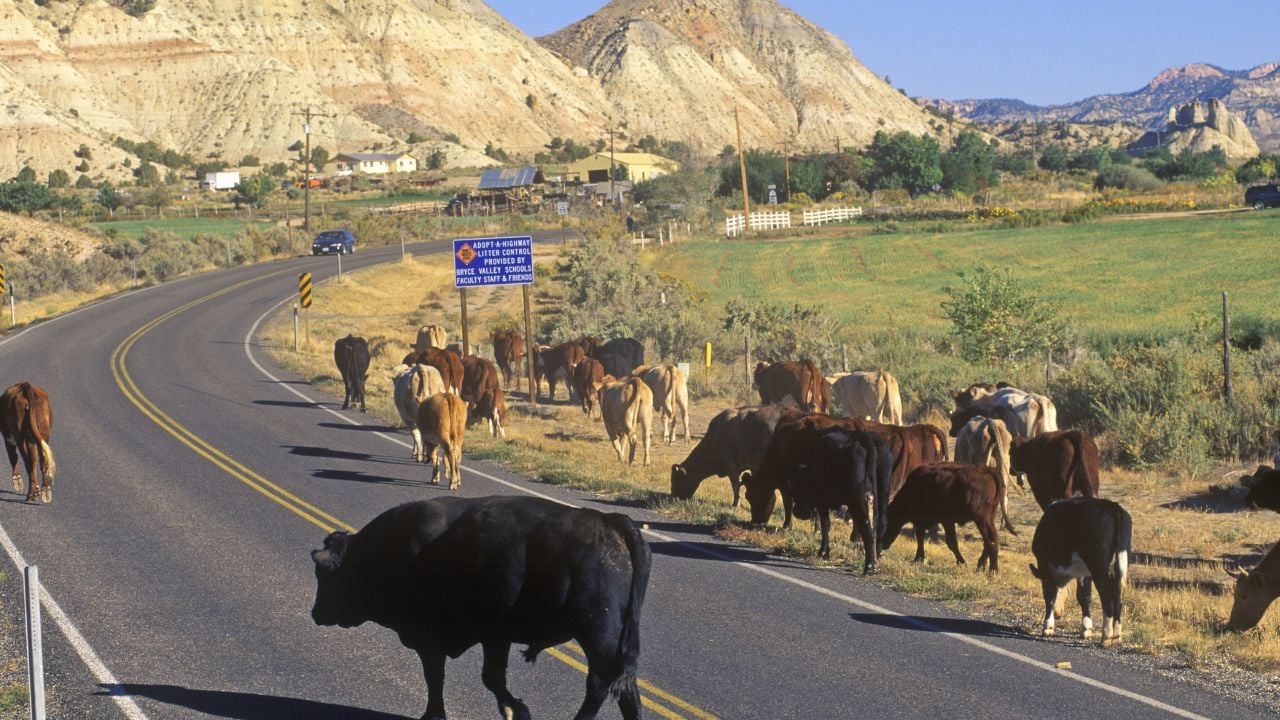
3. Cattle in the Road
Cows standing on a ranch road are legal, and if you hit a cow, the bill is usually yours.
Montana’s grazing ban covers only interstates and federal-aid primary highways, so a county gravel road sits outside it.
A separate section of the code says a livestock owner has no duty to keep animals off the highway.
After a collision, the owner owes you nothing unless the owner was grossly negligent or acted on purpose.
Neither section requires a sign.
A yellow cattle-crossing sign on a highway warns you about the animal, not about who pays.
Cattle drives follow the same split.
The rule that makes a rancher post flag escorts in front of and behind a herd applies only on an interstate or a state primary highway.
That rule covers only herds of more than 10 head.
Nighttime herding on those roads is banned outright.
On the gravel, you wait for the herd.
What Open Range Means Under Montana Law
Open range under Montana’s stock law is any land not enclosed by a fence of at least two wires in good repair.
On open range, the burden runs the opposite way from what you’d expect: The landowner fences neighboring livestock out, according to Montana State University Extension.
Nobody has to fence them in.
A barbed-wire fence counts as a legal fence only when it stands 42 to 48 inches tall with at least three wires and posts no more than 20 feet apart.
Inside a town or a herd district, the rule flips, and the livestock owner has to fence the animals in.
If you own the land beside a ranch road, the fence is your job.
4. No Hunting From the Road
A ranch road’s right-of-way is public ground, but it isn’t hunting ground.
Montana makes it a crime to hunt or attempt to hunt any game animal or game bird on, from, or across a public highway.
The ban reaches the shoulder, berm, or barrow pit of that road.
The fine runs $50 to $1,000, with up to six months in the county jail on top, and a judge can add restitution.
That covers miles of ditch.
If you spot a buck from the driver’s seat, the barrow pit is the one place in the county where you can’t take him.
Once he crosses the fence, you need the landowner’s permission before you follow him because hunting private land without it is a separate offense.
You learn that from the hunting regulations, not from anything at the cattle guard.
5. Fishing Access at the Bridge
A county road bridge on a ranch road doubles as a legal door to the stream under it.
Montana’s stream access law lets you reach the water by way of a public bridge, its abutments, and the county road right-of-way.
You have to stay inside that right-of-way.
Remember the 60 feet.
A rancher can still tie a fence to the bridge to hold cattle, but that fence has to provide for public passage to the water.
A stile, a gate, a roller, or a walkover all count, and Fish, Wildlife and Parks supplies the materials and installation, one crossing on each side of the stream.
If a dispute comes up, the agency negotiates the design with the landowner, not with you.
The landowner also owes you no duty once you’re on that path, short of willful or wanton misconduct, so the riprap is your problem.
Nothing in the law requires a sign at the bridge, so you’re expected to know.
6. Leaving Gates as You Found Them
The gate on a ranch road follows a rule you won’t find posted at the gate itself: Leave it the way you found it.
Fish, Wildlife and Parks spells that out in its hunter guidance.
If a gate is closed, you close it behind you.
If it’s pulled all the way back to the fence, it stays open.
That’s the whole rule.
If you can’t tell, you call the landowner.
An open gate can put cattle on the county road, and you already know who pays for that.
Park well off the road so farm equipment can get by, and stay off muddy two-tracks unless they’re well graveled.
A gate across the road itself answers to a different rule.
Montana lets a county build cattle guards and gates beside its roads, plus passes that let your truck through and stop loose livestock.
A gate that blocks a county road is an encroachment, though, unless the commissioners permit it at a public meeting.
The only way to know which kind you’re rattling through is the county’s road book, and Park County keeps its copy in the Clerk and Recorder’s vault in Livingston.
Psst! How much do you know about driving in Montana? Flip through these cards and see how many you can call right.
7. County Plow Order
In Missoula County, a ranch road’s place in the plow order is set on paper at the county shop, not on a sign out front.
Crews go out on weekdays between 5 and 6 a.m. after a storm, per the county’s published policy.
Priority 1 goes to school and city bus routes, roads near schools, high-traffic routes, and roads with hills or curves.
Your flat gravel road with three mailboxes comes after all of that.
Gravel gets the blade and nothing else because the county spreads salted sand and liquid deicer on paved roads only.
Those numbers explain the wait.
The state highway agency maintains just 10,560 rural miles in Montana, against the counties’ 39,448, by the Federal Highway Administration’s 2023 count.
No county plow fleet covers its share in one morning.
If the storm lands on a Saturday, the county promises nothing outside the crew’s regular hours.
So you keep chains in the truck and a shovel behind the seat because the plow reaches your road on the county’s clock, not yours.
5 Snow Removal Mistakes New Montana Homeowners Make Their First Winter
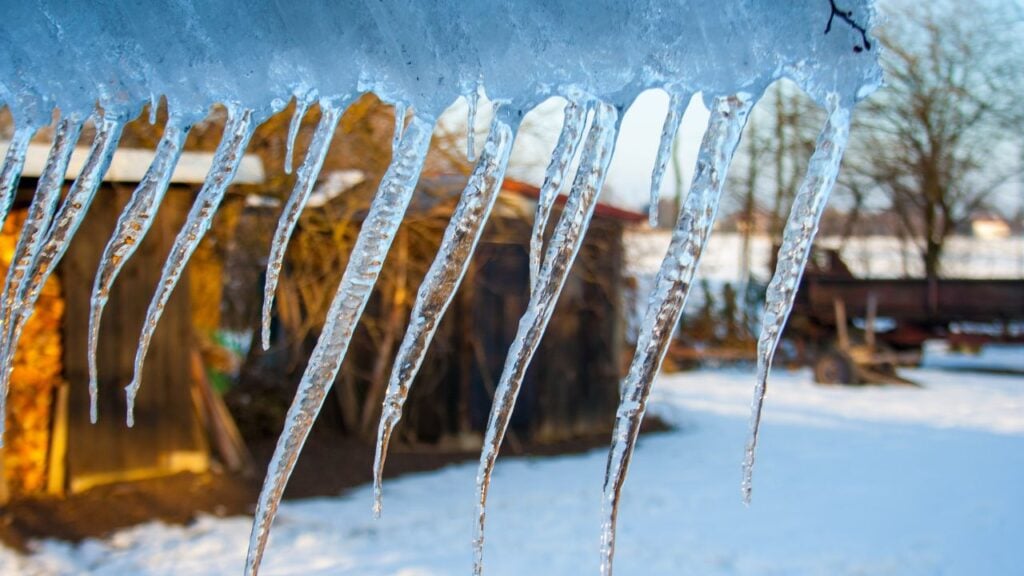
A bag of ice melt on a hardware store shelf never tells you the temperature where it quits working.
The first hard cold snap answers that for you, and it’s one of several lessons a first winter hands out the expensive way.
5 Snow Removal Mistakes New Montana Homeowners Make Their First Winter
8 Montana Words and Phrases That Make No Sense to the Rest of the Country

A moving truck spins its tires axle-deep on a dirt road outside Choteau, and the rancher who stops to help says it’s stuck in the gumbo.
If you don’t know what that means, it won’t be the last word that throws you.
8 Montana Words and Phrases That Make No Sense to the Rest of the Country
