
6 Church Basement Foods and Drinks Nobody Outside Minnesota Makes Correctly

Show up hungry to a Minnesota potluck, and you’ll soon learn that everyone has a say in how things are made.
Anyone who grew up around those long tables knows some recipes come with firm rules.
Here’s what belongs on that table, and why Minnesotans say outsiders miss the mark.
1. Hotdish
Hotdish is the dish you usually eat in a church basement or at a neighborhood potluck, according to Mpls.St.Paul magazine.
One paper trail for hotdish leads to a 1930 church cookbook from Mankato.
The Ladies Aid at Grace Lutheran Church compiled the book, and a hot dish recipe sits on page 49.
Food & Wine credited that book with the first written record of a hot dish recipe, Minnesota Public Radio News reported in 2016.
If you hoped that settles it, a former Star Tribune Taste editor told the report that the first cookbook to mention hot dishes would be hard to track down.
What Goes Into Hotdish
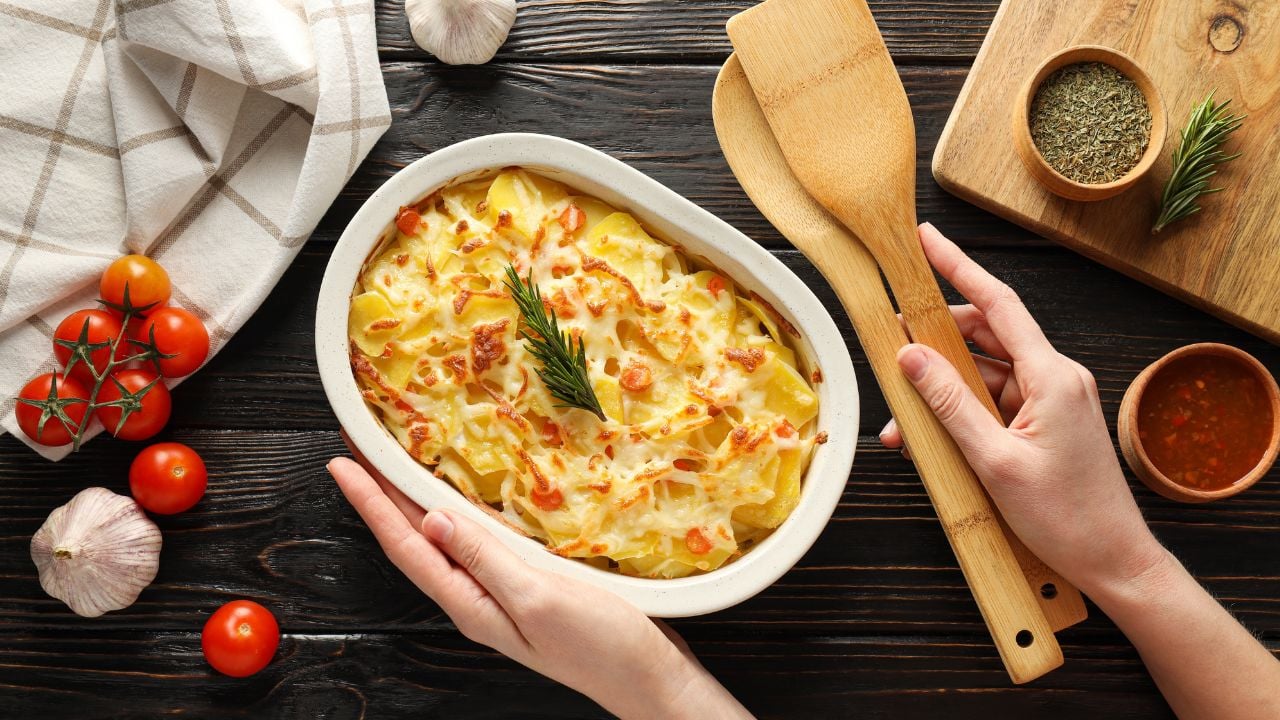
CBS Minnesota lists the familiar hotdish ingredients as hamburger for the protein, macaroni for the starch, a mix of vegetables, and tomato soup as the binder.
If you top a hotdish with Tater Tots, you’re using a starch that became popular soon after the potato product was invented.
If you spell it as two words, you’re matching the 1930 cookbook.
Many, including a food writer, say hotdish should be one word.
2. Jell-O Salad
Jell-O has been served in thousands of church basements, the Star Tribune wrote in 2015.
Lutherans tend to make it a salad with shredded carrots, celery and cottage cheese instead of a gelatin dessert.
Many Jell-O recipes found their way into cookbooks put together by church groups, especially in Minnesota and neighboring states, CBS Minnesota reported in 2024.
Atlas Obscura‘s 2015 story on Minnesota’s dessert salads says Lutheran church events are the major gathering places for the entire community.
If you’re feeding a large group, it’s not surprising you’d lean toward dishes that are easy to prepare, cheap, filling and won’t spoil.
If you want to know what else is on that table, think glorified rice, Watergate salad, cookie salad, Jell-O salad and Snickers salad.
3. Booya
Booya has been a fundraiser at St. John the Baptist since 1931, according to Edible Minnesota.
By 1978, the event had grown into a whole weekend with a polka mass, cake walks, bingo and fish ponds.
The church sells enough each year to fill nine 60-gallon kettles.
The Star Tribune has compared booyas to lutefisk dinners and smelt fry feeds, where people work together to feed hundreds at once.
If you’re picky about the pot, the writer’s family puts oxtails in and keeps boneless skinless chicken out.
Booya fans agree on three things: The word is both a noun and a verb, oyster crackers are a must, and your family’s recipe is the best.
The paper’s 2024 booya guide also listed church booyas at Bethesda Lutheran Church in Inver Grove Heights and Lord of the Lakes Lutheran Church in Forest Lake.
4. Egg Coffee
Egg coffee was a staple at the many Lutheran church potluck dinners, the Star Tribune says, and it’s sometimes called church basement ladies coffee.
Atlas Obscura says you’ll also find it called church basement coffee, Scandinavian egg coffee or Swedish egg coffee.
Heavy Table reported in 2011 that the Salem Lutheran Church diner at the Minnesota State Fair opened in 1949 as a tent pitched over a dirt floor.
By 2024, Minnesota Public Radio News reported, the same church dining hall had been at the fair for 75 years.
The coffee alone had brought in $30,000 the year before.
The fair had 26 church dining halls in the 1950s, and only Salem’s and Hamline’s remained.
Your cup cost 25 cents in 1985, with unlimited refills, the Star Tribune reported.
5. Lefse
In the basement of First Lutheran Church in Duluth, volunteers turned more than 300 pounds of potatoes into lefse, the Duluth News Tribune reported.
In Minneapolis, a crew at Central Lutheran Church made more than 560 pieces of lefse from 50 pounds of russet potatoes, the Star Tribune reported in 2014.
The crew ran the boiled potatoes through a ricer.
The mix then chilled overnight before it was rolled thin and cooked on a heated griddle.
If you’re new to lefse, the Nordic American Churches website describes it as a Norwegian potato flatbread that you spread with butter and sugar, then fold or roll.
6. Lutefisk
Minnesota Public Radio News opened a 2019 story on lutefisk by describing diners in Norwegian sweaters crowding into church basements in the weeks before Christmas.
The story centered on Mindekirken in Minneapolis, which serves some 500 diners at its lutefisk dinner.
If you’re planning ahead, Mindekirken’s homepage lists its next lutefisk dinner for Saturday, November 21, at 12:30 p.m., served family style with meatballs, coleslaw, lefse and potatoes.
Trinity Lutheran Church’s supper in Milaca costs $28 for all-you-can-eat lutefisk, according to the event page.
If you’d rather skip the fish, $25 buys ham and potato sausage instead.
Kids ages 6 to 12 pay $5, and children 5 and under eat free.
Sides are mashed potatoes, rutabagas, corn, lefse, coleslaw, cranberries, herring and Scandinavian cookies.
Suppers That Ended
The lutefisk dinner at Faith Lutheran Church in Forest Lake ran from 1947 to 2017, according to Atlas Obscura.
If you showed up on the second Tuesday of December, hundreds of volunteers had prepared lutefisk, lefse, boiled potatoes and meatballs.
The dinner once served 800 people and had dwindled to around 500 by the end.
If you’re wondering why it ended, the pastor said the work had become too much for many volunteers.
Volunteers were getting too old to prepare several hundred pounds of fish.
First Lutheran Church in Duluth stopped its lutefisk dinner when the pandemic hit, the Duluth News Tribune reported.
The church’s Lefse Run, then in its third year, descended from those lutefisk dinner days.
That run covered 3 miles along the Lakewalk, cost nothing, gave participants a piece of lefse and benefited Safe Haven, a nonprofit that works to stop domestic violence.
Psst! How much do you know about Minnesota food? Take our quiz and see if you can ace it.
Quiz
Minnesota Table Trivia
Answer these questions on Minnesota food traditions, from lutefisk to state symbols. We bet you can’t get them all right. Prove us wrong?
Lutefisk starts as dried cod that has been treated with which of these?
Where Else Booya Turns Up
If you think church booya belongs to one state, the Star Tribune says otherwise.
The community supper and fundraiser is a thing of the Upper Midwest, with booyas a fall tradition in parts of Wisconsin and Michigan, too.
Edible Minnesota says the majority of Minnesota's booyas are held in St. Paul, likely because eastern Europeans came to work in the stockyards there in the early 1900s.
St. Paul proclaims itself the booya capital of the world, though Green Bay would likely contest that.
If you cross the border for a bowl, Wisconsin booyah relies more on chicken, uses less tomato and is generally spiced with bay alone.
9 Signs You Grew Up in Minnesota, No Matter Where You Live Now

Some habits follow you out of Minnesota no matter where you end up.
A few of them come with a word you learned before you knew what it meant.
9 Signs You Grew Up in Minnesota, No Matter Where You Live Now
11 Things Minnesotans Say That Baffle Everyone Else

Minnesota has a vocabulary that confuses visitors at the gas station.
The accent gets the credit, but the vocabulary causes the confusion.
