
9 Things Wyoming Did Before Any Other State

Wyomingites have bragging rights that go back well over a century, and a few that are much newer.
These are the firsts that put the state ahead of the rest of the U.S.
Note: This is general information, not legal or financial advice. Business laws and state programs are subject to change.
1. Voting Rights for Women
Wyoming became the first state to grant women full voting rights, the U.S. Senate’s timeline says, when it joined the Union on July 10, 1890.
In 1869, Wyoming Territory became the first government within the jurisdiction of the United States to grant women the right to vote.
The Wyoming State Library dates Territorial Governor John Campbell’s signature on the Suffrage Act to December 10, 1869.
Women could hold office too.
Section 1 of the act, which you can read yourself, covers “every woman of the age of twenty-one years, residing in this Territory.”
You’ll also hear the state called the Equality State, a nickname it links to the rights women have traditionally enjoyed there.
New Jersey’s Vote Before Wyoming’s
Smithsonian magazine reports that New Jersey’s 1776 constitution let all inhabitants over 21 who had lived in their county for a year and were worth 50 pounds vote.
Women who met those property rules voted there until an 1807 law limited voting to free white male citizens.
New Jersey’s vote for women had a property test and ended in 1807, so it stands apart from the full voting rights the Senate credits to Wyoming.
2. Fracking Chemical Disclosure
In 2010, Wyoming became the first state to require oil and gas companies to disclose the chemicals used in fracking, High Country News reports.
You may only know fracking as a word.
Audubon magazine defined it in 2010 as injecting fluid under high pressure into rock fractures so gas can move more freely into a production well.
State regulators voted unanimously on June 8, 2010, to approve rules requiring companies to disclose the chemicals.
Industry opposed the rules.
The rules didn’t require industry to share proprietary formulas publicly, so you couldn’t count on seeing them.
In 2015, a settlement required state regulators to adopt stricter standards for industry claims that certain chemicals are trade secrets.
3. Women on Juries
In March 1870, Wyoming Territory seated six women on a grand jury, the first time in history, WyoHistory says.
You can read Kim Viner’s full account of the jury online.
Judge John Howe presided over a panel of up to nine men and six women.
One case ran late.
The judge required the jurors to stay overnight in a local hotel.
He picked Martha Symons Boies, later Atkinson, to guard their rooms as bailiff.
That made her the first woman in history to serve as a bailiff.
Laramie and Cheyenne both put women on grand and trial juries again in 1871.
4. Water Permits
The Wyoming Water Development Commission’s history of water law says Wyoming was the first state to require a permit to appropriate water.
Without a permit from the state, you couldn’t get rights to use water.
Territorial Governor Thomas Moonlight appointed Elwood Mead as Wyoming’s first territorial engineer in March 1888.
By December 22, 1890, the first state legislature had drafted and approved the state’s first water laws.
Under those laws, you had to file an application for a permit to appropriate water, and the State Engineer recorded the date and time it arrived.
That became the priority date.
WyoHistory adds that Mead’s system was soon heralded nationwide as the model for Western water law.
5. First Woman Justice of the Peace
Wyoming Territory appointed Esther Hobart Morris of South Pass City as the first woman justice of the peace on February 17, 1870.
That was just over two months after Territorial Governor John Campbell signed the suffrage act.
Her first act after taking office, WyoHistory reports, was to charge her predecessor for failing to hand over the court’s records to her.
You can find Morris in the National Statuary Hall Collection, where Wyoming dedicated a statue of her on April 6, 1960.
6. Limited Liability Companies
The Wyoming Secretary of State’s Business Division dates the first limited liability company (LLC) act to March 4, 1977.
The Wyoming Law Review and a Congressional Record resolution both say Wyoming was the first state to authorize the LLC.
Hamilton Brothers Oil Company wanted to combine a partnership’s flexibility and tax treatment with a corporation’s liability protection.
The LLC stayed unpopular.
The turn came in 1988, when the Internal Revenue Service formally recognized the LLC and accepted its partnership tax treatment.
If you run an LLC in any state, Wyoming’s act came before yours.
The Census Bureau reports that Wyoming’s population grew 2.3% to 576,851 from 2010 to 2020, and the state remained the least populous.
Psst! How much do you know about Wyoming’s history? Take our quiz and see how many you can get right.
Quiz
Wyoming History IQ
Answer these questions on Wyoming’s history and firsts. We bet you can’t get them all right. Prove us wrong?
Mary G. Bellamy became the first woman elected to the Wyoming legislature in which year?
7. First Woman Governor
Nellie Tayloe Ross won Wyoming's race for governor on November 4, 1924, becoming the first woman governor in the United States.
Voters chose her to complete the term of her husband, who died in office, the Wyoming Secretary of State's list of firsts notes.
She took office on January 5, 1925, two weeks before Miriam Ferguson of Texas.
If you're wondering why Ross, not Ferguson, holds the title, WyoHistory points to the two weeks between their inaugurations.
8. Decentralized Autonomous Organizations
The National Law Review says Wyoming became the first state to regulate decentralized autonomous organizations (DAOs).
A DAO is an organization managed by rules encoded in computer code rather than by a board of directors.
Under the law, a DAO is a distinct form of limited liability company.
If you organized a DAO under the law, its articles of organization could define it as member managed or algorithmically managed.
The bill is senate bill SF0038, the Decentralized Autonomous Organizations Supplement.
The governor signed it on April 21, 2021, and it took effect on July 1.
9. State-Issued Stable Token
Wyoming was the first public entity in the United States to issue a blockchain-based stable token, according to an August 19, 2025 bulletin from the governor's office.
If you're new to crypto, Wyoming Public Media describes a stable token as a type of cryptocurrency backed by the U.S. dollar.
As of January 7, 2026, Wyoming was the first and only state to issue a stable token.
The Wyoming Stable Token Commission is the issuer of the Frontier Stable Token (FRNT).
FRNT is fully backed by U.S. dollars and short-duration treasuries.
Wyoming released FRNT for public purchase on January 7, 2026, through Kraken, a Wyoming-based cryptocurrency exchange.
9 Cracker Barrel Traditions That Have Disappeared
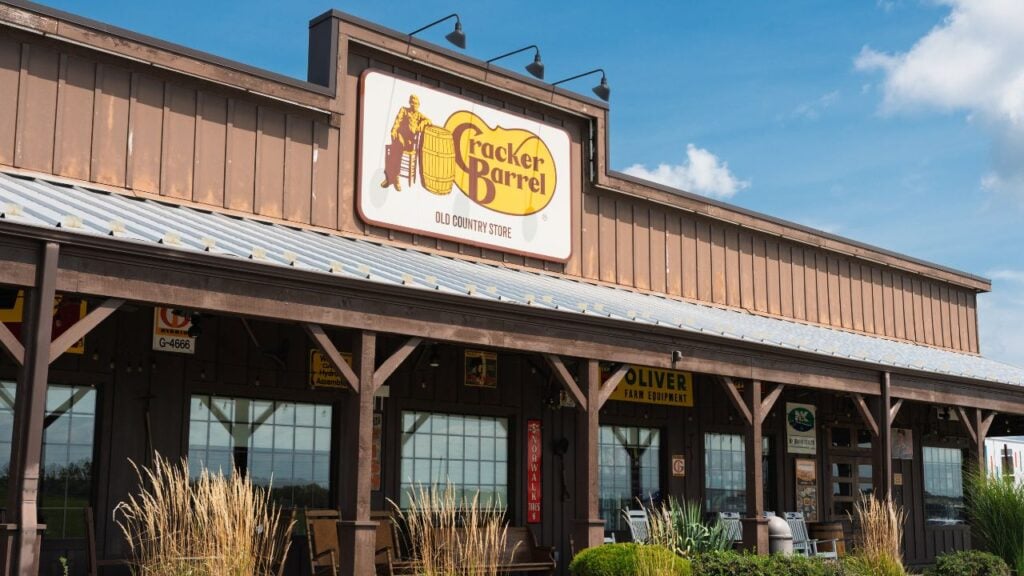
Fried chicken livers, red-eye gravy and beef stew are all on our list of Cracker Barrel traditions that have disappeared.
So are the audiobook exchange and the original wording of the peg game.
