
8 Things New York Snowplow Drivers Know About a Street Before Anyone Else

New York City’s plows push snow to the right side of the street, and there’s a reason for it.
Plow crews across New York follow plans that drivers never see.
Here’s what New York snowplow drivers know about a street before anyone else.
1. Every New York City Street
Every street in New York City is on a plow and salt route, the city announced in December 2023.
The Department of Sanitation also dropped its primary, secondary and tertiary categories for streets.
The department’s 2025-2026 Manhattan borough snow plan, published in November 2025, says every street is on a route and every route can be dispatched as needed.
You can use the PlowNYC website to see if a plow has visited a street yet.
The department reviews approximately 1,500 snow-plowing routes across the city during the spring and summer.
That’s a lot of routes.
2. Main Roads First
Snowplow crews in the town of Penfield prioritize main thoroughfares, then secondary roads, then subdivisions, the town says.
If you live in a Penfield subdivision, your street comes last in that order.
Penfield’s crews plow roughly 290 lane miles of town roads plus another 200 lane miles of state and county roads.
The town is reimbursed annually for the state and county miles.
That means a state road in Penfield can be plowed by a town crew.
Penfield splits that work into 18 town-wide plow routes.
3. Right Side of the Street
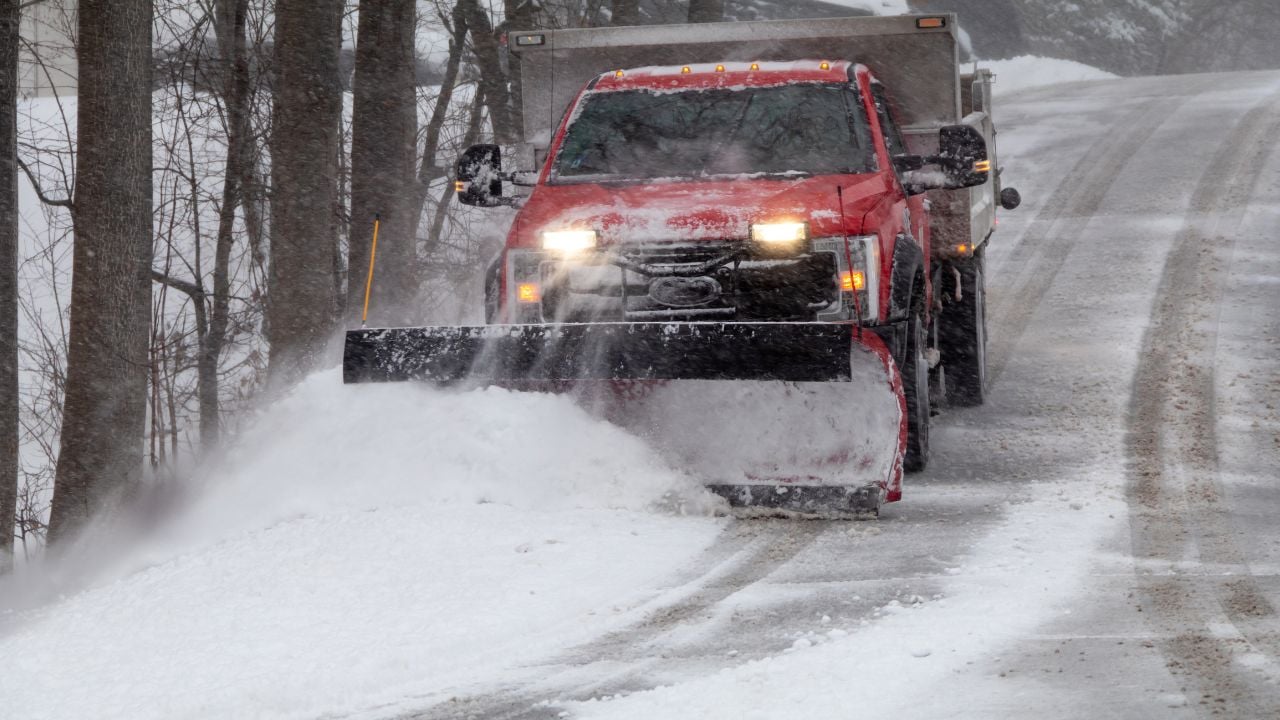
New York City’s plows push snow to the right side of the street.
The reason is that the same trucks must plow both one-way and two-way streets, NYC 311 says.
The Department of Sanitation starts plowing after 2 inches of snow have fallen.
If a city plow blocks your car or driveway, the department doesn’t clear either.
4. Hills, Curves and Intersections
Does your Penfield subdivision have hills, curves or intersections?
Those are where snowplow operators typically salt, the town’s Department of Public Works says.
When it snows overnight, Penfield typically calls in 18 plow truck operators between 2:30 and 3:00 a.m.
The goal is roads that are plowed and safe for morning traffic.
Many crews who run the same route come to know its trouble spots.
Psst! How much do you know about snowplows and winter roads? Take our quiz and see how many you can get right.
Quiz
New York Snow IQ
Answer nine questions on the crews, trucks and numbers behind winter roads. See if you can get every one right.
Between fiscal years 2003 and 2014, which New York City winter brought the most snow?
5. Private Streets and Alleys
Plow crews from New York City's Department of Sanitation don't clear alleys, private streets or parking lots other than city-owned lots, NYC 311 says.
Live on a private street?
The city's plows don't clear it.
6. Emergency Snow Routes
Look at Yonkers' emergency snow route list and you'll find the side of the street named, such as the west side of Riverdale Avenue and the south side of Ashburton Avenue.
Yonkers marks its emergency snow routes with red roadside signs.
During a snow emergency, the mayor or deputy mayor may suspend curbside parking on those streets.
Leave your car there illegally and it will be towed and ticketed, Yonkers says.
7. Pre-Treated Pavement
Before some snowstorms, state Department of Transportation maintenance workers pre-treat roads with salt brine, the department says.
The brine dries, then is activated at the first precipitation.
If you drive a state road, it may already be treated before some storms.
In New York City, Sanitation will pre-treat all main highway beds throughout the City.
The city's BladeRunner 2.0 tracking system also has a map layer for brine coverage locations.
8. Dead Ends and Cul-de-Sacs
Snowplow trucks in the Town of Amherst are instructed to treat the higher-traffic roads first, the town's Highway Department says.
In Amherst, dead-end courts and cul-de-sacs take longer to clean because of limited access for large plow vehicles.
When snow piles up until salt is no longer effective, Amherst's Highway Department goes into a plow operation and 104 employees are called in.
Miles of Plowing
State snowplow crews plowed the distance of 16 round trips to the moon in winter 2023-2024, by the Department of Transportation's own comparison.
Picture that.
The Thruway Authority plowed approximately 1.2 million lane miles that winter, on a system spanning 570 miles statewide.
Behind a state snowplow truck that's plowing or salting, expect 35 mph or slower, the state says.
Narrow Roadways and Bike Lanes
New York City's snow plowing includes small pick-up spreaders for narrow roadways, according to the Sanitation Department's 2025-2026 Manhattan plan.
They're small spreaders with plows attached, used where large salt spreaders cannot go.
The department has 44 smaller bike lane plows to pre-treat and clear snow from protected bike lanes.
BladeRunner 2.0 also added protected bike lane information to its map.
Snowbanks and Medians
Even when the road in front of you is clear, snowplow drivers aren't done, the state Department of Transportation says.
After a storm, crews begin pushing back snowbanks from along the road to make room for the next storm's snow.
They also remove snow from medians and other areas that are hard to reach.
So if a plow passes you on a cleared road, it may be doing cleanup work.
Bus Stops and Turnarounds
New York City's snowplowing and salting priorities include locations the Metropolitan Transportation Authority submits.
Turn-around locations for bus lines are among the priority locations the transit agency submits.
About 72 hours after streets have been cleared, temporary snow laborers help clear streets next to bus stops and pedestrian features such as crosswalks, NYC 311 says.
There's no guarantee every pedestrian feature will be cleared.
9 New York Travel Mistakes Even Seasoned Vacationers Still Make
A day trip to Niagara Falls can end at the Canadian border with the wrong ID in your hand.
Even seasoned travelers who know every bridge and tunnel in New York still make mistakes.
9 New York Travel Mistakes Even Seasoned Vacationers Still Make
7 Price Chopper Systems Employees Wish New Yorkers Understood

Your Price Chopper trip might feel like a routine.
But some of the systems behind it are easy to miss, even after years of shopping there.
7 Price Chopper Systems Employees Wish New Yorkers Understood
