
7 Nevada HOA Rules That Blindside Californians the First Year

Moving from California to Nevada?
The HOA may not work the way you’re used to.
Nevada has its own rules for associations, and the differences can cost Californians money in the first year.
Here’s what to know before you sign on to a Nevada HOA.
Note: This is general information, not legal advice. Association rules vary by community and are subject to change, so check your governing documents.
1. Nine-Month Lien Priority
Your homeowners association (HOA) holds a lien on your home for any assessment you leave unpaid.
An assessment is the dues your association bills you, and a lien is its legal claim on the house until you pay.
Under Nevada Revised Statutes (NRS) 116.3116, that claim can jump ahead of your mortgage lender for up to nine months of unpaid assessments.
The association counts those nine months back from the day it records its notice of default.
If your dues run $150 a month, nine months comes to $1,350 that your association can collect ahead of your lender.
Nine months adds up fast.
Beyond those months, a first mortgage recorded before your assessments went delinquent generally keeps its place ahead of the HOA’s lien.
Many Californians who buy in Nevada don’t see the lien rule coming.
2. Fines and Hearings
Before a Nevada HOA can fine you, its board has to hold a hearing, unless you pay the fine first, waive in writing, or skip it after proper notice.
The board also needs to have sent you written notice of the rule you’re accused of breaking at least 30 days before the alleged violation.
California’s Civil Code 5855 requires a board to notify a member in writing at least 10 days before a meeting that could lead to discipline.
State law holds the fine to $100 for each violation, or $1,000 total per hearing.
So ten violations at $100 apiece reach the $1,000 ceiling for a single hearing.
If you haven’t fixed a violation within 14 days, or within a longer period your board sets, it becomes a continuing violation.
After that, the board can add a fine for each 7-day period, and each added fine can’t top the original.
Late fixes get pricey.
The $100 and $1,000 limits don’t apply when a violation poses an imminent threat to health, safety or welfare.
3. Five-Year Reserve Studies
Nevada requires your HOA to commission a reserve study at least once every five years.
A reserve study is an expert’s estimate of what the community’s major components will cost to repair or replace, and how much the association should be saving for them.
Say a clubhouse roof will need $60,000 of work in ten years.
Your board can use the study to set aside about $6,000 a year toward that roof.
Saving beats scrambling.
California’s Civil Code 5550 calls for a board inspection of the major components at least once every three years.
That duty applies once the components’ replacement value reaches at least half the association’s gross budget, excluding reserves.
Generally, a Nevada study has to come from a person who holds a permit under chapter 116A.
That chapter is the part of state law that regulates community managers and other HOA personnel.
Your board has to review the results at least annually.
The board then has 45 days after adopting the results to send a summary to the state’s Real Estate Division.
4. 90-Day Foreclosure Clock
A Nevada HOA can foreclose on your home over unpaid assessments.
But the association can’t move to a sale until you’ve gone 90 days without paying after it records a notice of default and election to sell.
That notice is the association’s recorded announcement that you’re behind on payments and that it elects to sell your home.
Watch for that notice.
California’s Civil Code 5720 bars an association from foreclosing over delinquent assessments under $1,800, not counting late charges, fees and interest, unless they’re more than 12 months delinquent.
The Days Before a Nevada HOA Foreclosure Sale
An HOA foreclosure starts when the association mails you a notice of the delinquent assessment by certified or registered mail.
The association then waits at least 30 days before it records the notice of default and election to sell.
That 30-day wait and the 90 days that follow add up to at least 120 days before the association may foreclose by sale.
NRS 116.31162 adds more conditions before any sale, including a recorded affidavit, a sworn written statement, that names each holder of a security interest on your home.
5. Records Within 21 Days
Your HOA has to give you copies of its financial statement, budgets and reserve study within 21 days after you ask in writing.
California’s Civil Code 5210 gives an association 10 business days to produce records for the current fiscal year.
The 21-day deadline falls on the executive board, the group that runs your association.
You can also review the association’s contracts and court filings at its business office, or at a location within 60 miles of the community, during regular working hours.
Written requests start the clock.
6. Board Meeting Notices
A Nevada HOA’s board has to meet at least once every quarter, and no more than 100 days can pass between meetings.
At least twice a year, the board has to hold a meeting outside standard business hours.
You get at least 10 days’ notice before each board meeting, unless there’s an emergency, the meeting is only an executive session, or your bylaws set a longer period.
California’s Civil Code 4920 generally requires at least four days’ notice of a board meeting.
The notice has to include the agenda (in everyday terms, the list of what the board plans to discuss) or tell you where to get a copy.
Agendas aren’t optional.
Psst! How much do you know about HOAs? Flip each card and see how many you get right.
7. Mandatory Mediation
Mediation has to come before a lawsuit when your claim is about how your HOA interprets or enforces its recorded restrictions, bylaws or rules.
NRS 38.310 doesn’t let you start that kind of civil case in court until it has gone to mediation or, if both sides agree, to a state program.
The same requirement covers disputes over how the association raises or imposes assessments.
A court has to dismiss any covered lawsuit filed in violation of that requirement.
Skipping mediation backfires.
The state’s Ombudsman for owners in common-interest communities offers education, informal mediation and investigation of disputes.
To file a complaint with that office against your board or a neighbor, you start with a certified, return-receipt letter that describes your complaint and suggests a resolution. You then wait 14 calendar days after sending it before you file anything.
After that wait, you attach copies of the letter and the return receipt card to an intervention affidavit, a sworn statement you sign before a notary. You then mail or hand deliver the notarized form to the Ombudsman’s office on West Sahara Avenue in Las Vegas. The office says a notary is available at no charge if you call first.
6 Nevada Towns Nevadans Are Surprised Anyone Still Lives In
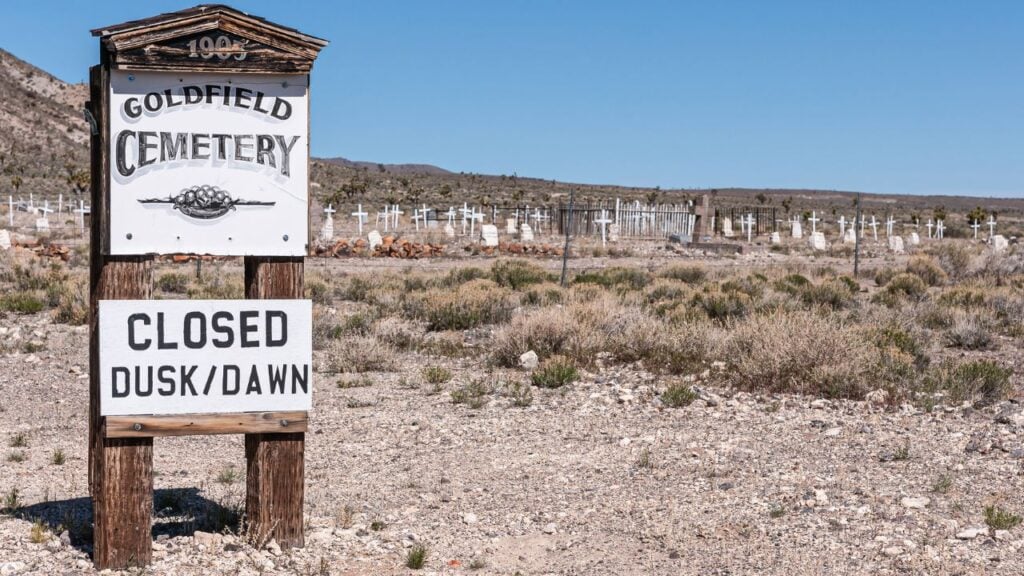
Some Nevada towns feel so remote that even Nevadans wonder who lives there.
The answer might surprise you.
6 Nevada Towns Nevadans Are Surprised Anyone Still Lives In
8 Things Nevada Does Better That Arizonans Won’t Admit

Nevada and Arizona share a border and a short list of things they agree on.
Here’s where Nevada comes out ahead.
