
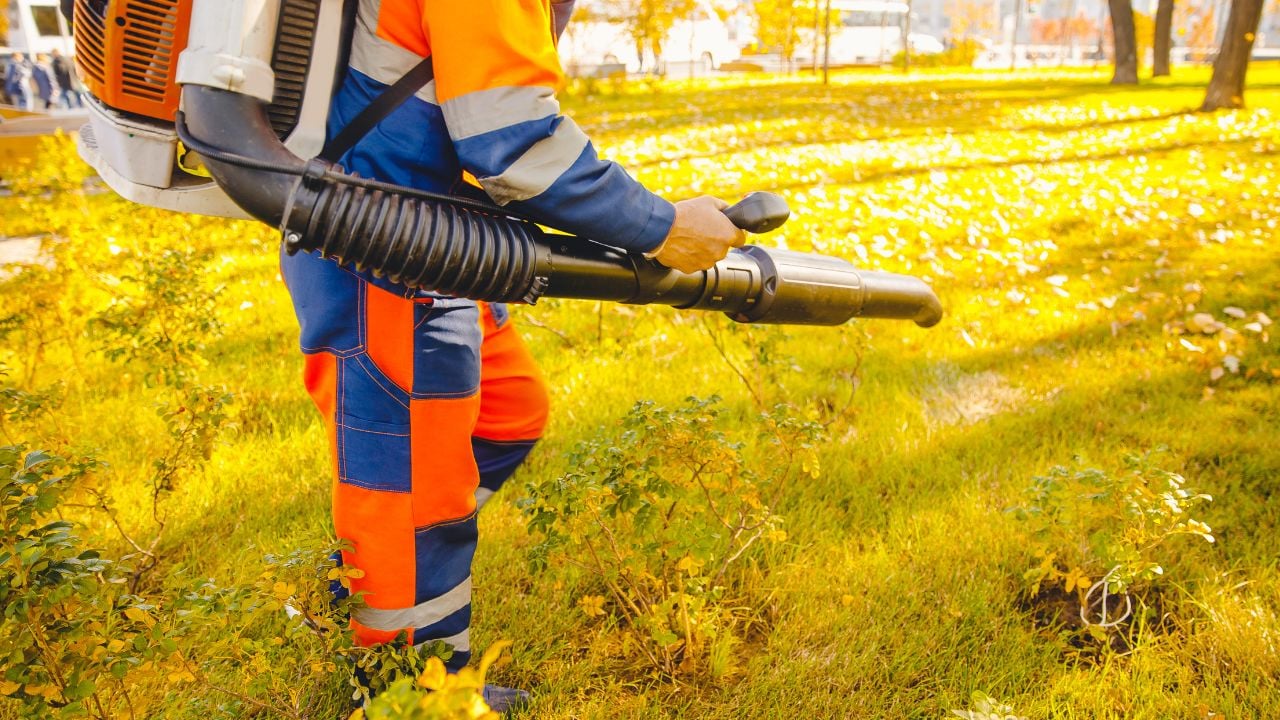
5 Things California’s Gas Leaf Blower Law Changed for Homeowners

Your old gas blower may still work fine, but what happens when it’s time to replace it?
Californians shopping for yard tools may find the state’s rules have changed what’s on the shelf.
Here’s what the gas leaf blower law means for your yard and your next purchase.
Note: This is general information, not legal advice. Air-quality rules are subject to change, so confirm the current requirements with the California Air Resources Board.
1. New Blower Sales
California’s leaf blower law starts at the checkout counter.
For model year 2024 and later, CARB’s regulation sets a limit of 0.00 grams per kilowatt-hour (g/kWh) on the hydrocarbons and nitrogen oxides from most new gas engines you’d buy.
Generators and large pressure washers follow a slower schedule, covered below.
The table for general equipment uses the same limit for every size class, from engines under 50 cc to engines over 825 cc.
Zero-emission equipment fits that limit.
2. Mowers, Trimmers and Chain Saws
The law reaches well past the blower.
The regulation lists lawn mowers, weed trimmers and chain saws as examples of equipment with a small off-road engine.
Those engines face the same limit of 0.00 from model year 2024 on.
Your new mower, trimmer or chain saw falls under that 2024 line.
The definition leaves out engines that move a licensed on-road vehicle, an off-road motorcycle, an all-terrain vehicle, a boat or a snowmobile.
Chain saws are in.
Dirt bikes are out.
3. Portable Generators
Does the leaf blower law give the generator you’d buy the same deadline?
No.
Under CARB’s rule, gas generator engines under 225 cc face a limit of 6.0 g/kWh for model years 2024 through 2027.
Generator engines of 225 to 825 cc face 3.0 over those same years, and bigger ones face 0.80.
Then the limit for every generator size drops to 0.00 with model year 2028.
Psst! How much do you know about California’s small-engine rules? Take our quiz and see if you can ace it.
Quiz
Small Engine Rules Quiz
Answer these questions on California’s small-engine rules and the equipment they cover. We bet you can’t get them all right. Prove us wrong?
A commercial operator running a backpack leaf blower for one hour can generate as much pollution as a car driving how far?
4. Large Pressure Washers
CARB's rule gives large gas pressure washers a slower clock too.
If you're buying one, you'll find engines of 225 cc or more get a separate table.
For model years 2024 through 2027, pressure washer engines of 225 to 825 cc face a limit of 3.0.
Anything bigger faces 0.80.
From model year 2028, both limits drop to 0.00.
A pressure washer with an engine under 225 cc falls into the general table, with its 2024 limit of 0.00.
5. Leftover 2023 Stock
CARB's announcement said older models already on store shelves can still be purchased.
Walnut Creek's city website sums up the state rule this way: Selling new gas-powered leaf blowers has been illegal since January 1, 2024, except for leftover stock from 2023.
Trade coverage of the vote on the rule said gas inventory that was already made could still be bought.
That fits the table because its zero limit begins with the 2024 model year.
If you want a new gas blower, you're looking at older leftover stock, and the city's summary names 2023 as the cutoff.
Model Year and Zero-Emission, Defined
The regulation behind the leaf blower law sorts equipment by model year, and it defines that term.
A model year is the manufacturer's annual production period that includes January 1 of a calendar year.
A manufacturer with no annual production period uses the calendar year.
Zero-emission equipment is defined as gear that produces no emissions of any criteria pollutant in any operating mode.
Landscaping Crews and AB 1346
AB 1346 also reaches the equipment a landscaping crew buys.
Crews are covered too.
The regulation applies to engines made for sale, sold or offered for sale in the state.
So a landscaping company buying new equipment faces the same 2024 line you do.
The state budget set aside $30 million for an incentive program to help landscaping businesses make the switch.
ABC7 reported that the National Association of Landscape Professionals says the money falls short for the state's 55,000 small landscape businesses.
If you hire a landscaping crew, any new equipment it buys falls under the same rules.
The Pollution Behind AB 1346
AB 1346 started with a pollution forecast.
The bill author's press release cited that forecast when it announced the law.
It described AB 1346 as a phase-out of new gas-powered leaf blowers and lawn mowers.
AB 1346 gave CARB a deadline of July 1, 2022 to adopt its regulations.
The goal was zero emissions from these engines by 2024, or whenever CARB determined that was feasible.
The date had wiggle room.
If you're wondering why the date reads that loosely, you can check the bill's text.
It says 2024 or as soon as the board determines it's feasible, whichever is later.
Your Existing Gas Equipment
The rules don't take away the gas blower you already own.
ABC7's report on the vote said equipment made before the 2024 cutoff can still be used and sold.
CARB's announcement said owners can continue to operate their current CARB-compliant gas equipment.
You can keep running the blower or mower you already have.
New equipment is the target.
A City Ban Beyond AB 1346
Walnut Creek shows how a city can go further than the leaf blower law, and its ordinance is separate from AB 1346.
The ordinance took effect April 1, 2026.
The ordinance generally bars anyone who owns, manages or rents property in the city from using gas-powered leaf blowers or hiring others to use them.
If you own property in Walnut Creek, you're responsible even when a contractor does the work.
The city lists a rake or broom, a battery or plug-in electric blower, and a talk with your landscaper as ways to comply.
A rake needs no charger.
8 Defensible Space Rules Californians Get Wrong Every Fire Season
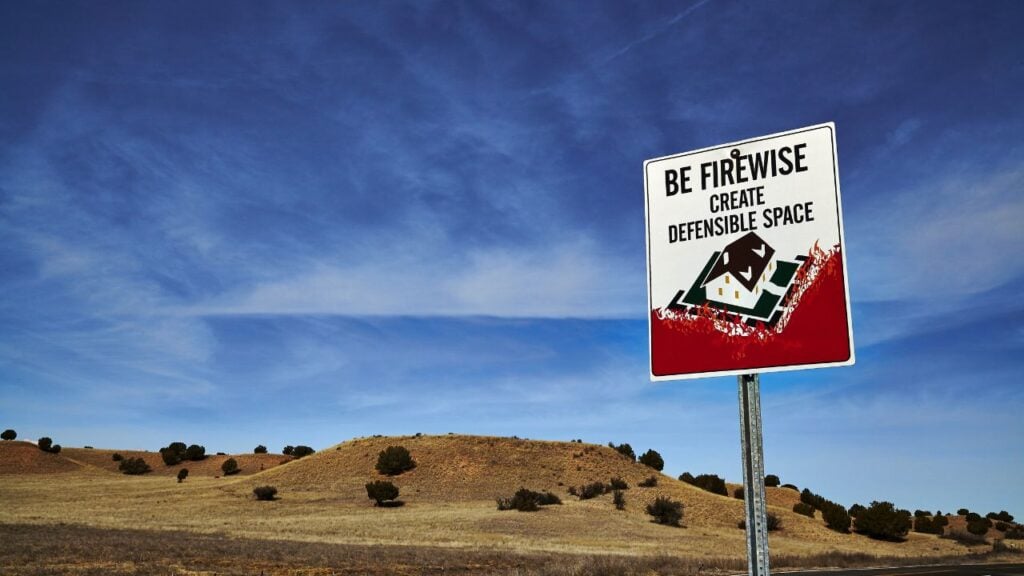
Fire season comes with a rulebook for your yard, and many homeowners get parts of it wrong.
These are the defensible space rules Californians get wrong, and the points worth a second look.
8 Defensible Space Rules Californians Get Wrong Every Fire Season
9 Solar Sales Promises Californians Shouldn't Sign Without Checking
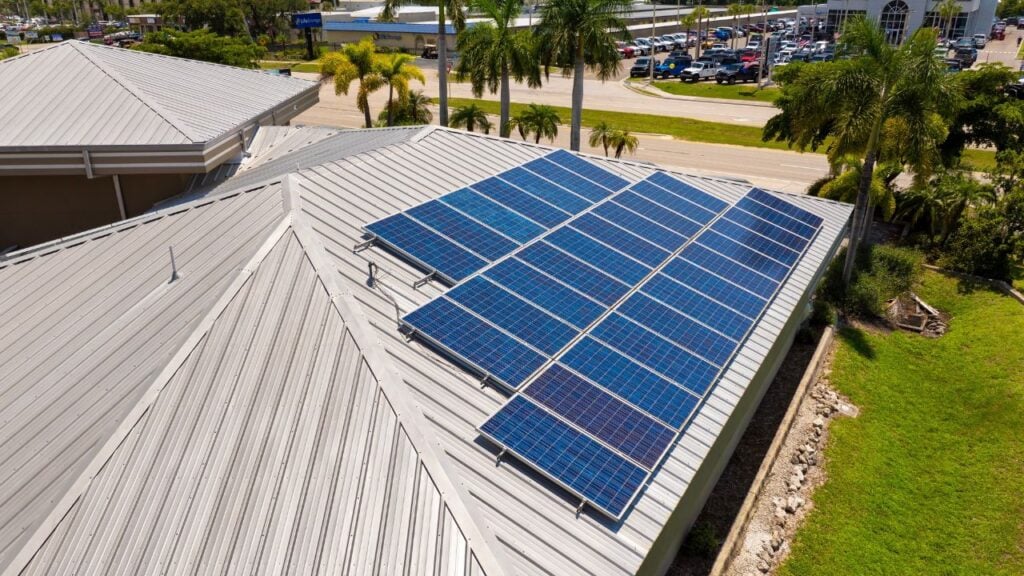
Solar pitches come with a lot of promises, and the fine print doesn't always match them.
These are the promises worth checking twice before you sign a contract.
9 Solar Sales Promises Californians Shouldn't Sign Without Checking
