
7 Wild Animals Floridians Can Be Fined for Feeding

Tossing a little food to a wild animal can feel kind.
But in Florida, it can get you fined, and the list goes well beyond the animals you’d expect.
Here are the wild animals Floridians should leave unfed, and why.
Note: This is general information, not legal advice. Wildlife feeding rules and penalties are subject to change, so confirm the current requirements with the Florida Fish and Wildlife Conservation Commission.
1. Black Bears
Feeding a black bear breaks a rule from the Florida Fish and Wildlife Conservation Commission (FWC).
The rule bans intentionally feeding bears.
Once FWC sends you written notice, the rule also bans leaving out food or garbage that attracts bears and is likely to create a nuisance.
You have 30 days after you receive a citation to pay the $100 civil penalty.
2. Alligators
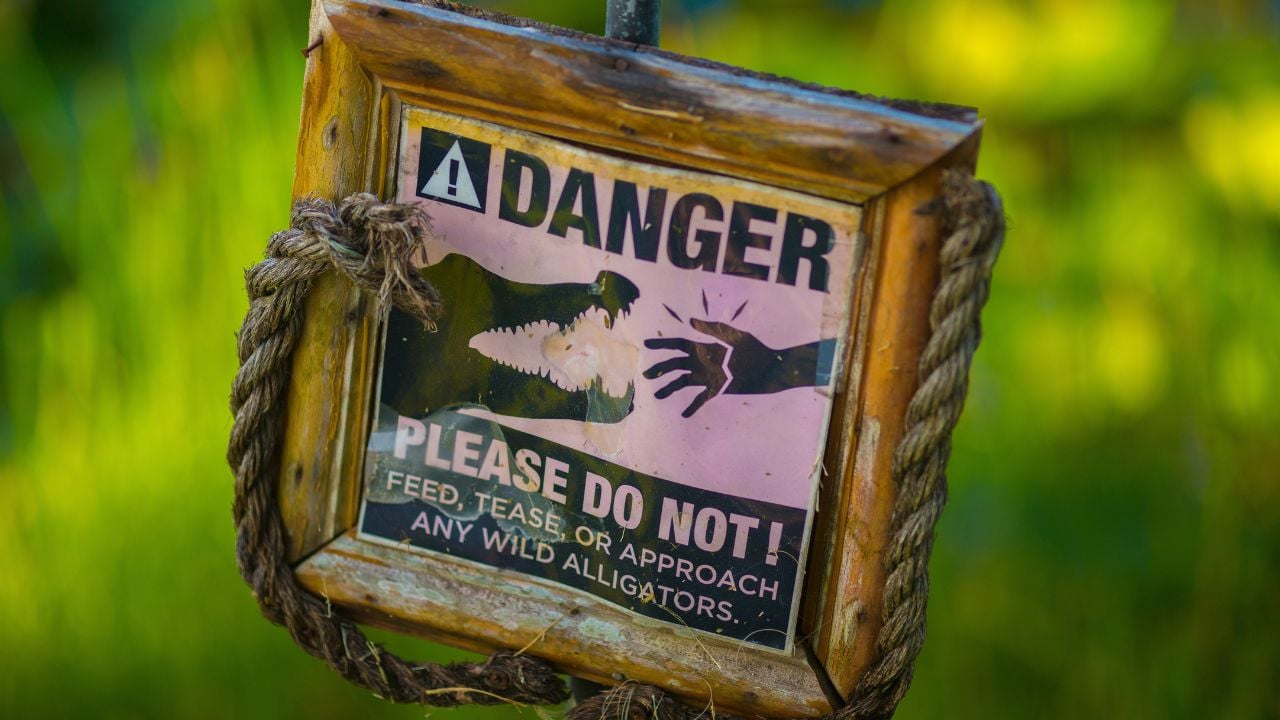
Alligators live in all 67 of Florida’s counties, and rule 68A-25.001 bars you from feeding them in any county.
The rule also forbids you from enticing an alligator or crocodile with food, unless the animal is held in captivity under a permit.
What a Wildlife-Feeding Violation Costs You
You owe a $100 civil penalty for a first violation, and it isn’t a crime.
A second violation is a second-degree misdemeanor, with up to 60 days in jail and a fine of up to $500.
That applies when all your violations involve bears or alligators, or when all involve other wildlife.
If all your violations involve bears or alligators, a third violation is a first-degree misdemeanor.
It carries up to one year in jail and a fine of up to $1,000.
A fourth violation in that case is a felony of the third degree.
It carries up to five years in prison and a fine of up to $5,000.
3. Sandhill Cranes
Feeding sandhill cranes has been illegal in Florida since 2002, under FWC’s feeding rule.
FWC says cranes that learn to link people with food can lose their fear and grab food from your hand.
Cranes drawn to yards for food are put at risk when they cross roads.
Your first citation for feeding a crane is the $100 civil penalty.
4. Pelicans
FWC’s feeding rules cover pelicans, and the rule bans intentionally feeding them.
It also bans placing food that attracts pelicans and changes their natural behavior.
You break that part when the change harms the survival or health of a local population.
If you’re cited again for feeding pelicans, that second violation is a second-degree misdemeanor.
Psst! How much do you know about Florida’s wildlife? Take our quiz and see if you can ace it.
Quiz
Florida Wildlife IQ
Answer these questions on Florida’s wildlife laws and the animals they protect. We bet you can’t get them all right. Prove us wrong?
Why do sandhill cranes sometimes scratch at windows and shiny cars?
5. Wild Monkeys
Feeding wild monkeys in Florida has been illegal since February 11, 2018, when FWC added them to its feeding rule.
Under the rule, feeding includes placing food or garbage, allowing someone to place it, and offering it in a way that attracts the animals.
So a snack you leave out can break the rule as easily as a snack you hand over.
FWC says feeding wild monkeys raises the health risk to people because it brings the monkeys into closer contact with them.
If you're cited for feeding monkeys, a first violation is a noncriminal infraction.
6. Manatees
Manatees are protected by the federal Marine Mammal Protection Act, the federal Endangered Species Act and Florida's Manatee Sanctuary Act.
FWC says it's prohibited to give manatees food or use water to attract them to your boat, dock or marina.
Water counts too.
If you're convicted under state law, you face a fine of up to $500, up to 60 days in jail, or both.
Federal law goes higher, with fines up to $100,000, up to a year in prison, or both.
7. Dolphins
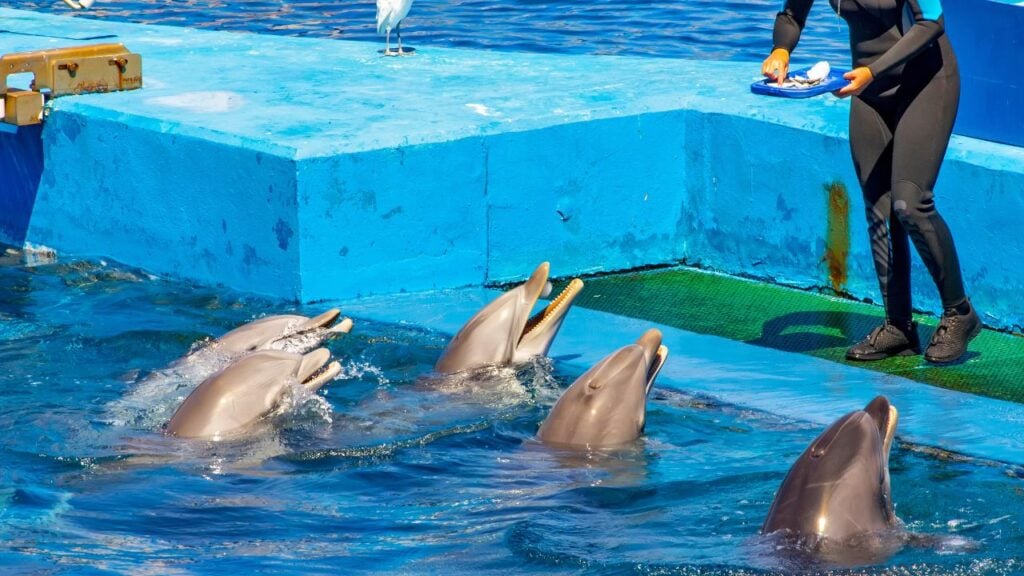
Feeding wild dolphins is illegal under federal law, and the National Oceanic and Atmospheric Administration (NOAA) says the ban covers feeding or harassing wild marine mammals.
The Marine Mammal Protection Act sets the penalties, which include civil penalties of up to $36,498.
If you're convicted of a criminal violation, you can face up to one year in prison.
At its top, that civil penalty is about 365 times Florida's $100 first-violation penalty.
The Harm FWC Cites
FWC says wildlife you feed can become dependent on humans for food and lose their natural fear of people.
That's true whether you feed wildlife on purpose or by accident.
A food source or feeding station often draws large numbers of wildlife together, which exposes them to stress and competition and spreads disease.
Property damage and vehicle collisions are among the conflicts that follow.
What Happens After a Citation
Florida's wildlife-feeding law counts any judicial disposition other than acquittal or dismissal as a violation.
If you pay the civil penalty, you're deemed to have admitted the violation and waived your right to a hearing.
If you refuse a citation, fail to pay the penalty or fail to appear in county court as required, you commit a second-degree misdemeanor.
Where the Rule Stops
Florida's wildlife-feeding penalty law doesn't cover every FWC rule.
If you keep an animal in captivity, section 379.412 doesn't cover FWC rules about that animal.
If you hunt, the section also leaves out FWC rules that restrict taking game over bait or intentionally placed food.
The same goes for rules that restrict hunting near a feeding station.
Wildlife Hotlines
If you see someone feeding wildlife, FWC takes reports on its Wildlife Alert Hotline at 1-888-404-3922.
If you see someone feeding a dolphin or manatee, NOAA Fisheries takes reports on its Enforcement Hotline at (800) 853-1964.
If you run into a problem alligator, FWC's Nuisance Alligator Hotline is 866-392-4286.
8 Florida Beach Rules Locals Follow That Are Never Posted

Where you set a folding chair on a Florida beach can matter.
The answer starts with which stretch of sand it sits on.
8 Florida Beach Rules Locals Follow That Are Never Posted
7 Florida Roadside Attractions Floridians Assume Closed Years Ago
Think Marineland disappeared along with the drive-in theater and the orange grove billboard?
It nearly did.
7 Florida Roadside Attractions Floridians Assume Closed Years Ago
