
The Real Reason Louisiana Has Parishes Instead of Counties

Louisianans who mention their parish to an out-of-state friend may get a puzzled look.
It’s a fair question, and the answer goes back further than many people realize.
Here’s how Louisiana ended up with parishes instead of counties.
How Church Districts Became Parishes
Parishes began as church districts long before they became units of government.
By the late 1700s, the Louisiana colony had twenty-one of these church districts, according to 64 Parishes.
Each one had to build houses of worship, celebrate mass weekly if not daily, administer sacraments, educate children, collect tithes and maintain cemeteries.
That work required a sense of community geography based around church buildings, and under Spain the districts were called parroquias.
In 1807, the Americans realized those twenty-one church units did a better job of regionalizing settlement patterns than their twelve sprawling counties.
After some adjustments, they adapted the church units into nineteen official parishes.
The State Library of Louisiana says the new boundaries followed Spanish tradition by tracking ecclesiastical boundaries.
If the word “parish” has always sounded churchy to you, that’s where it comes from.
Why Twelve Counties Disappeared
Parishes replaced a county map the Americans had drawn only two years earlier.
In 1805, the Legislative Council of the Orleans Territory divided the area into twelve counties, including Orleans, German Coast, Attakapas and Opelousas.
The counties even made it into the 1812 state constitution, which grouped them into districts for electing senators.
Counties lingered in the law long after 1807.
An 1824 act still referred to the county of German Coast, making the local parish sheriff its sheriff too, according to the 64 Parishes encyclopedia.
In 1843, a German Coast sheriff tried to pay his state taxes with $290 in compensation that had been issued as worthless notes from a defunct bank.
The state had to pass a bill to sort it out.
If you’re looking for where “county” dropped out, check the 1845 constitution.
It used “parish” roughly a hundred times, while “county” and “counties” had completely disappeared.
The word “county” or “counties” appears nineteen times in the published proceedings of the constitutional convention.
Why it vanished from the final document is a mystery, the encyclopedia’s author says.
The State Library of Louisiana says no later constitution brought the word back.
Parishes were more familiar and more popular in the mostly French-speaking, Catholic south, where the majority of the population lived.
Counties didn’t catch on there as parishes did.
Where Parishes Fit in Federal Data
Louisiana’s parishes appear in federal data under the Census Bureau’s heading for a county or statistically equivalent entity.
Alaska has no counties either, and the Census Bureau treats its boroughs and census areas as the equivalent.
Maryland, Missouri, Nevada and Virginia go a different direction, with independent cities that sit outside any county.
The District of Columbia and Guam have no primary divisions at all, so each is treated as one equivalent entity in decennial censuses.
How Parishes Got Police Juries
Police juries, the elected bodies that govern most parishes, date to a territorial law passed in 1811.
They serve as both the legislative and executive branches of parish government.
The 1811 law let each police jury set up a gendarmerie in its parish to go after runaway enslaved people.
64 Parishes says the “police” in the name reflected that law enforcement purpose, particularly regarding enslaved people.
Modern police juries can enact and enforce ordinances, maintain public works and levy taxes.
Police juries also house and maintain the courts and the offices of the assessor, coroner, clerk of court, registrar of voters, district attorney and sheriff.
Twenty-three of the state’s sixty-four parishes have home rule charters instead, and those parishes can choose other forms of government, such as council-president or council-manager systems.
Most of the rest are still run by police juries.
Psst! How much do you know about Louisiana’s history? Take our quiz and see if you can ace it.
Quiz
Louisiana History IQ
Answer these questions on Louisiana’s history, landmarks, and parishes. We bet you can’t get them all right. Prove us wrong?
The Battle of New Orleans was fought on January 8, 1815. How long before that had the treaty ending the War of 1812 been signed?
Why Southeast Parishes Run River to Sea
Southeastern parishes look nothing like the squarish ones in the north.
Parishes in the north, including Claiborne, Union, Bienville, Jackson and Ouachita, are compact polygons, squarish or roundish.
The majority of the state's parishes are compact polygons, and that includes some in the southwest, such as Acadia and Evangeline.
Orleans, St. Bernard, Jefferson, Plaquemines, Lafourche and Terrebonne look different, with long slices that run from river to sea or bayou to bay.
The older parts of southeastern Louisiana tended to produce those protruding shapes.
Most residents of those long parishes still live along their riverine frontages, while most of their rears remain marsh.
If you trace a line from Union Parish down toward Terrebonne, you cross from squarish parishes into river-and-bayou slices.
Where people lived is what the 1807 officials said the church districts captured better than counties, according to 64 Parishes.
Terrace and prairie ground suits compact shapes better than fractured coastal land or meandering rivers.
The state's official website lists 64 parishes today, up from nineteen in 1807.
More were added as former Spanish West Florida and the old Neutral Ground by the Texas–Mexico border joined the state, and as sprawling prairie and piney woods parishes were split into smaller ones.
10 Things Louisiana Librarians Know About a Town Before Anyone Else

Your local librarian can see a town's next budget showdown coming before a single yard sign goes up.
These are the things Louisiana librarians know about a town before anyone else.
10 Things Louisiana Librarians Know About a Town Before Anyone Else
5 Items Louisianans Clear Off Grocery Shelves First When a Storm Enters the Gulf
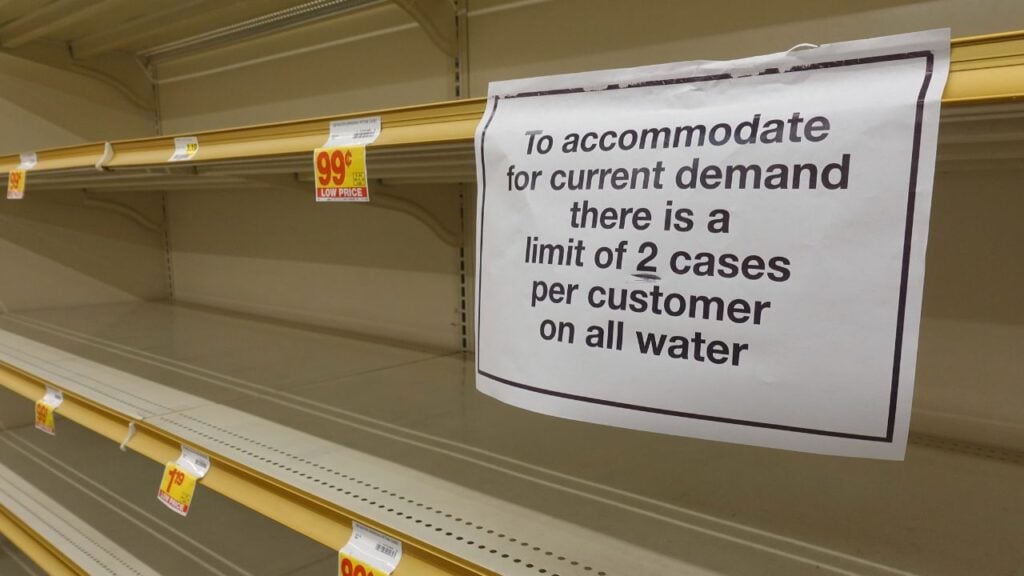
Certain items disappear from Louisiana grocery shelves before the rest of the aisle looks touched.
It happens storm after storm, before the last-minute crowd even shows up.
5 Items Louisianans Clear Off Grocery Shelves First When a Storm Enters the Gulf
