
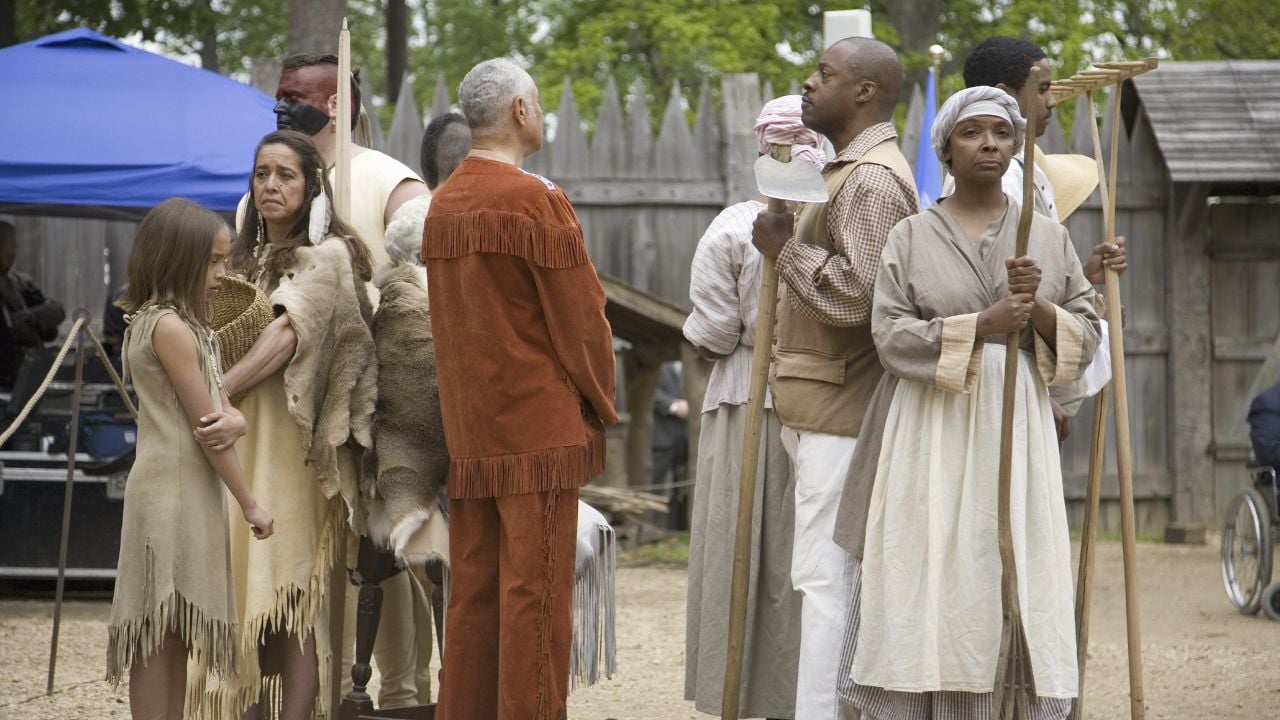
12 Things Virginians Learned in School About History That Historians Have Since Corrected

Some of the stories you learned in a Virginia classroom were told like they’d never change.
But historians have kept digging since, and several of those lessons look pretty different now.
Here’s what you may have been taught, and what the evidence shows today.
1. Pocahontas and Smith
Many history lessons tell you that Pocahontas saved John Smith’s life.
Historians now call that rescue unlikely to be true.
Smith’s famous version of the story appeared in print in 1624, years after the event.
A letter Smith wrote a few months after his 1607 visit says only that Powhatan feasted him and then interviewed him.
What Smith saw may have been a mock execution, a ritual Powhatan likely used to adopt him as a chief.
Pocahontas was perhaps eleven.
Encyclopedia Virginia says she probably wasn’t even there and treats the romance between them as unlikely to be true, too.
2. Jamestown’s Lost Fort
If you’ve heard that the 1607 fort washed into the James River, the idea goes back to eyewitness accounts from as early as 1837.
Severe erosion on the western shore led to a concrete seawall in 1902.
Archaeologist William Kelso began digging between the church tower and the river on April 4, 1994.
He doubted the lost-fort story.
Within three archaeological seasons, his team had evidence that the fort’s remains were on dry land.
Psst! How much do you know about colonial and Revolutionary Virginia? Take our quiz and see if you can ace it.
Quiz
Colonial Virginia Pop Quiz
Test yourself on colonial, Revolutionary and early-republic Virginia. We bet you can’t get them all right. Prove us wrong?
Cornwallis stayed away from the Yorktown surrender ceremony. Which officer stood in for him?
3. Cavalier Ancestors
According to Encyclopedia Virginia, the Cavalier story you may have heard says Royalists flocked to Virginia after the king was defeated in England.
Most English immigrants of the 1600s were indentured servants or middling folk, not Cavalier families.
Relatively few members of the colony's elite supported the king, even in England.
4. 1619 and the First Africans
Some lessons treat the Point Comfort landing as the first arrival of Africans in North America.
Two English ships, the White Lion and the Treasurer, carried Africans to Point Comfort in late August 1619.
English crews had taken them from a Portuguese vessel.
Research suggests the people aboard were likely taken from Ndongo, in present-day Angola.
The National Park Service describes them more carefully: They were the first enslaved Africans in English-occupied North America.
The Spanish had brought enslaved Africans to parts of what became the southern and southwestern United States before then.
The 1620 census counted thirty-two Africans in Virginia.
If you learned the short version, Ndongo and the Spanish record are what it leaves out.
5. Jamestown's Drought Years
Ralph Hamor blamed misgovernment, idleness and faction for the colony's early deaths.
Tree-ring studies show the colonists arrived at the start of a seven-year drought, running from 1606 to 1612.
That was the driest period in 770 years.
Historians now weigh that drought alongside the colonists' lack of skills, warfare and a siege of Jamestown, according to Encyclopedia Virginia.
Weakness and fatigue may have looked like laziness but were illness.
6. Patrick Henry's Speech
Patrick Henry's liberty-or-death speech is his most famous quote.
Henry spoke in March 1775.
His words weren't transcribed.
The version you know comes from biographer William Wirt, who published the text in 1817, 42 years later.
Wirt began collecting recollections in 1808, nine years after Henry's death, according to Colonial Williamsburg.
Thomas Jefferson was among those whose recollections he gathered.
Some historians think the words attributed to Henry were written later by Wirt or by attorney St. George Tucker.
7. Washington's Cherry Tree
Mount Vernon, Washington's home, says the tale puts the chopping at Ferry Farm, across from Fredericksburg, Virginia.
The tale began with Mason Locke Weems, a traveling minister and bookseller, whose Washington biography came out in 1800.
The cherry tree didn't appear until the fifth edition in 1806.
Weems' claims have never been verified.
McGuffey's version appeared in The Eclectic Second Reader for almost twenty years.
That reader taught the myth of the cherry tree to millions of American students.
If you learned it as a lesson about honesty, you learned a story a bookseller added to a later edition.
8. Washington's Teeth
If wooden teeth are what you remember, Mount Vernon says otherwise: His dentures weren't made of wood.
Its list of materials includes human teeth, cow, donkey or horse teeth, hippopotamus and walrus ivory, and gold.
Some of his dentures may have taken on a wooden look after staining.
A May 1784 entry in Washington's account books records a payment to enslaved people for nine teeth, noted as on account of a French dentist.
Those were probably teeth bought for the stock of the dentist, Jean Pierre Le Mayeur, not for Washington's mouth.
9. Civil War Causes
Many students learned a version of Civil War history built on states' rights and tariffs.
That version comes from what historians call the Lost Cause.
Its supporters stressed states' rights, the constitutionality of secession, and tariff disputes instead of slavery.
Historian Alan Nolan argued the opposite, that arguments over slavery caused the secession crisis.
Encyclopedia Virginia points to two textbooks as examples of the Lost Cause in schoolbooks.
A 1908 textbook, Mary Tucker Magill's History of Virginia, described enslaved people as happy in their condition.
A 1964 textbook, Virginia: History, Government, Geography, said strong affection existed between masters and enslaved people in a majority of Virginia homes.
Confederate Vice President Alexander Stephens described slavery as the foundation of the Confederacy, a statement about the Confederacy as a whole, not Virginia.
10. State-Commissioned Textbooks
The Virginia Senate created the Virginia History and Textbook Commission in 1950, in response to the rising civil rights movement, according to Encyclopedia Virginia.
The books it produced covered grades four, seven and eleven.
The seventh-grade book said life for enslaved people was generally happy.
The eleventh-grade book described slavery as a kind of “comprehensive social security.”
The seventh-grade book also called the Civil War the War Between the States.
By 1965, a sizeable body of Virginia educators considered the books propaganda.
The Virginia Board of Education voted unanimously in 1972 to drop the books, after a study found they painted a rosy picture of slavery.
If you went to school in Virginia between the late 1950s and 1972, these may be the books you used.
11. Black Confederate Soldiers
As recently as 2010, a Virginia fourth-grade history textbook told students that thousands of Black soldiers fought for the Confederacy.
The book was Our Virginia: Past and Present.
It said two battalions of Black soldiers served under Stonewall Jackson.
William & Mary historian Carol Sheriff pointed out that historians had debunked the account.
Virginia's Department of Education advised teachers using the book not to repeat the claim to students, saying it fell outside the mainstream of Civil War scholarship.
A committee of content specialists and teachers had ruled the book accurate and unbiased before it was adopted.
If you studied from that book, you saw a claim that historians reject.
12. Surrenders After Appomattox
If you were taught that the war ended at Appomattox, the National Park Service's Appomattox Court House site calls that belief erroneous.
Robert E. Lee surrendered only the Army of Northern Virginia, on April 9, 1865.
Lee and Grant met in the parlor of the McLean House, a private home.
Edmund Kirby Smith's Trans-Mississippi army agreed to terms on May 26 and surrendered on June 2.
It took months.
Stand Watie's forces, in present-day Oklahoma, were the last Confederate land forces to surrender, on June 23.
The Shenandoah, the last active Confederate naval vessel, steamed into Liverpool, England, on November 6.
4 Arguments Virginians Have About Which Half of the State Counts as the South

Your answer may depend on which part of Virginia you call home.
These four arguments show where people split.
4 Arguments Virginians Have About Which Half of the State Counts as the South
9 Things Virginians Never Do at a Rest Stop on I-95

Pulling off the interstate for a break looks simple.
Virginians have a list of things they skip when they do.
