
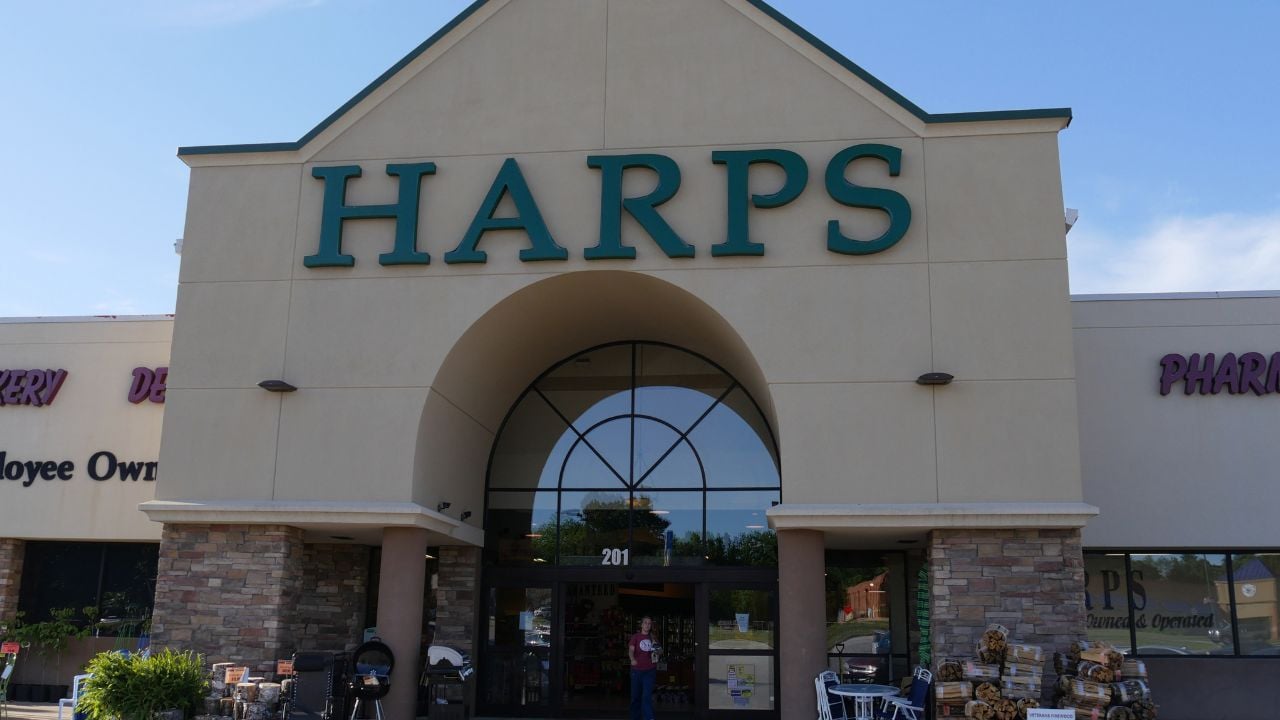
7 Things to Know About Harps, the Employee-Owned Arkansas Grocer

Harps has been part of grocery runs around Arkansas for generations.
Lots of shoppers know the store, but fewer know who owns it or how it got so big.
Here’s what to know about the hometown grocer and how it grew.
1. 10Box Cost Plus Stores
Harps runs a second store format called 10Box Cost Plus.
Its pricing works differently from a regular Harps.
At 10Box, you pay the actual cost of each item plus 10% at checkout, according to Talk Business & Politics.
As of early 2025, you could find 10Box stores in Arkansas, Missouri and Oklahoma.
The Van Buren store, set to open March 5, 2025, would be the 14th.
A 2017 Washington Times report found that shoppers pack groceries themselves and that there’s no full-service deli or bakery.
What 10Box Counts as Cost
Harps’ 10Box Cost Plus format defines cost as every expense of getting a product from the manufacturer to the shelf, according to Talk Business & Politics.
Harps told Supermarket News in 2023 that the 10% covers its operating costs and a nominal profit.
If an item costs 10Box $50, you’d pay $55 for it under that rule.
2. SNAP Online Orders
If you get Supplemental Nutrition Assistance Program (SNAP) benefits, Harps began accepting them for eligible online orders in 2021.
The Arkansas Department of Human Services announced the change on Oct. 28, 2021.
The U.S. Department of Agriculture’s page of Arkansas retailers accepting SNAP payments online lists Harps Food Stores and 10 Box Cost Plus.
3. Rewards App
The Harps rewards app launched in 2021 through a partnership with a technology company called Birdzi.
Harps had 114 stores in Arkansas, Oklahoma, Missouri and Kansas when it launched the program, according to Chain Store Age.
The program uses personalized ad flyers, shoppable recipes and digital coupons.
The launch announcement said the flyers and digital coupons came in response to local newspapers ceasing the printing of grocery ads.
The app is listed on Google Play as my Hometown Rewards.
If you download it, the digital coupon wallet works only at participating stores.
4. Food Palace Rebrand
Harvard Harp opened Harps Cash Grocery in Springdale in 1930 with his $500 life savings, according to the Encyclopedia of Arkansas.
The store reopened as Food Palace in 1954 and was re-branded as Harps in 1956.
So if you’ve shopped at a Harps for years, you’re using the same family name the store opened under in 1930.
5. Employee Ownership Timeline
If you’ve wondered how a grocery company becomes employee-owned, Harps used an employee stock ownership plan (ESOP) and took years to finish.
The Encyclopedia of Arkansas says the Harp family began the process after the company bought a chain of ten grocery stores in 1995.
Over the next several years, Harps bought stock from the family and other investors.
The process finished in 2001, just after Gerald Harp retired.
The Shelby Report, a grocery trade publication, reported that a share of Harps stock was valued at $27.90 in 2001 and $445.40 for 2018.
Kim Eskew will retire as Harps’ chairman and chief executive officer on Jan. 15, 2027.
J. Max Van Hoose, a grandson of founders Harvard and Floy Harp, will succeed him.
The report said Eskew’s tenure spanned the 2001 transition to 100 percent employee ownership, which made Harps the largest employee-owned company in Arkansas.
6. Small-Town Growth
By the start of 2026, Harps had 160 stores in six states, according to the Encyclopedia of Arkansas.
The company had 11 stores in 1977 and 82 in 2016.
Harps’ chairman and chief executive officer told the magazine in 2024 that many of the stores are in small communities.
For some customers, a Harps might be the closest grocery store within 50 miles.
If you live in a small town, that may describe your Harps.
7. Dyer Foods Deal
Harps announced in March 2026 that it would buy 18 stores from the owners of the independent grocer Dyer Foods and enter Tennessee and Kentucky.
The Shelby Report described the Dyer Foods acquisition on June 15, 2026 as the largest of the independent grocery deals Harps had completed over the past year.
By September 2026, Harps operated 177 stores in eight states, including Tennessee and Kentucky.
Seventeen of the 18 stores are in western Tennessee.
One is in Fulton, Kentucky.
The stores include Food Rite, Save-A-Lot, Piggly Wiggly and Cash Saver locations, according to Supermarket News.
Harps planned to convert the two Cash Saver stores to the cost-plus format called 10Box Cost Plus.
If you live in Jackson, Dyersburg or Covington, the Shelby Report’s list of towns with these stores includes yours.
Revenue and Private Company Rank
Harps’ revenue for its fiscal year that ended in August 2023 was $1.56 billion, according to Arkansas Business.
The figure put Harps at No. 12 on the magazine’s 2024 list of the largest private companies in Arkansas.
Walmart and Edwards Food Giant are among the grocers Harps competes against.
Psst! How much do you know about employee-owned companies and Arkansas food? Take our quiz and see if you can ace it.
Quiz
Arkansas Food and ESOP Quiz
Answer these questions on employee-owned companies and Arkansas food. We bet you can’t get them all right. Prove us wrong?
Arkansas has an official state fruit and an official state vegetable, and they’re the same food. Which one?
Walmart's Backyard
Harps' home office in Springdale is 17 miles from Walmart's headquarters, according to a 2019 Shelby Report profile.
Harps competed with 334 Dollar General stores in the markets where it operates.
More than 30 Harps stores had pharmacies in 2019, so if you fill prescriptions at a Harps, your store may be among them.
6 Things Arkansas Shoppers Get Wrong at the Brookshire's Meat and Produce Counters
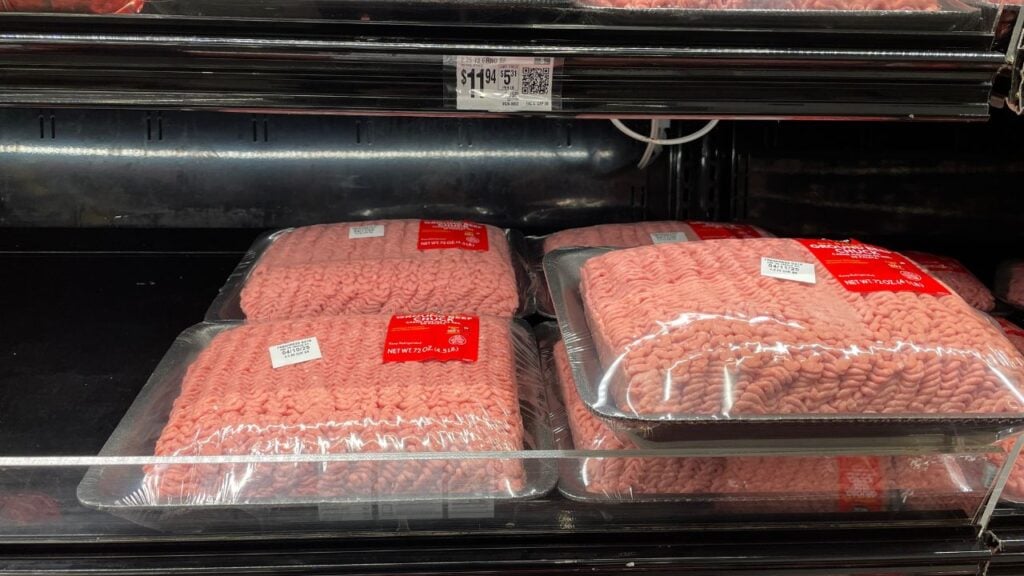
A lot of Arkansas chicken lands in a Brookshire's meat case before it ever reaches your kitchen.
What happens between the case and your cart is where many shoppers get it wrong.
6 Things Arkansas Shoppers Get Wrong at the Brookshire's Meat and Produce Counters
8 Restaurant Chains Arkansans Defend Harder Than They Should

Arkansans guard their home-grown restaurant chains, flaws and all.
When a chain grows past the state line, they defend it harder than they probably should.
8 Restaurant Chains Arkansans Defend Harder Than They Should
