

70% of Oklahomans Say They’ve Cut Back on Restaurants and Takeout, a Survey Found

Dinner out used to be the easy meal.
Now rising menu prices may have a lot of Oklahoma households rethinking how often they do it.
Here’s what a recent survey found, and what it can and can’t tell you.
Note: This is general information, not financial advice. Survey results, prices and tax rules are subject to change.
What the Survey Found
The release reports a single survey of 645 respondents, taken in May 2026.
32% of respondents cut back a lot over the past year because of higher prices.
Another 38.2% said they cut back some.
Add the two groups together and you get 70.2%, a total the release describes as more than 70%.
In a group of 645, that works out to roughly 450 people.
The release stops there.
It lists no margin of error and no breakdown by income, age or restaurant, so you can’t tell who cut back the most or where they stopped eating.
Who Released the Survey
The State Chamber of Oklahoma released the survey results in a June 3, 2026 news release.
The public radio network KOSU covered the survey on June 8 and put the figure at 70 percent.
Its story described the Chamber as a business policy organization.
That makes it a sponsor-run poll, meaning the group that put out the results is the group behind the survey.
The Chamber released the numbers ahead of the June 16 vote on State Question 832, a ballot measure to raise Oklahoma’s minimum wage to $15 an hour by 2029.
The Chamber opposed that measure.
Voters rejected it on June 16.
Knowing who sponsored a poll is part of reading it, whichever way you vote.
Neither the release nor KOSU’s story tells you how respondents were reached.
Treat it as a snapshot.
Restaurant Prices in the South
Prices for food away from home were rising before the survey was taken, according to the U.S. Bureau of Labor Statistics.
In the bureau’s South region, which includes Oklahoma, the Consumer Price Index for food away from home rose 3.6% over the 12 months ending April 2026.
Food bought at the grocery store rose 2.5% over the same 12 months.
By August, the 12-month gain for food away from home had slowed to 2.9% in the South.
It’s slower, but still rising.
That’s still above the 1.9% rise for food at home in the region.
If a $50 dinner out rose 3.6%, you’d pay $51.80.
Order out once a week, and your extra $1.80 adds up to about $94 over 52 weeks.
What the South Region Covers
The Consumer Price Index figures above for food away from home come from the bureau’s South region, which has 16 states and Washington, D.C.
Along with Oklahoma, the region includes Texas, Arkansas, Louisiana and Florida.
So the 3.6% and 2.9% reflect prices across that whole area, and neither is an Oklahoma-only number.
Menu Prices Nationwide
Nationwide, menu prices have been rising faster than grocery prices, too.
The bureau’s national index for food away from home rose 3.4% over the 12 months ending August, against 2.2% for food at home.
KOSU’s story cites a McKinsey analysis that found the cost of eating out increased faster than the cost of groceries in 2024 and 2025.
The U.S. Department of Agriculture’s Economic Research Service expects food-away-from-home prices to rise 3.5% in 2026, based on its September update.
That matches the 20-year average.
Prices rose 4.1% in 2024 and 3.8% in 2025.
If you eat out often, those gains reach your check.
What Spending Data Shows
The bureau’s latest consumer spending report covers 2024, so it can’t confirm a May 2026 survey.
In that report, the average household spent $3,945 on food away from home in 2024.
That was up just $12 from 2023.
Those are national averages for 2024, which is before the period the Chamber asked about, so your household’s total may look different.
The report also cites a 2025 survey in which 37% of polled consumers said they were dining out less often.
The questions differed.
That poll asked about dining out less, while the Chamber asked about cutting back a lot or some on restaurants and takeout.
So you can’t set the 37% beside the Chamber’s 70% as a like-for-like match.
Food away from home made up 56.3% of all U.S. food spending in 2025, the Economic Research Service reports, counting purchases by consumers, businesses and government.
Psst! How much do you know about what Americans eat and spend? Take our quiz and see how many you can get right.
Quiz
Eating Out Pop Quiz
Answer these questions on Oklahoma food symbols and household spending. We bet you can’t get them all right. Prove us wrong?
In 2007, Oklahoma lawmakers named which of these the official state vegetable?
Restaurant Meals and the Grocery Tax
Restaurant meals and groceries have been taxed differently in Oklahoma since August 29, 2024.
That's when the state stopped charging its 4.5% sales tax on groceries.
The cut was estimated to save the average Oklahoman about $104 a year, the public radio station KGOU reported in 2024.
Restaurants got no such cut.
Food you buy at a restaurant counts as prepared food, so you still pay the state tax on it, plus any local sales tax.
Local sales taxes still apply to groceries, so a cart of exempt items can still be taxed.
The station's list of foods that stay taxed includes restaurant takeout and delivery, hot rotisserie chicken, hot soups and deli sandwiches made by the store.
Fresh produce, bread, eggs and cereal, on the other hand, are exempt from the state's 4.5%.
6 Fence Law Rules That Decide Who Pays in Oklahoma
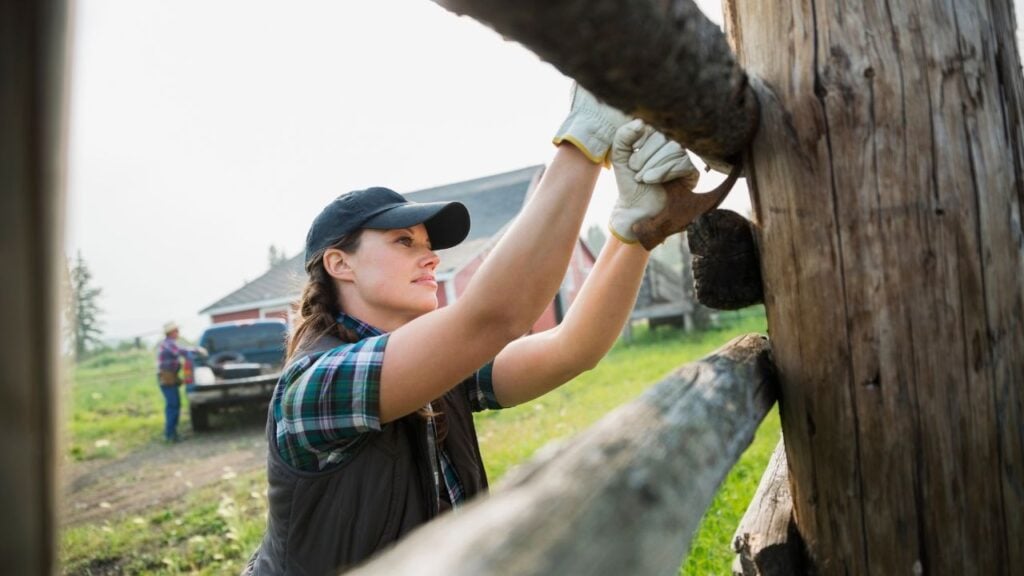
A fence in Oklahoma has to meet a standard before it counts as one.
When it falls short, the rules decide who pays.
6 Fence Law Rules That Decide Who Pays in Oklahoma
5 Oklahoma Onion Burger Rules Cooks Won't Break
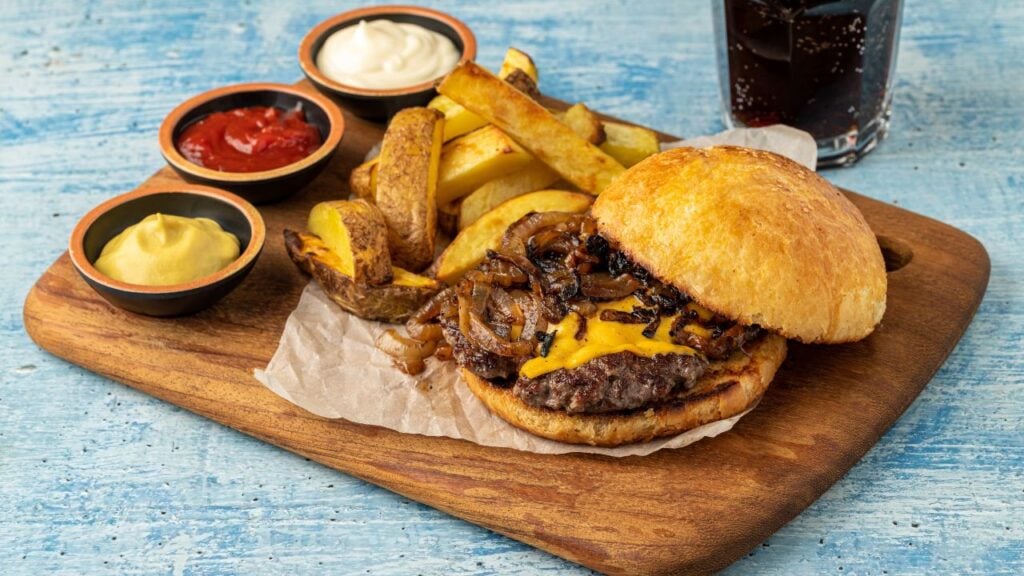
An Oklahoma onion burger looks simple enough to copy at home.
A few small decisions separate a burger that tastes right from one that merely has the right ingredients.
