
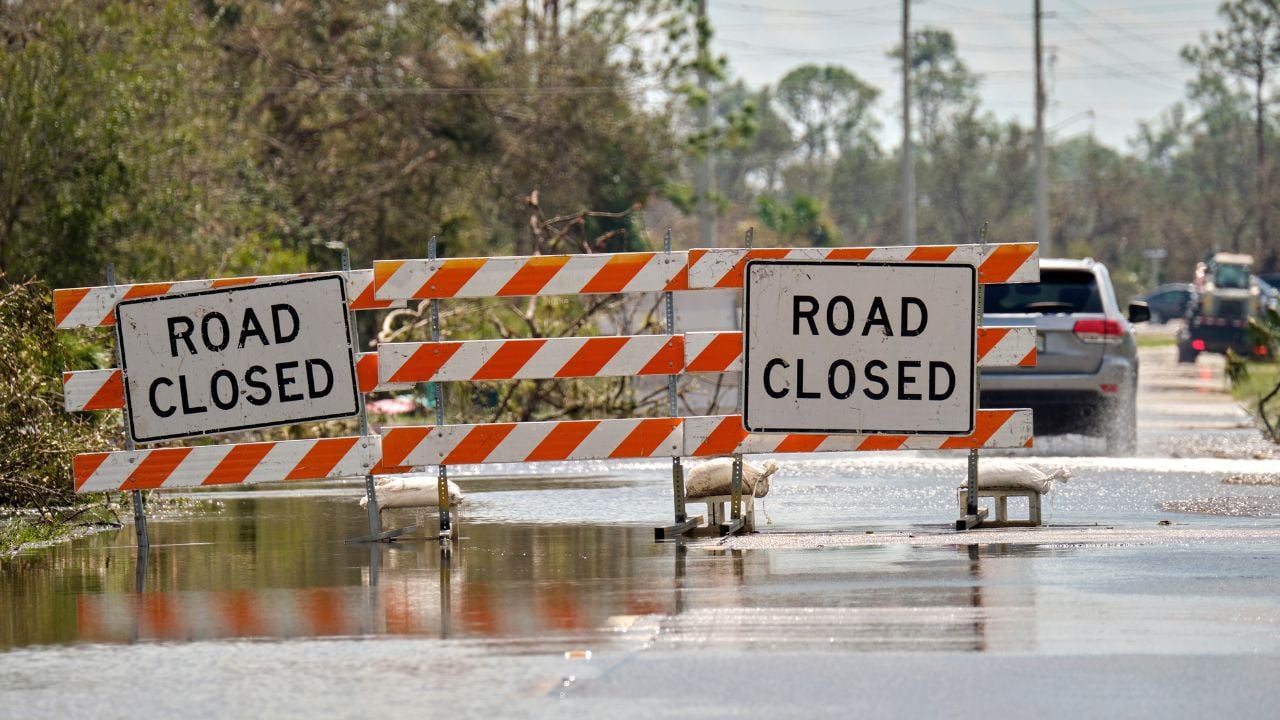
5 Things Arizona’s Stupid Motorist Law Can Charge Drivers For

A flooded road can look shallow enough to drive through.
But Arizonans who go around a barricade and need rescuing can end up with the bill for it.
Here’s what that bill can cover.
Note: This is general information, not legal advice. Laws are subject to change, so confirm the current wording with the Arizona Legislature.
1. Police Services
Under section 28-910, the driver who went around the barricade pays for the flood rescue.
The liability covers any response needed to remove the driver, a passenger or the vehicle from that road.
Police services are the first cost the statute names when it defines what that response includes.
If an officer responds to your stalled vehicle, the agency that sent the officer can collect the cost of that work from you.
A public agency can be anything from the state itself to a city, a county or a district that provides police services.
The charge counts as a debt of the person liable.
The agencies that incurred the expenses may collect it proportionately.
2. Firefighting
Fire crews are on the list of costs a driver can be charged for under section 28-910.
Firefighting sits right beside police work in the definition of a reasonable cost.
If a fire crew pulls you out of a stalled vehicle, the agency’s direct costs for that response can land on your bill.
The statute asks only for reasonable costs the agency directly incurred, so the word directly limits what a fire crew can charge.
3. Rescue Services
The stupid motorist law lists rescue as a category separate from police and firefighting work.
Liability under the law starts when you, a passenger or the vehicle has to be removed from a barricaded road.
The text covers a response to remove you, any passenger or the vehicle, or both.
That makes a response that removes the vehicle part of the bill too.
The definition also reaches for-profit and not-for-profit entities that make an appropriate emergency response, not only public agencies.
Whether the crew is public or private, the statute limits the costs to an appropriate emergency response to the incident.
4. Emergency Medical Services
Section 28-910 counts emergency medical services at the scene of an incident as a charge the driver can owe.
If you’re treated on a flooded road, that care is part of what the response can cost.
A district or authority that provides medical or other emergency services counts as a public agency, so it can collect its costs of treating you.
The statute leaves out charges from an ambulance service regulated under title 36, chapter 21.1, article 2.
5. Responders’ Salaries
The stupid motorist law adds a separate item to its list of reasonable costs, the salaries of the persons who respond to the incident.
If you need rescuing, you could be charged for the wages of the people who respond.
The statute applies the same test to salaries that it applies to the rest of your bill.
They have to be reasonable costs the responding agency or entity directly incurred.
The $2,000 Cap
The stupid motorist law sets a $2,000 limit on the emergency-response expenses you can owe under this statute for a single incident.
The statute’s wording is that a person’s liability for the expenses of an emergency response “shall not exceed two thousand dollars for a single incident.”
Police, firefighting, rescue, emergency medical services at the scene and salaries all share that one limit.
If a response costs more, your liability under this statute stops at $2,000.
What Triggers the Bill
A driver’s liability under section 28-910 depends on a few facts lining up on the same road.
The road has to be a public street or highway that a rise in water level has temporarily covered, a phrase the statute says includes groundwater or overflow of water.
It also has to be barricaded because of flooding.
If you’re the driver, your vehicle also has to become inoperable on that road for the response to be required.
A second subsection covers a person convicted under section 28-693 for driving a vehicle into any area temporarily covered by a rise in water level.
That person may be liable for the response too.
News coverage, including a 2023 azfamily report, calls section 28-910 the stupid motorist law, but the statute never uses that name.
Separate Citations
The stupid motorist law isn’t the only legal exposure when you go around a barricade.
The statute says its liability is in addition to any other liability that may be imposed, so it doesn’t replace other liability you could face.
Tucson television station KOLD reported in 2023 that drivers may still face citations for reckless driving, or for child endangerment when minors are in the vehicle.
Insurance Exclusions
Section 28-910 lets an insurance policy exclude coverage for a driver’s liability for the expenses of an emergency response.
It doesn’t say whether any policy does.
That’s why your policy’s wording decides whether the bill lands on you or on your insurer.
It’s permitted, not required.
Psst! How much do you know about driving in Arizona’s monsoon season? Take our quiz and see if you can ace it.
Quiz
Monsoon Road IQ
Answer these questions on driving through Arizona’s flash floods and dust storms. We bet you can’t get them all right. Prove us wrong?
According to the National Weather Service, how much rushing water does it take to carry away SUVs and trucks?
Enforcement in Practice
Section 28-910 calls the expenses of an emergency response a charge against the person who's liable.
If you're wondering whether a bill arrives, a 2023 azfamily report describes the law as rarely enforced.
Rarely isn't never.
Tucson station KOLD's 2023 reporting found one known case since the law passed in 1995, a Cave Creek resident charged in 2005.
Pima County's sheriff, Chris Nanos, said in 2023 that his department has never used the law and won't while he is sheriff.
The Maricopa County Sheriff's Office said in 2023 that it doesn't charge for rescues.
9 Hydration Claims Arizonans Pay Extra for and Shouldn't

Hot weather makes hydration a big business, and many brands compete for your money.
Read those labels with a skeptical eye.
