

4 Things Delawareans Pay Instead of a Sales Tax

A receipt with no sales tax on it feels good.
But Delaware finds a way to make up for that tax in other ways.
Here are the charges that take its place.
Note: This is general information, not tax advice. Tax rates, fees and dollar amounts are subject to change.
1. Gross Receipts Tax
If you own a business here, the gross receipts tax is what you pay in place of collecting a sales tax.
The state levies it on you as the seller of goods or services, not on the consumer.
It’s figured on your gross receipts, the total you take in from goods sold and services rendered in the state.
Rates run from 0.0945% to 1.9914% of that total, depending on the type of business, and petroleum products can run higher.
Most businesses are entitled to an exclusion that varies with the business activity, and exclusions generally start at $100,000 per month and can be as high as $1,250,000.
You can’t subtract the cost of the goods you sell, your labor costs or your delivery costs from what you take in.
The type of business activity additionally determines whether you remit the tax monthly or quarterly.
2. Vehicle Document Fee
On your next car, Delaware charges a document fee instead of a sales tax, and it rose from 4.25% to 5.25% on October 1, 2025.
Delaware’s Division of Motor Vehicles (DMV) figures it on the sale price or the vehicle’s current average trade-in value, whichever is higher.
As the owner, you pay the fee, and the DMV collects it.
The law calls it a fee rather than a tax, but it’s figured as a percentage of the price, the way a sales tax would be.
The Math on a $30,000 Car
On a $30,000 vehicle, Delaware’s document fee at 5.25% comes to about $1,575.
If you trade in a $10,000 car, you owe the fee only on the remaining $20,000, which cuts it to about $1,050.
If you sell your old car privately within 60 days before or after you title the new one, you get the same credit as a trade-in.
3. Lodging Tax
A hotel room in Delaware comes with an 8% lodging tax on the rent instead of a sales tax.
The hotel, motel or tourist home collects it from you when you pay for the room.
One percentage point of that 8% goes to the beach preservation program.
The rest is split among the General Fund, each county’s convention and visitors bureau and the Delaware Tourism Office.
If you book a short-term rental through a site like Airbnb or Vrbo, the state’s separate tax is 4.5%, and the site collects it.
That rate applies to rental agreements made on or after January 1, 2025.
Psst! Think you know where Delaware gets its money? Take our quiz and see if you can ace it.
Quiz
Delaware Tax IQ
Answer these questions on Delaware’s taxes and what it skips. We bet you can’t get them all right. Prove us wrong?
How many states have no statewide sales tax at all?
4. Car Lease Use Tax
Leasing a car in Delaware means a use tax of 1.9914% of your rent rather than a sales tax on the lease.
The leasing company collects it from you when it collects your rent.
On a $400 monthly payment, that's about $8 every month.
The same rate covers leases of other tangible personal property, with some exemptions.
Realty Transfer Tax on a Home Sale
A home sale in Delaware triggers a realty transfer tax, and the state's share is 2.5% of the home's value where the county or town has enacted the full 1.5% local transfer tax, and 3% where it hasn't.
Local governments can add up to 1.5% on top, which brings the combined rate to 4% where the full local tax applies.
Buyer and seller typically share it equally.
Say a home sells for $400,000 where the full local tax applies: 4% comes to $16,000, or $8,000 each if you split it down the middle.
If you're a first-time buyer who plans to live in the home, your share drops by 0.5% of the price, with the break capped at $2,000.
Income Tax and School Bills
Your Delaware income tax is graduated, so it works differently from a sales tax, with rates running from 2.2% to 5.55% on taxable income under $60,000 and 6.60% applying to the portion above that.
In Sussex County, the Treasury Division collects school taxes on each parcel, and your bill is due September 30.
If you pay late, the penalty rate is 1.5% per month.
Exemptions and Credits
Many of the charges that stand in for a sales tax come with exemptions.
You owe no realty transfer tax when a home passes between spouses, parent and child, or siblings.
Once you've occupied a room for at least five consecutive months, the law treats you as a permanent resident instead of a guest, and the lodging tax doesn't apply.
Active, reserve and National Guard members stationed in Delaware, along with their dependents, have been able to claim a document fee credit since October 2023.
If you're in the military, you have to show orders within 90 days of moving to Delaware or buying the vehicle.
The credit is applied at the time of titling.
9 Reasons a Delaware Family Business Doesn't Reach a Second Generation

You've put years into something, and you'd love to see it outlast you.
Wanting that isn't a plan.
9 Reasons a Delaware Family Business Doesn't Reach a Second Generation
8 Things That Surprise Newcomers Who Move to Delaware
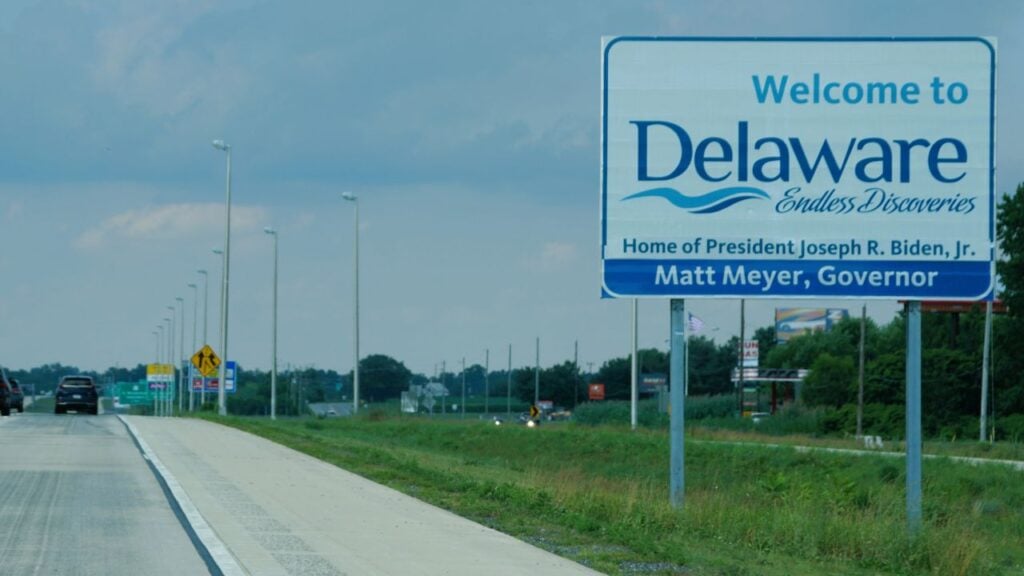
Move to Delaware from almost any other state, and the size of the place takes some adjusting.
So does the rest of what comes with living here.
