

12 Things Bay Staters Call by Names That Much of America Doesn’t Use

Some words feel so normal at home that you forget they’re local.
Bay Staters use a few names without a second thought, and visitors to Massachusetts may need a translation.
Here’s a guide to the local names that leave out-of-staters guessing.
1. Jimmies
Jimmies are tiny rod-shaped bits of candy, usually chocolate-flavored, that land on ice cream and doughnuts.
Merriam-Webster’s regionalisms list labels that meaning New England usage.
Its origin is unknown, and the earliest known use dates to about 1947.
The origin’s a mystery.
Ask for jimmies in many other places, and you may get a puzzled look from whoever is scooping.
Say it in Boston, and you’ll likely get exactly what you pictured.
2. Tonic
Tonic means soda in Greater Boston, according to WBUR‘s field guide to local slang.
It’s soda by another name.
Merriam-Webster lists a chiefly New England sense of the word as a carbonated flavored beverage.
Its first sense for tonic is tonic water.
That’s why you may get tonic water if you ask for a tonic outside New England.
Inside Boston, you can expect a soda.
3. Elastics
Elastics are rubber bands in Greater Boston, according to WBUR’s glossary of local slang.
New Englanders use elastics for ponytails and more.
Hair ties count too.
Ask a Boston coworker for an elastic, and you may get a rubber band or a hair tie.
You may want to say rubber band elsewhere to avoid confusion.
4. Hamburg
Hamburg is what many New Englanders call ground beef, according to Merriam-Webster.
If a local recipe calls for a pound of hamburg, you can reach for ground beef.
Hamburg is a variant of hamburger.
The first known use of hamburger dates to 1884, and the word traces to the German Hamburger, meaning of Hamburg.
Same meat, different word.
Brown it with onions, and you’ve got the start of the next dish on this list.
5. American Chop Suey
American chop suey is a dish of elbow macaroni, ground beef, and tomato sauce, usually with chopped onions and green peppers, according to Merriam-Webster.
New Englanders also tend to add Worcestershire sauce.
That’s the twist.
A similar dish goes by goulash in other parts of the country.
If you grew up with goulash, you already know the plan.
Order it in New England, and you’ll get a bowl of macaroni and beef.
6. Clicker
Where’s the clicker?
Clicker is what many New Englanders call a television remote.
Ask someone in Boston to hand you the clicker, and you’ll probably get the remote.
WBUR’s field guide to Greater Boston slang includes it too.
The word can also mean any remote, or a mechanical handheld counter.
Ask for it at an event door, and you might get a handheld counter instead.
7. The T
The T is the Massachusetts Bay Transportation Authority, or MBTA, Greater Boston’s transit system.
Just say the T.
The agency’s history page says it became law on August 3, 1964, and calls the T the first combined regional transit system in the U.S.
At the start, the system served 78 municipalities in the Greater Boston area.
Ask a Bostonian for directions, and you may hear “the T” as shorthand for the whole system.
If you plan to ride, you can call it the T and locals will follow.
How the T Got Its Line Colors
The T’s line colors came from a consultant’s map, and only some of them tie to a place.
After the 1965 consolidation, a local consulting firm drew a color-coded system map using red, green, blue, and orange because those four are easy to tell apart.
Red went to the line that ended at Harvard back then, a nod to the school’s crimson.
The line under Boston Harbor became the Blue Line.
The original consulting team says the Orange and Green names were random, so any story tying them to geography is a myth.
8. CharlieCard
The CharlieCard is the T’s fare card, and its name traces back to a 1949 song, according to the agency.
“Charlie on the MTA” began as a campaign song for mayoral candidate Walter A. O’Brien, Jr.
The song tells of a rider stuck on an endless ride because he couldn’t pay the exit fare.
Poor Charlie.
The T ended its last exit fares in 2006, but Charlie’s journey lives on in the CharlieCard and CharlieTicket names.
Tap a CharlieCard at the gate, and you’re using a name that traces back to a campaign song.
Next time you tap in, you’ll know where the name came from.
Psst! How much do you know about Boston and its words? Take our quiz and see if you can ace it.
Quiz
Bay State Trivia Test
Answer nine questions on Boston transit, New England words, and local history. We bet you can’t get them all right. Prove us wrong?
Which year did Boston’s Tremont Street subway open as the first subway tunnel in North America?
9. Three-Decker
A three-decker is a three-story apartment building with a separate apartment on each floor, according to WBUR.
Look for a flat roof and stacked porches, and you can tell a three-decker from an ordinary house.
The buildings usually have front and back porches and date to the mid- to late 19th century.
Count the floors.
Boston Magazine says both three-decker and triple-decker are correct.
Historic New England estimates builders put up about 15,000 of them in Boston between 1880 and 1930.
Dorchester's building boom made up a third of that construction.
You can spot rows of them if you walk through Dorchester.
10. Allston Christmas
Allston Christmas is the nickname for the move-in rush around September 1 in Boston, according to the International Students Office at the Massachusetts Institute of Technology.
Leases in much of the city run from September 1 to August 30.
Thousands of college students, especially in Allston and Brighton, are tied to those leases.
Curbs fill up.
The name comes from the free stuff tenants leave on the curb.
Newcomers should be careful with mattresses and upholstered furniture.
If you spot a nice chair on the sidewalk, you should think twice before dragging it home.
Check any curbside find closely before you bring it inside.
11. House of Pizza
A House of Pizza is a New England Greek-style pizza joint with an extensive menu.
Walk into a House of Pizza, and you can order a pizza and a gyro at the same counter.
Boston.com counted about 106 House of Pizza and Pizza House restaurants across Massachusetts from registered business licenses.
The first recorded Greek pizza in the U.S. dates to New London, Connecticut, where Costas Kitsatis opened a Pizza House in 1952.
Many menus at these shops add falafel, spanakopita, gyros, and Greek salad to the pizza.
You get pizza and more.
You can spot a House of Pizza by the name on the sign.
12. Three-Way
A three-way is the traditional North Shore roast beef sandwich, according to Boston.com.
It stacks thinly sliced rare beef, James River barbecue sauce, mayonnaise, and cheese, usually on an onion roll.
The name refers to the combination of mayonnaise, cheese, and James River barbecue sauce.
That's the name.
The North Shore Beefs Facebook group had nearly 36,000 members when Boston.com wrote about it in 2024.
Its BEEFtionary includes B2B for beef-to-bun ratio and SOS for sauce on the side.
Order a three-way on the North Shore, and you can expect roast beef with all three toppings.
Ask for SOS if you want the sauce on the side.
7 Heating System Problems Bay Staters Find on the First Cold Night

The first cold night of fall puts a lot of Massachusetts furnaces to the test.
See which problems show up first.
7 Heating System Problems Bay Staters Find on the First Cold Night
9 Things That Confuse Everyone Who Moves to Massachusetts
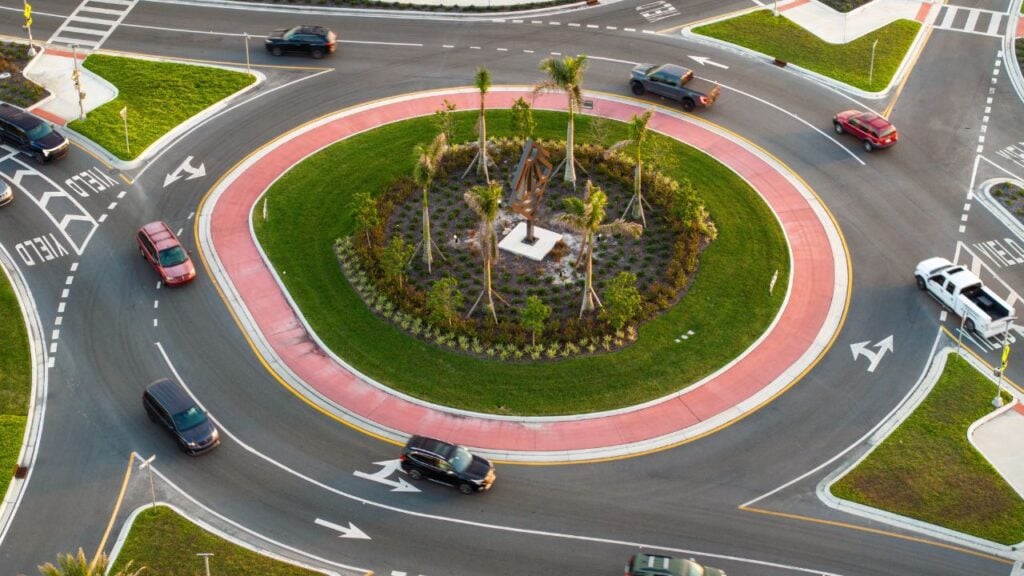
Moving to Massachusetts comes with a learning curve, and it starts before you unpack.
See what trips up newcomers before you sign the lease.
