
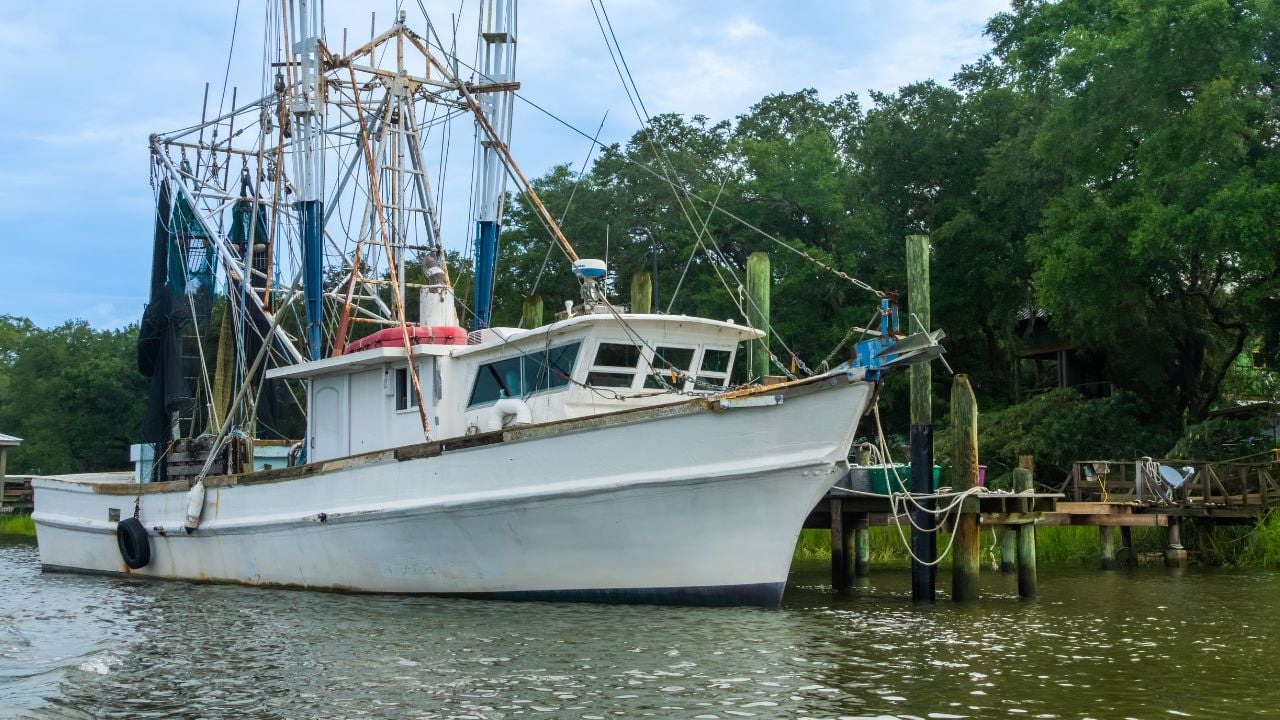
4 Things South Carolina Shrimpers Do When the Season Starts Winding Down

The next time you order South Carolina shrimp, we’re going to make you consider what the captain does when the nets start coming up light.
Winter closings, night limits and a fleet that’s shrunk over the years make a slow season harder to ride out than you’d think.
Here’s how some South Carolina shrimpers have kept going, and what a harsh winter could mean for next fall’s shrimp.
1. Waiting on a Late Run
In late November 2019, one Shem Creek shrimper waited on a late run to salvage the season after the fall catch fell off.
That made sense, since the fall shrimp season often runs into winter.
The operator said the harbor was full of shrimp.
The late run came.
Shrimpers pulled more than 260,000 pounds from state waters in December 2019, about 40,000 pounds more than usual for the month.
Through December, they netted about 2.2 million pounds, roughly a half-million pounds less than usual.
2. Chasing Shrimp to Other States
In 2017, a lot of shrimp boats headed for Florida and Georgia to try to catch something, and some shrimpers went up to North Carolina.
In 2019, the bigger boats went north or south, where the catch was better.
Psst! How much trivia do you know about this state? Take our quiz and see if you can ace it.
Quiz
Palmetto State Trivia Quiz
Think you know your state trivia? We bet you can’t get them all right. Prove us wrong?
Which shell is South Carolina’s official state shell?
3. Heading Offshore
A few larger shrimp boats planned to keep dropping nets in federal waters beyond three miles.
That was after the 2019 fall season, when the state closed its waters to shrimping partly because the catch showed signs of waning.
The goal, from the state Department of Natural Resources (DNR), was to leave enough shrimp in the water to spawn a strong spring crop.
The closure covered only state waters, roughly within three miles of the coast, so those boats could work past the line.
For most local shrimpers, though, the uncertain catch wasn't worth the expense of the trip.
Cold-Weather Closures for Trawlers
A conservation closure like the one in 2019 stops at the state line, but severe winter weather can close federal waters to shrimp trawlers too.
Federal rules call it the South Atlantic shrimp cold weather closure.
If South Carolina, Florida, Georgia or North Carolina closes its waters to shrimping under that rule, federal regulators may close the federal waters next to them as well.
The federal closure lasts until the state closure ends, unless it ends earlier at the state's request.
4. Taking Off-Season Jobs
In 2019, many shrimp captains in the Charleston area held off-season jobs to get by.
The 7 p.m. Cutoff
Night trawling is unlawful, except under a permit for trawling fish, so shrimpers have to quit when night starts.
From April through August, night runs from 9 p.m. to 5 a.m., and September and October shift it to 8 p.m. through 6 a.m.
On November 1, night starts at 7 p.m., the earliest of the year, and it ends at 6 a.m. through March 31.
Winter Gear Rules
Shrimp trawlers with hand-retrieved nets, meaning no winch, block or pulley aboard, can tow for up to 75 minutes from November 1 through March.
That's up from 55 minutes between April and October.
On December 16, a trawler can no longer carry a cast net or other recreational shrimping gear aboard, and the ban lasts through April 30.
December Bay Closures
Winyah Bay and North Santee Bay close to shrimp trawling on December 16 and stay closed until August 31.
That's 8.5 months.
Shrimpers who work those bays have to move to other waters or stop for the stretch.
Winter's Toll on Fall Shrimp
A harsh winter can leave a much smaller population of white shrimp the following autumn.
Fall white shrimp numbers can track the severity of the previous winter.
Warm water can matter too, since relatively warmer water extended the catch in the most bountiful waters by about two weeks in 2019.
What Went Wrong in 2019
Nobody could say for sure why the 2019 fall shrimp catch fell off.
Explanations ranged from persistent offshore winds and higher-than-normal tides to dredging in the Charleston shipping channel, though DNR had no immediate explanation and black gill disease seemed to be ruled out.
You may not have noticed, since the poor local season had little effect on shrimp prices or availability.
A Shrinking Shrimp Fleet
In 2017, the number of shrimp trawler licenses in the state was about a third, maybe less, of the 1980s total, the Post and Courier reported.
DNR's fisheries management director blamed competition from cheap farm-raised Asian shrimp and the high cost of staying in business, and said a pound of shrimp can only bring so much.
The fall white shrimp season averaged 1.87 million pounds a year over the four years before 2017.
Fundraisers for the Fleet
During the weak fall shrimp season of 2017, fundraisers were being held in Mount Pleasant for the Shem Creek shrimp fleet.
A Save Shem Creek GoFundMe had raised nearly $10,500 of a $25,000 goal by late November, and tickets to a Christmas lunch with the fleet were $15.
9 Restaurant Chains That Only Make Sense in South Carolina
One South Carolina pizza chain started as a running joke among three college friends.
These are the restaurant chains that only make sense in South Carolina.
9 Restaurant Chains That Only Make Sense in South Carolina
6 Things South Carolinians Do at a Tailgate That Nobody Else Would

Some South Carolina fans tailgate from inside a railroad car.
That's only the start of what South Carolinians do at a tailgate.
6 Things South Carolinians Do at a Tailgate That Nobody Else Would
