

12 Things That Make Northern Virginia and the Rest of Virginia Feel Like Different States

Northern Virginia is the largest data center market in the world, which is a lot of servers for one corner of one state.
Drive to Buchanan County in the southwest, and fewer households have broadband and more of your neighbors are 65 or older.
Here’s how Northern Virginia compares with the rest of Virginia, from paychecks and home prices to commutes and growth.
1. Household Incomes
Loudoun County, in Northern Virginia, has a median household income of $181,765, and Fairfax County has $153,637.
Statewide, the median is $93,170.
If you live in Virginia Beach, the median household income around you is $92,968, almost exactly the statewide figure.
Richmond’s median is $64,587.
If you move from Richmond to Loudoun County, you’d be joining households with a median income nearly three times higher.
Buchanan County, in Virginia’s coalfield region, has $42,886.
Loudoun County’s median is more than four times Buchanan County’s.
Buchanan County’s median is less than half the statewide figure.
2. Home Values and Rent
The median home in Loudoun County, in Northern Virginia, is worth $743,800.
If you’re shopping in Fairfax County, the median home is worth $732,800, nearly double the $383,700 statewide.
Virginia Beach is almost identical to the state at $382,500, while Roanoke is at $190,500.
If you sold a median-priced Loudoun County home, you could buy nearly four median-priced homes in Roanoke.
Buchanan County’s median is $94,900.
Rent follows the same pattern, with a median gross rent of $2,386 a month in Loudoun County and $996 in Roanoke.
Buchanan County’s median gross rent is $743 a month, less than a third of Loudoun County’s.
3. Metro and Commuter Rail
Loudoun County, in Northern Virginia, got Metrorail service in November 2022, when the Silver Line extension opened stations at Loudoun Gateway and Ashburn.
If you fly into Washington Dulles International Airport, a Metrorail station opened there in November 2022.
If you commute by train from the Northern Virginia suburbs, Virginia Railway Express runs to Alexandria, Crystal City and downtown Washington, D.C.
The Northern Virginia Transportation Commission is charged with the funding and stewardship of Metro and co-owns the Virginia Railway Express.
Northern Virginia has six bus systems.
The average Loudoun County worker spends 30.1 minutes getting to work, compared with 19.0 in Roanoke and 27.3 statewide.
What the Northern Virginia Numbers Measure
The Northern Virginia figures in this list come from Fairfax and Loudoun counties.
Buchanan County and the cities of Virginia Beach, Richmond and Roanoke supply the comparisons.
The transit, toll, emissions and data center sections cover Northern Virginia more broadly.
The income, home value, rent, commute, education, birthplace, language and internet figures are Census Bureau survey estimates covering 2020 through 2024.
Income figures are in 2024 dollars.
Age shares are estimates too, and population counts use the 2010 Census, the 2020 Census and July 2025 estimates.
4. Toll Lanes
Northern Virginia has express lanes on I-495, I-95, I-395 and I-66.
The Virginia Department of Transportation says they use dynamic tolling, which varies the price with congestion.
Outside Northern Virginia, the only other example named is the I-64 express lanes in Hampton Roads.
On I-66 inside the Beltway, the weekday carpool hours are 5:30 to 9:30 a.m. going east and 3 to 7 p.m. going west.
If you’re driving alone during those hours, you can pay a toll to use the lanes in the peak direction.
If you drive with at least two passengers, those lanes are free with an E-ZPass Flex switched to high-occupancy vehicle (HOV) mode.
The lanes are free to all during off-peak periods, including weekends.
5. Emissions Tests
Virginia’s Department of Environmental Quality says the Air Check Virginia program began in 1982 as part of Northern Virginia’s air quality plan.
The inspection area includes the counties of Arlington, Fairfax, Loudoun, Prince William and Stafford, plus the cities of Alexandria, Fairfax, Falls Church, Manassas and Manassas Park.
If you register a car in one of those places, you’ll likely need a passing test or a waiver every two years.
Virginia law exempts vehicles manufactured and titled for the current model year or any of the three before it.
If you move to Loudoun County with a newer car that was first titled in another state, the Department of Motor Vehicles may still require a test.
Motorcycles, antique vehicles, qualified hybrids and vehicles powered exclusively by clean fuels, including electricity, are exempt too.
6. Data Centers
A 2024 General Assembly commission report found that Northern Virginia is the largest data center market in the world, with 13 percent of all reported data center operational capacity globally.
A strong fiber network, reliable cheap energy, available land, major national customers nearby and a state tax incentive all helped build that market.
Data centers enable the digital services you rely on daily, including email and media streaming.
Access to power and large, flat areas of land are key requirements for data centers.
Some distressed areas of the state, particularly in Southwest Virginia, don’t have either.
If you live in Northern Virginia, you live where most of the state’s data centers are located.
Significant new market growth was expected in counties outside Northern Virginia and along the I-95 corridor to Central Virginia.
Psst! How much do you know about Virginia’s map? Take our quiz and see if you can ace it.
Quiz
Virginia Map Quiz
Eight questions on Virginia’s roads, peaks and local governments. We bet you can’t get them all right. Prove us wrong?
How many independent cities does Virginia have?
7. College Degrees
In Fairfax County, in Northern Virginia, 65.0% of adults age 25 and older have a bachelor's degree or higher, and Loudoun County is right behind at 64.6%.
Statewide, the rate is 42.2%.
Richmond is at 45.6%, Virginia Beach at 40.9% and Roanoke at 30.0%.
Pick three adults you meet in Fairfax County, and nearly two of them have a bachelor's degree or higher.
Buchanan County is at 11.5%.
In Buchanan County, you'd have to meet about nine adults to find one.
That puts Fairfax County's rate at more than five times Buchanan County's.
8. Birthplaces and Languages
Fairfax County, in Northern Virginia, is 30.8% foreign-born, compared with 13.1% statewide.
Loudoun County is at 27.4%, Virginia Beach at 9.2% and Buchanan County at 0.8%.
Among your neighbors in Loudoun County, more than one in four were born in another country.
Language follows: 39.0% of Fairfax County residents age 5 and older speak a language other than English at home.
In Fairfax County, nearly four in ten of the people you pass speak one.
That share is 17.4% statewide and 2.9% in Buchanan County.
9. Population Growth
Between the 2010 Census and the Census Bureau's July 2025 estimate, Northern Virginia's Loudoun County added more than 137,000 residents.
That's growth of about 44%.
If you've lived in Loudoun County since 2010, you now share it with about 137,000 more people.
Buchanan County, in Virginia's coalfield region, lost more than 5,600 residents over the same stretch, a drop of about 23%.
If you've lived in Buchanan County since 2010, you now share it with about 5,600 fewer people.
The state as a whole grew about 11%, while Virginia Beach grew about 4%.
10. Population Density
Northern Virginia's Fairfax County has 1,167,873 residents, while Buchanan County has 18,492, in the Census Bureau's July 2025 estimates.
That's about 63 times as many people in Fairfax County.
Buchanan County has the bigger map, with 503 square miles of land to Fairfax County's 391.
The 2020 Census counted 2,942 people per square mile in Fairfax County and just over 40 in Buchanan County.
If you want elbow room, Buchanan County has about 40 people per square mile, compared with 219 statewide.
If you want neighbors, Fairfax County's 2,942 is more than 13 times the statewide figure.
Richmond, a city of 60 square miles, is denser than either county at 3,782 people per square mile.
11. Age Mix
In Buchanan County, 25.2% of residents are 65 or older, compared with 12.6% in Loudoun County, in Northern Virginia.
Fairfax County is at 16.2%, Roanoke at 17.8%, Richmond at 14.1% and the state at 18.4%.
In Buchanan County, about one in four of your neighbors is 65 or older.
Kids tell the same story: 25.1% of Loudoun County residents are under 18, while Buchanan County is at 17.3%.
Fairfax County is at 21.6%, Roanoke at 22.6% and the state at 20.9%.
If you have kids, Loudoun County is a place where about one in four residents is under 18.
12. Broadband
In Buchanan County, 77.2% of households have a broadband internet subscription, compared with 97.0% in Loudoun County, in Northern Virginia.
Fairfax County is at 96.4%, and statewide it's 91.0%.
Virginia Beach is at 94.4%, Richmond at 86.2% and Roanoke at 85.7%.
Knock on 100 doors in Loudoun County, and about 97 of the households you reach have a broadband subscription.
Do it in Buchanan County, and about 23 of the 100 households you reach don't.
9 Things Virginians Say That Place Them East or West of the Blue Ridge

Virginia Tech's Speech Lab studied how people in 13 Appalachian states say one word, Appalachia, using recordings people across the region sent to a podcast.
The findings showed one pronunciation more common in the northern and southern areas and the other concentrated in the middle of the region.
9 Things Virginians Say That Place Them East or West of the Blue Ridge
8 Things Giant Food Employees Wish Virginians Understood About the Deli
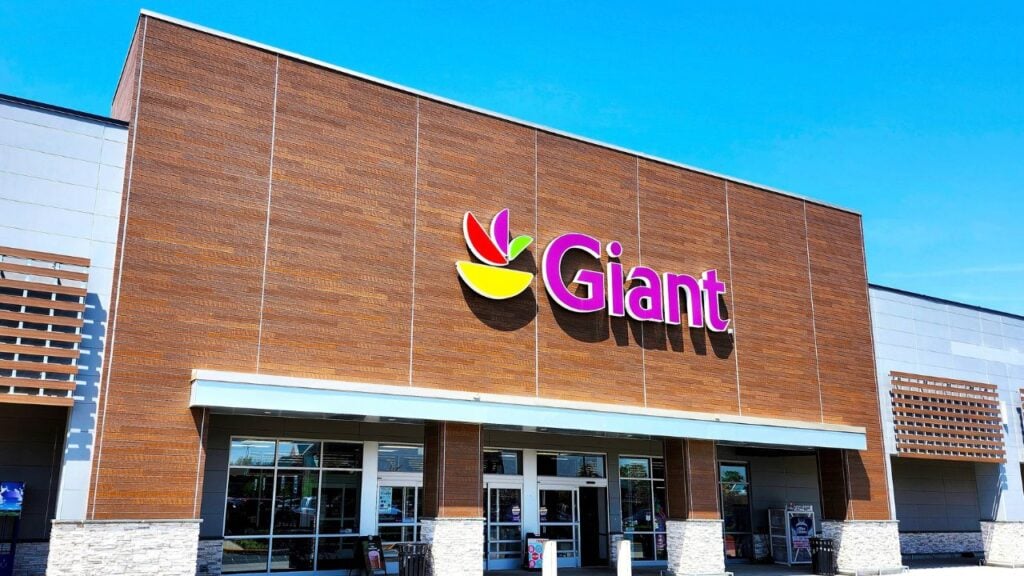
When you're squeezing a deli stop into a busy day, the counter can feel like one more thing between you and getting home.
Once you understand a little more about the employee's side of that counter, some of your frustrations may go away.
8 Things Giant Food Employees Wish Virginians Understood About the Deli
