

9 New Jersey Habits Transplants Pick Up Within a Year Without Noticing

After a few months in New Jersey, you stop doing the sales tax math on a new sweater.
Transplants pick up habits like that without even trying.
Here are the New Jersey habits transplants pick up within a year without noticing.
Note: This is general information, not legal or tax advice. State rules, fines and dollar amounts are subject to change.
1. Headlights in the Rain
In New Jersey, wipers on means headlights on.
The law counts rain, mist, snow and other precipitation that calls for windshield wipers as a time when your headlights have to be on.
The same rule applies from a half-hour after sunset to a half-hour before sunrise.
Fog and smoke trigger it too, whenever people and vehicles aren’t clearly visible 500 feet ahead of you.
Many newcomers end up flipping both switches without thinking about it.
Noon counts too.
2. Full Stops at Crosswalks
Slowing down isn’t enough at a crosswalk.
State law says drivers must stop and remain stopped for a pedestrian in a marked crosswalk.
That covers anyone on your half of the road, or within one lane of it.
If you roll through anyway, the fine is $200.
What the Crosswalk Law Covers
New Jersey’s crosswalk law also reaches intersections with no painted lines.
At those, you have to yield the right-of-way to a pedestrian in the unmarked crosswalk.
The yield rule doesn’t apply where police or traffic signals control the crossing, or where a pedestrian tunnel or overhead crossing is provided.
If you break the marked-crosswalk rule and seriously injure a pedestrian, the fine is $100 to $500.
A court can also order up to 25 days of imprisonment or a license suspension of up to six months, or impose both.
3. Three-Minute Idling Limit
Idling a stopped car for more than three consecutive minutes breaks a state rule.
That limit applies to gasoline and diesel vehicles, so it covers your car too.
Vehicles stopped in a line of traffic are exempt, which means the gridlock on your commute doesn’t count against you.
Each verified violation costs $250 for a first offense, $500 for a second and $1,000 for a third and each one after.
4. Reusable Bags at Checkout
A lot of newcomers end up keeping reusable bags in the trunk.
New Jersey’s bag ban took effect on May 4, 2022.
Stores can’t hand you single-use plastic carryout bags.
Grocery stores larger than 2,500 square feet can’t hand you single-use paper bags either.
A business that breaks the rule is warned the first time.
A second offense can cost up to $1,000 per day, and a third or later offense up to $5,000 per day.
Psst! How much do you know about New Jersey? Take our quiz and see how many you can get right.
Quiz
Garden State Pop Quiz
Answer nine questions on New Jersey’s sales tax, restaurant rules and official state symbols. We bet you can’t get them all right. Prove us wrong?
New Jersey names an official state microbe. Which one is it?
5. Buying the Ticket Before Boarding
If you board a New Jersey Transit train without buying a ticket first, you face a $5 cash surcharge.
Ticket vending machines are available at every rail station.
You can also buy a ticket in the New Jersey Transit app.
6. Skipping Tax Math on Clothes
Most clothing and footwear are exempt from sales tax in New Jersey, so you can skip the tax math on a sweater or a pair of loafers.
For everyday coats and shoes, the price on the tag is the price at the register.
Clothing accessories like handbags and watches still carry sales tax.
Sport and recreational equipment doesn't qualify for the exemption either.
7. Hands-Free Phone Use
State law makes it unlawful for you to use a wireless telephone while driving unless it's hands-free.
Hands-free use is allowed as long as the device's placement doesn't interfere with federally required safety equipment.
Newcomers often mount the phone before they pull out of the driveway.
A first offense costs $200 to $400.
A second offense runs $400 to $600, and a third or later offense runs $600 to $800.
On a third offense, you also pick up three motor vehicle penalty points.
8. Quarterly Property Tax Payments
Buying a home in New Jersey means paying property tax in four installments, due February 1, May 1, August 1 and November 1.
If you pay late, interest runs from the date the tax was payable.
A town can choose to charge no interest on an installment paid within the tenth calendar day, so your town's policy matters.
Towns can charge up to 8% a year on the first $1,500 of a late installment and up to 18% on the amount above that.
9. Licensing Your Dog
Any dog of licensing age has to be licensed under state law.
That age is seven months, or sooner if the dog has a set of permanent teeth.
The license is renewed annually or every third year.
Your dog also has to wear the registration tag on a collar or harness.
5 New Jersey Pizza Rules Nobody Writes Down

Saying you're getting pizza in New Jersey can start a long conversation.
Then someone asks where, and suddenly everyone has something to say.
5 New Jersey Pizza Rules Nobody Writes Down
6 Reasons New Jerseyans Are Leaving the State They Grew Up In
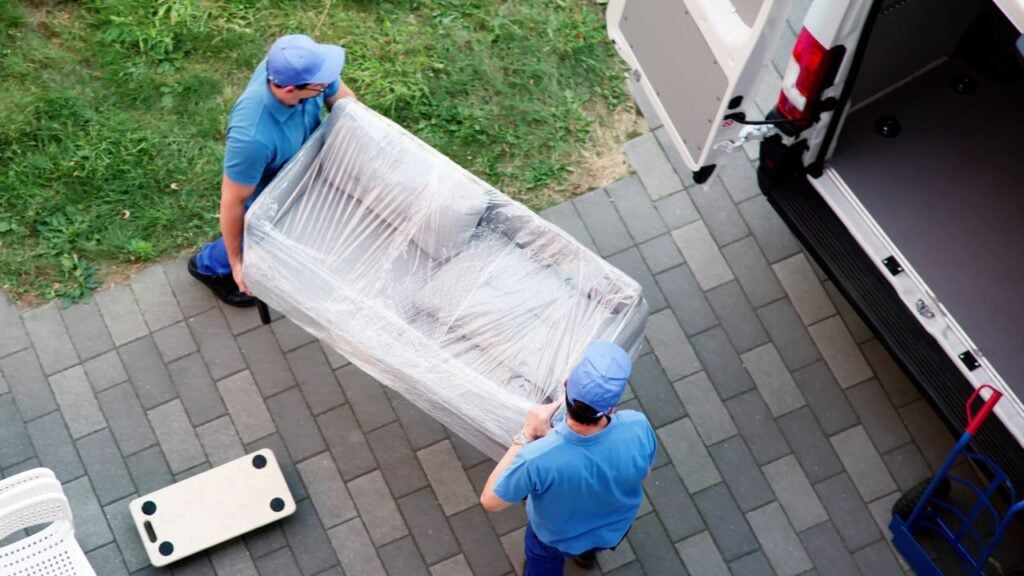
New Jerseyans are packing up for reasons that go beyond the weather.
The reasons might surprise the people who stay.
6 Reasons New Jerseyans Are Leaving the State They Grew Up In
