
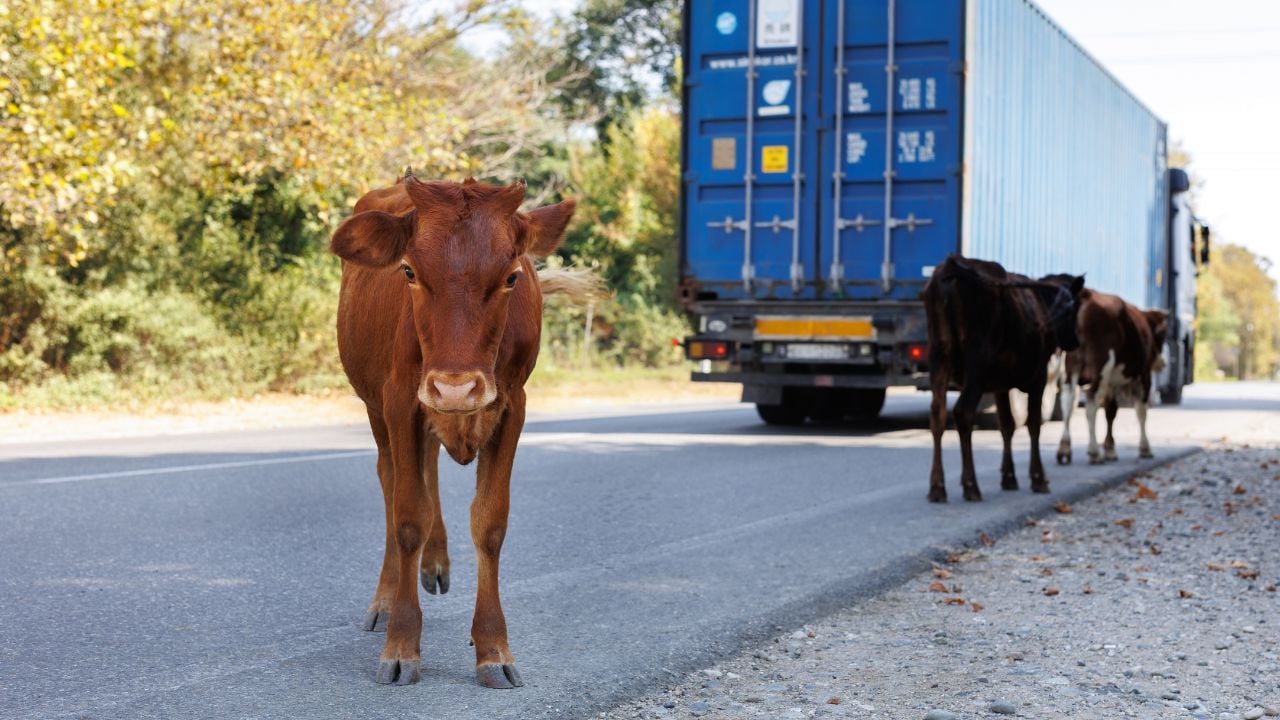
5 Things Kansas Law Says About Loose Cattle on the Road

A loose cow wanders onto the road beside your Kansas land, and nobody claims it. The law says you can take it up as a stray.
Whether you’re the owner, a driver or the neighbor, the law has something to say about it.
Here’s what Kansas law says about loose cattle on the road.
Note: This is general information, not legal advice. Kansas statutes and court rulings are subject to change.
1. Ban on Running at Large
Kansas has a law against loose cattle, and you can read it in one breath.
State law makes it unlawful for any livestock to run at large.
The definition of livestock includes cattle.
Driven cattle are different.
A separate section says the law doesn’t keep anyone from driving livestock along a public highway.
If you own the animals, you’re responsible for all damages anyone suffers because of it.
2. Owner Liability for Damage
Loose cattle on a road can leave their owner liable for the damage.
State law says an owner whose livestock runs at large is liable to the person injured for all damages that result.
The statute doesn’t say who the person injured has to be.
If you’re the person injured, the law gives you a lien on the livestock for that amount.
A lien is a legal right a creditor has in someone’s property.
3. Negligence, Not Automatic Blame
A 1985 case from the Kansas Court of Appeals shows who has to prove what after loose cattle reach a road.
A car hit a cow on a public highway in Leavenworth County.
A trial court awarded the drivers $2,390.17 for the damage to their car.
The Court of Appeals reversed.
The drivers hadn’t shown the owner failed to use due care to keep the cow in.
Undisputed evidence showed the owner or his brother visited the pasture every day or every other day.
The court found nothing that should have told a reasonable owner the cow might get out.
A 2010 ruling about cattle loose in a ditch near a highway cited that case for the rule that the injured person must prove negligence.
If you’re the injured driver, both rulings put the proof on you.
The 2010 court said strict liability, which would make an owner pay no matter how careful they were, doesn’t apply to livestock escapes.
An owner also doesn’t have to provide absolute security.
Psst! How much do you know about Kansas fences and livestock? Take our quiz and see if you can ace it.
Quiz
Pasture Law Pop Quiz
Answer these questions on Kansas fence and livestock laws. We bet you can’t get them all right. Prove us wrong?
Which of these animals is named in the Kansas definition of livestock for the law against running at large?
4. Highway Fence Upkeep
If you assume the cattle owner is the only party sued when loose cattle reach a highway, a Highway 69 case shows otherwise.
After a car hit a cow there in 1997, a jury found the Kansas Department of Transportation (KDOT) partly at fault.
The jury put 35% of the fault on KDOT, 45% on the man who pastured cattle nearby and 20% on the driver.
A section of KDOT's highway fence had been down for at least a year and a half before the crash.
The Court of Appeals threw out that verdict in 2001, saying KDOT owed the plaintiffs no duty on that fence repair.
The Kansas Supreme Court reversed that ruling and reinstated the verdict in 2002.
The justices held that because KDOT had taken on the job of fencing the highway, it had a duty to maintain its fences.
They rejected KDOT's argument that it only had to maintain fences where livestock were present.
What Fence-In Means
Kansas is a fence-in state, so livestock owners have to fence their animals in.
Highway fences work differently.
Some states expect landowners to build highway fences, while Kansas delegated that job to its department of transportation.
5. Taking Up a Stray
If a loose cow on the road next to your land has no known owner, Kansas law lets you take it up as a stray.
A stray is a domestic animal found running at large, or inside someone else's enclosure, whose owner isn't known in the community or can't be found.
Within 24 hours, you have to report the animal to the county sheriff, with a description of it, where it's being kept and your address.
The sheriff notifies the state animal health commissioner and the owners of any registered brands on the animal.
Release to an established owner needs the agreement of both the sheriff and the commissioner.
The owner has to pay the costs, including reasonable payment to you for keeping and feeding the stray.
If nobody establishes ownership, the sheriff advertises the stray in the area where it was taken up.
The sheriff then has the stray delivered to a public livestock market, where it's sold to the highest bidder for cash.
The sale date has to be at least 21 days after the report to the sheriff.
The sale pays the costs first, including the payment for keeping and feeding the stray.
Any money left over goes to the county treasurer, who puts it in a special stray fund.
Roads Through Pasture
Some Kansas roads cross fenced pasture, so a cow beside the road isn't always a loose one.
When the public is allowed by license or custom to travel through fenced pasture and the landowner consents in writing, the county commissioners may designate the road a public highway.
If you use one of those roads, you're personally liable for any damage you cause to livestock while traveling it.
The county, township and landowner aren't liable for that damage.
5 Things Kansans Do Every Year Once Wheat Harvest Starts
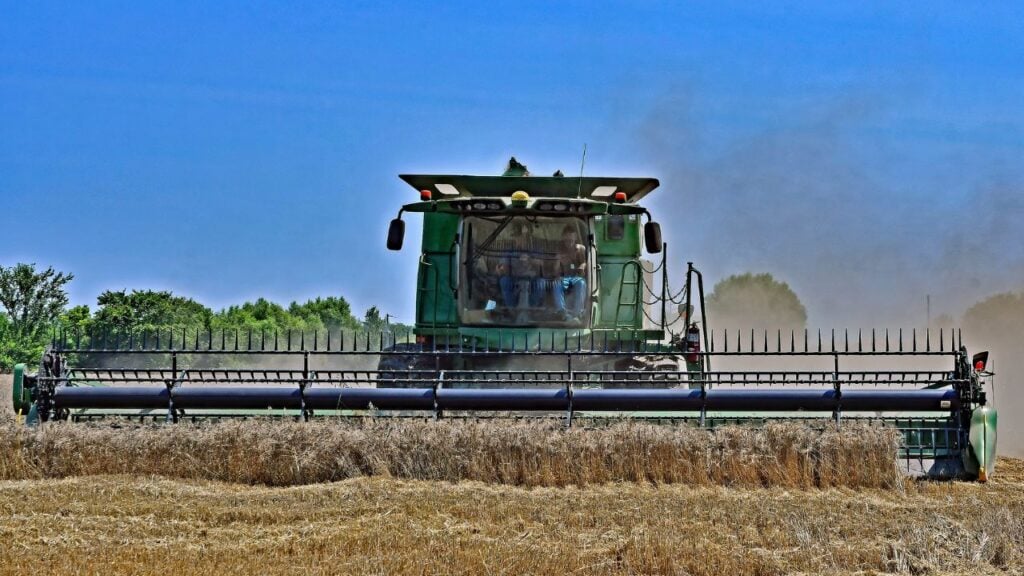
When wheat harvest starts, Kansans have a routine they follow every year.
Here's a look at what that routine involves.
5 Things Kansans Do Every Year Once Wheat Harvest Starts
5 Reasons a Kansan Won't Buy a Bierock Out of State

Spotting something that reminds you of home on a menu should be good news.
But if you're a Kansan craving a bierock, you might hesitate.
