
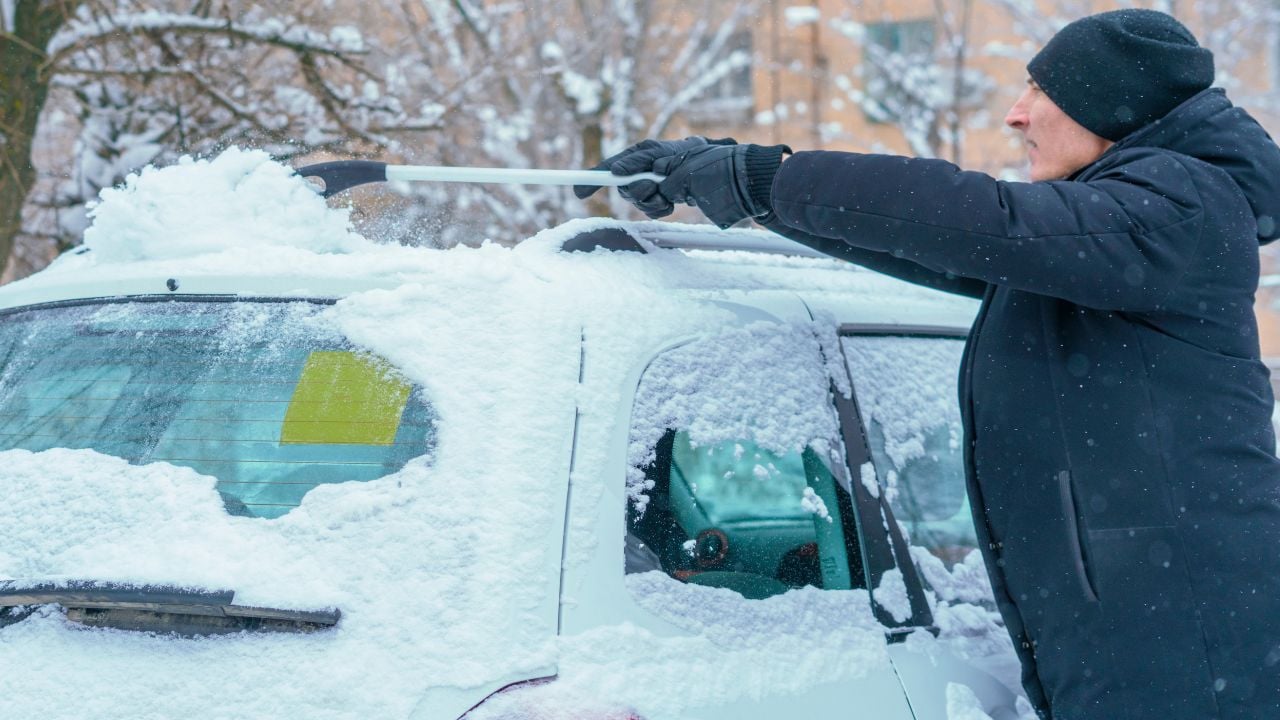
Connecticut Drivers Can Be Fined for Snow on Their Roof. 5 Winter Car Rules Nutmeggers Miss

Studded tires are legal on Connecticut roads starting Nov. 15, and not a day sooner.
It’s an easy date to miss when the first cold snap hits.
Here’s why Connecticut drivers can be fined for snow on their roof, and the other winter car rules Nutmeggers miss.
Note: This is general information, not legal advice. Driving laws and fines are subject to change, so confirm the current requirements with the Connecticut Department of Motor Vehicles.
Roof Snow Fines
The snow-and-ice law makes you clear accumulated snow and ice off your hood, your trunk, and your roof, so none of it threatens people or property on the road.
The duty applies on any street or highway in the state.
If a pile on your roof does pose that threat, you’ve committed an infraction, and the fixed fine is $75.
The fine rises to $200 to $1,000 for each offense when snow or ice slides off and injures someone or damages their property.
Where the Snow-and-Ice Law Stops
The statute behind the $75 fine doesn’t apply while your car is parked.
Nor does it apply when snow, sleet, or freezing rain starts after you pull out and keeps falling during your drive.
Commercial drivers have the same duty, with a $75 infraction fine and $500 to $1,250 when dislodged snow or ice injures someone or damages property.
1. Driving on Frozen Water
The frozen-water ban makes it an infraction to drive any car onto the frozen surface of a public body of water.
Driving onto the ice is the violation, so you don’t have to fall through to get the ticket.
The law treats a car’s presence on the ice as enough evidence of the violation.
Vehicles that a government agency owns and uses are exempt.
So are vehicles running under a government contract and vehicles that a school or college owns and uses.
The ban’s exemptions don’t include your pickup.
2. Studded Tire Dates
The studded-tire rule lets tires with a metal nonskid device onto the road from November 15 through April 30, and both of those days count.
Outside that window, no metal part of a wheel or tire is allowed to touch the road while your car is moving.
If you leave studs on past April 30, a first offense is an infraction.
A later offense carries a fine of up to $200.
Emergency vehicles and road-making machinery are exempt from that law, and so are farm tractors crossing a highway to reach farmland.
Psst! How much do you know about driving in Connecticut? Take our quiz and see if you can ace it.
Quiz
Connecticut Road IQ
Answer these questions on Connecticut driving laws and winter rules. We bet you can’t get them all right. Prove us wrong?
Connecticut’s drunk-driving law defines “motor vehicle” to include which winter machine?
3. Headlights in Snow
The headlight rule depends on the weather as well as the time of day.
Many drivers think of headlights as a nighttime rule.
Connecticut requires lighted lamps from half an hour after sunset to half an hour before sunrise.
The same law requires them at any time during precipitation, including snow, rain, and fog.
It reaches any moment when people and vehicles aren't clearly visible 500 feet ahead of you.
If you skip the lights, you've committed an infraction.
4. Windshield Snow and Ice
The windshield law requires your glass to be reasonably free of snow, ice, condensation, and dirt, inside and out.
It bars you from driving when something significantly blocks your view of the road.
A wiper in effective working order must sit directly in front of you, as well.
A violation of any part of the windshield law is an infraction.
In State v. Cyrus, a state appeals court ruled in 2008 that an object hanging from the rearview mirror isn't automatically a violation.
The court agreed that the state has to prove the object blocked the driver's view or distracted the driver.
A 2025 change to the law now requires that blocked view to be a significant one.
5. Speed in Bad Weather
The reasonable-speed rule judges your speed against weather conditions, along with traffic and the width of the road.
Staying under the posted limit doesn't excuse you from slowing down when weather or highway conditions create a special hazard.
Driving faster than is reasonable is the infraction of traveling unreasonably fast.
It's separate from ordinary speeding.
Who Enforces Idling Limits
Under the state's idling rules, police can ticket only school buses idling for longer than three minutes.
That's what the Department of Energy and Environmental Protection (DEEP) says on its enforcement page.
DEEP's field staff can't write tickets, but they respond to idling complaints about commercial vehicles and buses only.
Complaints about privately owned passenger vehicles go to your local authority.
The page says the state limit for a vehicle that isn't in motion is three consecutive minutes.
Temperatures below 20 degrees Fahrenheit are one of its exceptions.
Running the defroster or heater to protect the health or safety of you and your passengers is another.
Letting your engine reach the manufacturer's recommended operating temperature is on the list too.
Roof Law History
The roof law began as a 2010 act that wasn't set to start until December 31, 2013.
Lawmakers moved the start to October 1, 2011, in a 2011 act that made the duty apply to noncommercial drivers like you.
A 2013 act added the language that makes your ticket an infraction.
Commercial vehicles kept the later date, so their duty began on December 31, 2013.
7 Unwritten Rules About Leaf-Blowing Hours in a Connecticut Neighborhood
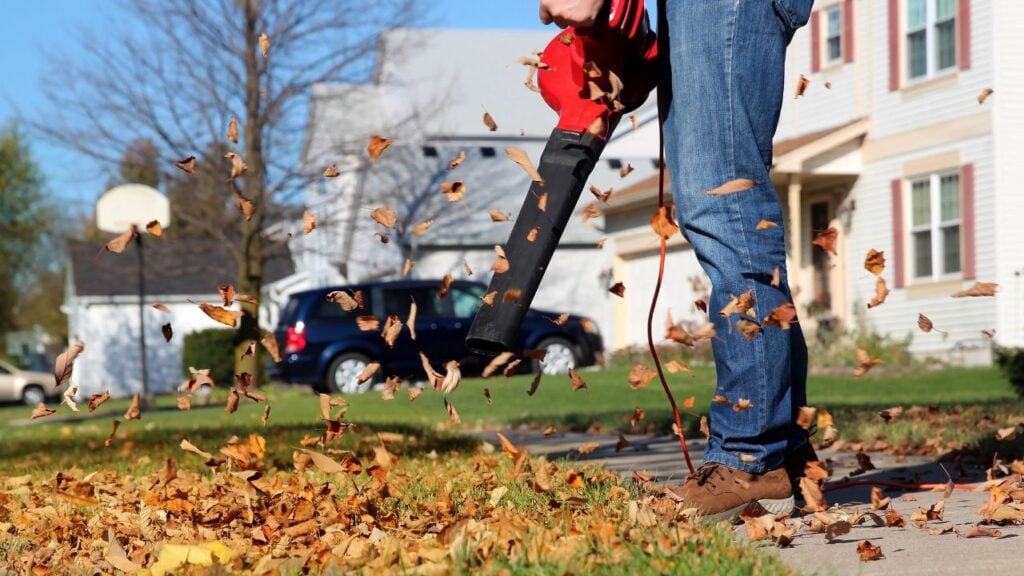
Greenwich is one Connecticut town that has voted to restrict leaf blowers.
That vote set a floor, and neighbors work out the rest, driveway to driveway.
7 Unwritten Rules About Leaf-Blowing Hours in a Connecticut Neighborhood
