
6 Things Snow Geese Do at Missouri’s Loess Bluffs Every November

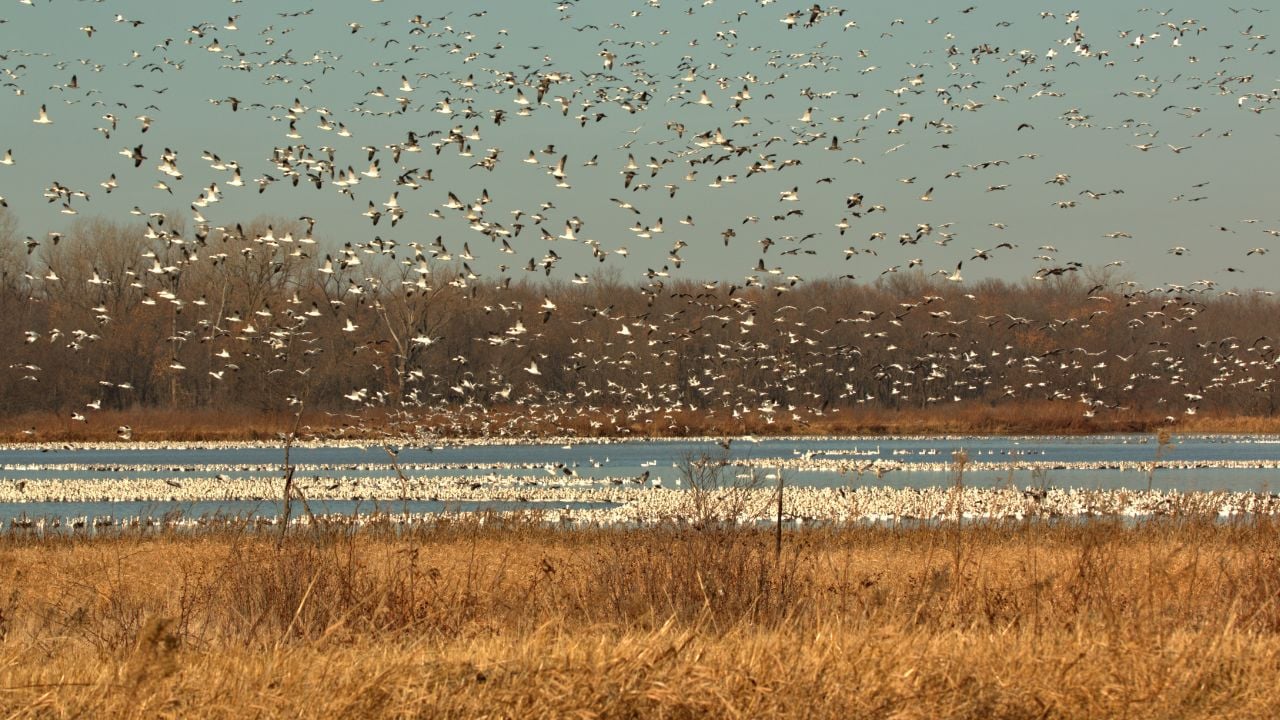
Get to Loess Bluffs around sunset, and you can watch snow geese pour back in for the night.
Missouri’s big flocks keep a schedule, and knowing it makes all the difference.
Here’s what snow geese do at Missouri’s Loess Bluffs every November.
1. Building Toward the Peak
Snow geese begin arriving at Loess Bluffs in mid-October, and the U.S. Fish and Wildlife Service puts the peak in mid to late November.
The snow goose migration is the refuge’s most spectacular wildlife event, in both fall and spring.
The Kansas City news site Flatland reported in 2020 that the fall peak can reach 200,000 to 300,000 snow geese.
That’s a 2020 peak range, and the count on the day you visit can run far lower.
Refuge staff complete weekly surveys from fall through spring migration.
2. Flying Out by Sunrise
Once the flocks arrive, a typical day at Loess Bluffs starts early.
Snow geese begin flying out at or before sunrise to feed on waste grain on private farmland nearby.
Flatland’s 2020 report describes a cold morning when one bird lifted into flight, others followed, and soon the sky was filled with geese.
The auto tour and hiking trails open 30 minutes before sunrise, so you can be in place when they go.
3. Gathering by Midday
Snow geese usually come and go from Loess Bluffs throughout the morning.
By midday, a large concentration of them can be on the wetlands.
Can’t make it at dawn?
The Missouri Department of Conservation’s magazine says that if you reach a Missouri wetland in late morning, snow geese will be returning from feeding in nearby fields.
By then, a floating mass of white birds may already be forming in an open pool.
Psst! How much do you know about migratory birds and Missouri wildlife refuges? Take our quiz and see how many you can get right.
Quiz
Migratory Bird Quiz
Answer these questions on migratory birds and Missouri’s wildlife refuges. We bet you can’t get them all right. Prove us wrong?
The oldest snow goose on record, a banded bird recovered in Idaho in 2020, was about how old?
4. Afternoon Liftoff
On that same typical day, snow geese fly out to neighboring fields again in the late afternoon, which gives you a second liftoff to watch.
One refuge photo shows a large flock lifting off in the afternoon and forming a dense mass as it rises together.
The refuge's home page captions another photo the same way, with great numbers of snow geese lifting into flight in the afternoon.
5. Returning at Sunset
That day ends at or after sunset, when snow geese return to Loess Bluffs.
The Cornell Lab of Ornithology says that during migration and winter, they roost mainly at night and afloat.
You'll have time for the late arrivals, since the auto tour and hiking trails stay open until 30 minutes after sunset.
6. Crowding the Marsh
At the peak of their arrival, snow geese turn the blue wetland at Loess Bluffs into a sea of white, according to the refuge.
A count in Flatland's 2020 report found about 102,000 snow geese and 123,400 ducks using the wetlands, numbers not uncommon for late November and early December.
Only about 3,500 acres of the refuge are managed wetlands.
Freeze-Up
Snow geese and other waterfowl at Loess Bluffs generally stay until the shallow marshes are frozen solid, then continue south.
The Missouri Department of Conservation puts the best waterfowl viewing at the refuge between Thanksgiving and Christmas, before the waters freeze.
Thanksgiving falls on November 26 this year, near the end of the peak window.
A cold snap that freezes the marshes can shorten the time you have to see them.
In winter, concentrations of ducks and geese can be found in patches of open water.
Bald Eagles and the Flocks
Snow geese are often what the bald eagles at Loess Bluffs are feeding on, the department's magazine reports.
The eagles migrate to the refuge by late fall and early winter, and a record 662 were counted during a 2020 survey.
Hundreds of geese rise at once, growing louder, when an eagle passes overhead.
Planning Your Visit
Loess Bluffs lists a one-way, 10-mile auto tour, six hiking trails, an observation deck and a viewing tower.
The auto tour is an opportunity to experience wildlife year-round.
The refuge's visit page lists October through December as the best months for migrating waterfowl, and morning and evening as the best times to see wildlife.
You'll find spotting scopes at the visitor contact station, on the hiking trails and along the auto tour drive, so you don't have to carry one.
Loess Bluffs Visitor Hours
Loess Bluffs National Wildlife Refuge lists its visitor center as open Tuesday through Saturday, 10 a.m. to 3 p.m., except federal holidays.
The auto tour and hiking trails are open daily, including federal holidays, from 30 minutes before sunrise to 30 minutes after sunset.
The phone number is (660) 442-3187.
Spring Migration
More snow geese use Loess Bluffs during spring migration.
The refuge says arrivals begin in mid-February, which gives you a second window to see them.
The public radio station at Northwest Missouri State University reported in 2026 that a February 24 survey counted 755,550 snow geese at the refuge.
The department's magazine reports that spring counts at Loess Bluffs can reach more than 1 million.
Mid-March is the typical peak for the spring migration.
9 Signs Hunting Season Has Arrived in a Missouri Town
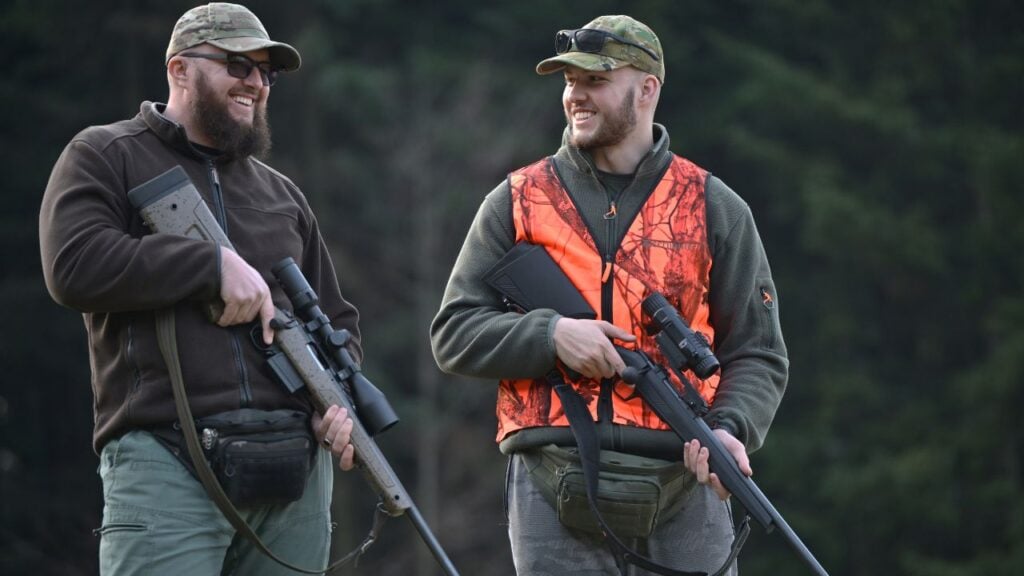
Shop owners, cooks, and processors across the Ozarks and the river bottoms often notice the shift weeks before the big November opener.
These are the signs hunting season has arrived in a Missouri town.
9 Signs Hunting Season Has Arrived in a Missouri Town
5 Things Clarksville, Missouri Does Every Flood Season That Surprise Tourists

Flood season in Clarksville, Missouri, brings a few surprises for visitors.
These are the things Clarksville does every flood season that surprise tourists.
5 Things Clarksville, Missouri Does Every Flood Season That Surprise Tourists
