

6 Things Florida’s Lemon Law Covers That Most Car Buyers Don’t Know

Buy a used car from its first owner within the Lemon Law’s 24-month window, and its protection can come with it.
Floridians who keep taking the same car back to the shop don’t always realize how much the law covers.
Here’s what Florida’s Lemon Law covers that most car buyers don’t know.
Note: This is general information, not legal advice. Lemon Law rules and deadlines are subject to change, so confirm the current requirements with the Florida Attorney General’s Office.
1. Leased Cars
Leased cars fall under Florida’s Lemon Law, not just cars you buy.
If you lease for a year or more, the law counts you as a consumer.
A shorter lease doesn’t count.
The car has to be for personal, family or household use too.
When a leased car qualifies, you get back the deposit and rental payments you’ve paid the company that leased you the car.
The statute bars an early-termination penalty when you receive a refund or replacement.
2. Demonstrator Models
Florida’s Lemon Law covers demonstrator models, the cars a dealership uses for test drives.
Demos count.
The definition covers a demo when a manufacturer’s warranty was issued as a condition of sale.
The law protects you whether you buy or lease a new or a demonstrator vehicle.
For a demo you buy, the 24-month rights period runs from the car’s original delivery to a consumer.
3. Second Owners
A used car can still carry Lemon Law rights.
Buy a car from its first owner during the 24-month rights period, and the law treats you as a consumer too.
That holds when you use it for the same personal, family or household purposes.
The clock keeps running.
Say a car was first delivered 18 months ago. If you buy it now, you have six months of rights period left.
The title, the registration or the manufacturer may help you pin down when the first owner took delivery.
Psst! How much do you know about your Lemon Law rights? Flip each card and see how many you can get right.
4. Taxes and Fees in Your Refund
A Lemon Law refund goes beyond the car’s price.
Collateral charges are the extra costs you paid only because you acquired the car.
They include earned finance charges, sales taxes and title charges.
A refund also includes your net trade-in allowance, your cash down payment and your loan or lease payments, according to The Florida Bar.
One cost doesn’t come back.
Negative equity you rolled over from a trade-in stays your obligation.
Pull your purchase or lease contract and look for these lines before you ask the manufacturer for a figure.
What Counts as an Incidental Charge
Under the Lemon Law, incidental charges are a second kind of extra cost, and the statute defines them differently from collateral charges.
They’re the reasonable costs you pay as a direct result of the car’s defect.
Keep the receipts for anything the defect cost you, so you can show the connection when you ask for a figure.
5. Attorney’s Fees
Florida’s Lemon Law makes the manufacturer pay your attorney’s fees when you win in court.
That award covers your litigation costs and the money you lost because of the violation.
Arbitration is different.
Fees can be recovered only on an appeal to the circuit court.
6. Buyback Cars
Under the Lemon Law, a car the manufacturer took back stays marked as a buyback.
Sellers have to disclose that fact to the people who buy these vehicles afterward.
The statute requires a clear and conspicuous disclosure of the problem when a returned car is resold.
The manufacturer has to warrant the fix of that problem for 1 year or 12,000 miles, whichever comes first.
If you’re shopping for a used car, the Attorney General’s office links a searchable list of vehicles reported as bought back by manufacturers, so search it before you sign.
Vehicles the Law Skips
Trucks over 10,000 pounds gross vehicle weight, motorcycles, mopeds, electric bicycles and off-road vehicles aren’t covered.
A recreational vehicle can qualify, but the living facilities of recreational vehicles are excluded.
If you drive a work truck or a motorcycle, check the weight and vehicle type before you count on the law.
The Florida Bar says the car has to be sold or leased in Florida.
By that standard, a car you bought in another state before you moved may fall outside the law.
A car you use mainly for something other than personal, family or household purposes may fall outside the law too.
Counting Days in the Repair Shop
Days in the repair shop count toward the Lemon Law, not just repair visits.
A cumulative total of 30 days or more out of service for repairs triggers a presumption.
The law presumes the manufacturer has had a reasonable number of attempts.
Those days can come from more than one problem, unlike the three-repair test, which needs the same problem each time.
After three repair attempts for the same problem, you send written notice to the manufacturer by registered or express mail.
The manufacturer then gets a final attempt to fix the car, starting with 10 days to respond.
At 15 cumulative days out of service, the statute separately requires you to notify the manufacturer in writing.
The 30-day test needs the manufacturer to have had at least one chance to inspect or repair the car after that notice.
The law requires a fully itemized repair order each time your car comes back from warranty work.
The 24-Month Window
A problem you first report during the first 24 months stays covered, even when the repair happens later.
Month 23 still counts.
The window ends 24 months after the car’s original delivery.
Here’s the catch. The three-repair and 30-day tests count only repairs and shop days inside that window.
To take a dispute to the state’s arbitration board, you generally have to file no later than 60 days after the window closes.
Mark the date your window closes on your calendar the day you take delivery.
The Arbitration Board
The Lemon Law sends disputes to members of the Florida New Motor Vehicle Arbitration Board, who sit in panels of three.
Board decisions either award a refund or a replacement vehicle, or the case is dismissed.
If the board rules for you, the manufacturer has to comply within 40 days of receiving the decision.
Taking the Manufacturer to Court
You can sue the manufacturer in court to recover damages caused by a violation of the Lemon Law.
Your lawsuit generally has to begin within 1 year after the rights period expires.
A board decision can be appealed to circuit court within 30 days of receiving it.
The appeal is a trial de novo, so the case is tried over from the beginning.
8 Florida License Plate Designs Pulled for Weak Sales
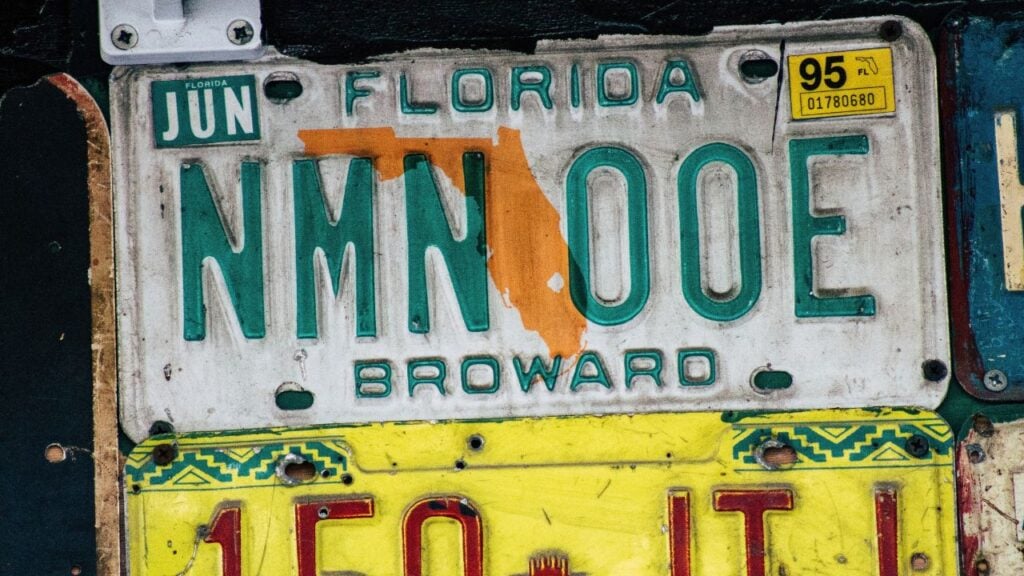
That plate on your bumper may not be around forever.
Weak sales can end a design.
8 Florida License Plate Designs Pulled for Weak Sales
9 Florida Fence and Property Line Rules Neighbors Get Wrong

A fence post set two feet over the line can turn next-door neighbors into courtroom opponents.
Florida has rules for exactly that situation.
