
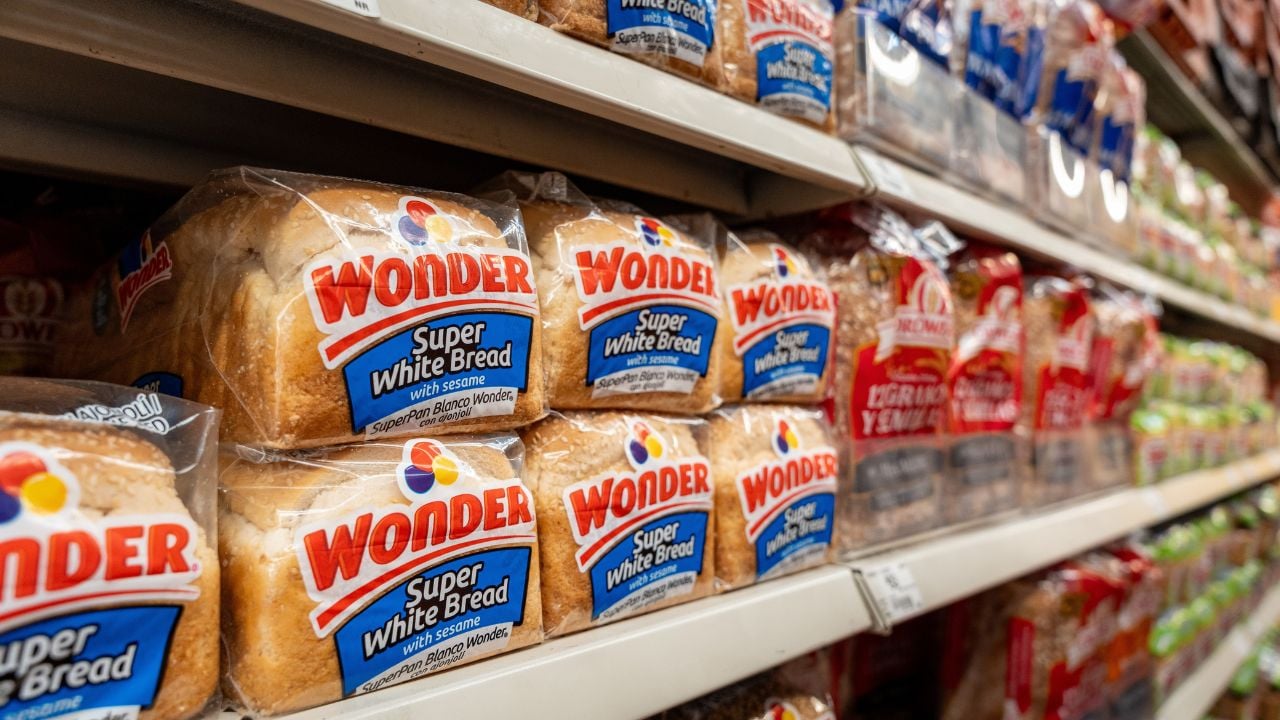
Has White Bread Gotten Cheaper? Here’s the Surprising Answer for Tennesseans

Buy a pound of white bread a week, and you’re paying about $23 more a year than you did in 2019.
But it’s not all grim.
The price of white bread in the South, which includes Tennessee, has eased since its 2024 high.
Here’s how white bread prices have moved, and what Tennesseans are paying now.
Note: This is general information, not tax advice. Prices and tax rates are subject to change, so confirm the current figures with the Tennessee Department of Revenue.
Up a Third Since 2019
Southern white bread averaged $1.283 a pound in August 2019.
The BLS average for the South in August 2026 is $1.724.
That’s an increase of 34.4%, or about 44 cents on every pound.
August 2019 was one of that year’s cheaper months, though.
That works out to about 6 cents more per pound each year, on average, across those seven years.
Against the full-year 2019 average of about $1.33, what you pay today is up 30%.
You’re looking at a regional average, not a Tennessee-only price.
What the BLS South Number Covers
The BLS South region behind these Southern white bread prices covers 16 states and the District of Columbia.
Those states are Alabama, Arkansas, Delaware, Florida, Georgia, Kentucky, Louisiana, Maryland, Mississippi, North Carolina, Oklahoma, South Carolina, Tennessee, Texas, Virginia, and West Virginia.
BLS tracks prices in urban areas.
Each month’s figure applies to the month as a whole, not to any one date.
The Run-Up to the High
A pound of Southern white bread averaged $1.401 in January 2022.
By January 2024, the price had reached $1.876, an increase of 33.9% in two years.
That’s the highest monthly price in a series that goes back to 1980.
From $1.750 in August 2023 to $1.833 in December, the price rose 4.7%, and the peak came the next month.
From August 2019 to January 2022, the price rose 9.2%, from $1.283 to $1.401.
The 2022 average across all 12 months was $1.52.
The 2023 average was $1.78, an increase of 16.8% in one year.
If you noticed your bread getting pricier in 2022 and 2023, BLS prices show you were right.
Flat Since Last Summer
By August 2026, Southern white bread sat 8.1% under its January 2024 high, about 15 cents a pound.
The latest $1.724 matches the January 2026 reading exactly.
In August 2025 the South average was $1.736, so the latest $1.724 is a drop of 0.7%, or about a penny a pound.
Monthly averages have stayed between $1.699 and $1.771 since November 2025.
The South average hasn’t topped $1.80 since November 2024, when it hit $1.809.
If you look only at Augusts, the South average was $1.750 in 2023, $1.755 in 2024, $1.736 in 2025, and $1.724 this year.
That’s a spread of 3.1 cents across four years.
In August 2022, by comparison, the price was $1.559, so the jump to 2023 was 12.3%.
The South average is about what it was last summer.
How the South Compares
If you’re comparing, the U.S. city average for white bread is $1.823 a pound, about a dime above the South’s $1.724.
Since August 2019, that national average has risen from $1.275, an increase of 43%.
That’s about 55 cents more per pound, against 44 cents in the South.
The West average is $2.035 in August 2026, up 28.9% from $1.579 in August 2019.
The South’s 34.4% increase lands between the two.
Across the country, grocery prices overall rose 33.3% over the same seven years.
That puts Southern white bread at about the same pace as groceries in general.
On average, shoppers in the South pay about 31 cents a pound less than shoppers in the West.
A Year of White Bread
Say you buy a pound a week, or 52 pounds a year.
At the August 2019 Southern average of $1.283, those 52 pounds cost $66.72.
At today’s $1.724, they cost $89.65.
At the national average of $1.823, 52 pounds would cost $94.80.
That’s $22.93 more a year.
Double it to two pounds a week, and the extra cost doubles to $45.86.
Wheat Versus the Loaf
The U.S. Department of Agriculture’s Economic Research Service (ERS) puts bread among the more-processed foods.
Foods like that tend to have smaller farm shares, so wheat is only part of what you pay.
White flour, by contrast, sits among the less-processed products, which tend to have larger farm shares.
Retail prices for less-processed foods may respond more to farm price changes.
Bread takes multiple ingredients, including flour, high fructose corn syrup, and vegetable oil.
These figures are U.S. data, not Southern. From 2000 to 2013, U.S. wheat prices rose 162%, but retail bread prices rose only 52%.
A gap that wide means changes in farm prices will likely have a weaker effect on the price of your loaf, ERS says.
Psst! How much do you know about the price of bread? Take our quiz and see how many you can get right.
Quiz
Bread Price IQ
Answer these questions on bread prices, taxes, and history. We bet you can’t get them all right. Prove us wrong?
Sliced bread went on sale for the first time in 1928. In which state was that first loaf sold?
Tennessee's Food Tax
Tennessee charges a reduced state rate of 4% on food and food ingredients, plus a local rate.
Many other purchases face the general state rate of 7%.
On a pound of bread at the South average of $1.724, the 4% rate adds about 7 cents.
At the general 7% rate, that would be about 12 cents, so the food rate saves you about 5 cents a pound.
The local rate varies by county and city, so two Tennessee registers can ring up different totals on the same bread.
6 Tennessee Grocery Habits That Instantly Give Away a Longtime Local

At a Food City in Elizabethton, a shopper walks past the Sprite and loads a case of Dr. Enuf.
The man behind her moved down from Illinois in March, and he's never heard of Dr. Enuf.
6 Tennessee Grocery Habits That Instantly Give Away a Longtime Local
9 Food Lion BOGO Deals Worth the Trip for Tennessee Shoppers
Some grocery sale tags save pocket change.
Others save enough to notice on a bank statement.
9 Food Lion BOGO Deals Worth the Trip for Tennessee Shoppers
