
7 Habits That Give Away Someone From the North Carolina Mountains

In the North Carolina mountains, many locals check the woolly worm before winter.
If you grew up there, you probably have habits like that, too.
Here’s what gives away someone from the North Carolina mountains.
1. Heating With Wood
Wood heat stands out in several mountain counties.
In Madison County, about 13% of occupied homes use wood as their main heating fuel, based on Census Bureau estimates for 2020 through 2024.
Statewide, it’s about 1%.
Yancey County comes in near 10%, and Mitchell County sits near 9%.
If you grew up hauling split logs to the porch, you know the chore.
2. Digging Ginseng
NCpedia‘s 2006 encyclopedia entry says wild ginseng collectors were often mountain folk who depended on the income.
In mountain speech, the plant is sometimes called sang.
Mountain people were digging wild ginseng in the 1800s, and women and men alike could gather it to add to the family’s income.
The North Carolina Wildlife Resources Commission says wild ginseng can’t be collected from Jan. 1 through Aug. 31, which leaves a digging season of Sept. 1 to Dec. 31.
Before you dig, you need the landowner’s written permission, and that applies to public and private land.
State and national parks, including the Blue Ridge Parkway and the Great Smoky Mountains National Park, don’t allow collection.
Diggers should collect only plants with three prongs or more and replant the seeds where the roots came from.
3. Planting by the Signs
Planting by the signs has a long history in the Great Smoky Mountains.
Farmers there checked almanacs for the zodiac and moon phases before they planted.
Corn and other crops that grow above ground went in while the moon was waxing, and root crops like potatoes went in while it was waning.
A 2025 Cooperative Extension column from Henderson County describes old-time gardeners who plant by the signs.
It cites a review of more than 120 references that found no consistent link between the moon and plant growth.
4. Stringing Leather Britches
In a 2024 essay about a Western North Carolina farm family, threading green beans to dry into leather britches is a job that demands good eyesight and a steady hand.
Drying took far less equipment than canning.
Before winter, Appalachians would preserve green beans by stringing them on thread and hanging them to dry, the Mountain Gateway Museum in Old Fort says.
The dried beans are called leather britches, or shuck beans.
The strings could hang outside or behind a wooden stove until the beans shriveled.
Once dry, you could store the beans on the strings or in a flour sack, then rehydrate them and slow cook them with meat.
Psst! How much do you know about the Blue Ridge Mountains? Take our quiz and see if you can ace it.
Quiz
Blue Ridge Trivia
Answer these questions on the Blue Ridge. We bet you can’t get them all right. Prove us wrong?
The last section of the Blue Ridge Parkway to be finished is a curving bridge built from how many 50-ton concrete segments?
5. Making Apple Butter
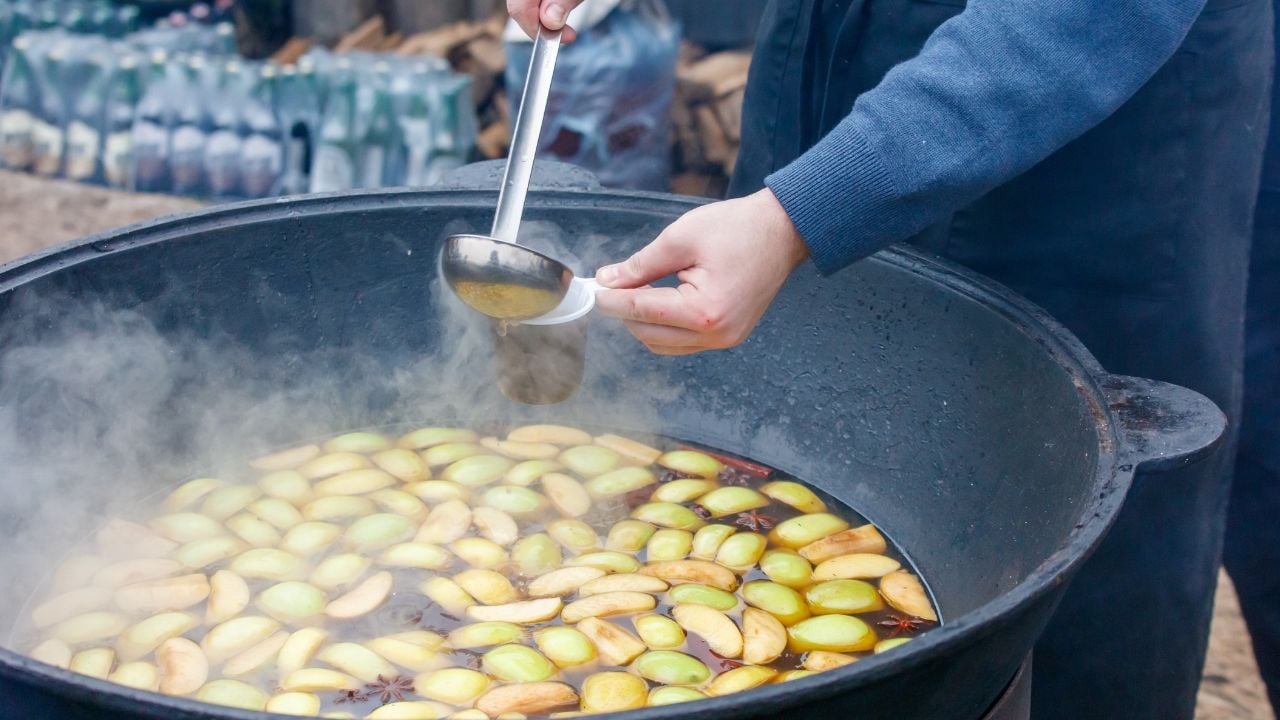
Apple butter was a common mountain treat in the Southern Appalachians, and it was usually made in a large kettle over a fire.
Many people still make it the traditional way, the Mountain Gateway Museum says.
Great Smoky Mountains National Park's annual Mountain Life Festival listed apple butter making among its demonstrations in 2025.
The same list included cider pressing, sorghum milling, hearth cooking and broom making, all at the Mountain Farm Museum behind the Oconaluftee Visitor Center in Cherokee.
6. Reading the Woolly Worm
Many mountain locals check the woolly worm before winter.
Banner Elk, in the High Country, built a Woolly Worm Festival around the tradition.
Mountain lore says the 13 segments on a woolly worm you spot stand for the 13 weeks of winter.
Black bands mean cold, snowy weeks, and brown bands mean milder ones.
The town started the festival in 1978 to determine which worm provides the official forecast.
The 2026 festival was scheduled for Oct. 17 and 18.
The grand prize is $1,000 for Saturday's overall winner, plus the honor of predicting the High Country's winter.
A 2012 analysis by the State Climate Office of three years of winning forecasts found them right 40% to 50% of the time.
That's about the same as flipping a coin.
7. Gathering Ramps
According to NCpedia, mountain folk nicknamed "ramp-eaters" have long enjoyed gathering ramps in the spring.
Ramps are wild leeks with a strong, garlic-like aroma that come up in early spring.
They were traditionally the season's first greens, and people considered them a tonic after the winter months.
Annual spring ramp festivals are held in many Western North Carolina counties.
The Haywood County Ramp Convention grew out of early 1930s gatherings and features picnicking, music, singing and traditional mountain activities.
The Mountain Dance and Folk Festival
Asheville's Mountain Dance and Folk Festival is an annual tradition that Bascom Lamar Lunsford kicked off in 1928.
Lunsford was a collector and promoter of traditional mountain music.
The 99th festival was scheduled for July 30, 31 and Aug. 1, 2026, with a different show each evening.
The traditions on stage include bluegrass, ballads, clogging, storytelling and Big Circle Mountain Smooth Dance.
The festival was meant to portray its participants with dignity, at a time when popular culture labeled mountain musicians hillbillies.
4 Regional BBQ Styles That Divide North Carolina Neighbors

North Carolina lawmakers once proposed naming an official state barbecue festival.
Many neighbors across the state still debate which style is best.
4 Regional BBQ Styles That Divide North Carolina Neighbors
9 Things Grandparents in North Carolina Do Differently Than Their Parents Did

A grandparent's version of how things should be done can start quite a conversation in a North Carolina family.
You remember how your parents did things, but you're also learning why their approach doesn't always fit how kids live today.
9 Things Grandparents in North Carolina Do Differently Than Their Parents Did
