
12 Things North Carolinians Grew Up With, and the Hometown Stories Behind Them

Before the green-tiled roofs and the glowing “Hot Doughnuts Now” signs, Krispy Kreme doughnuts were sold out of the back seat of a car.
Many Americans have no clue that Krispy Kreme originated in the Tar Heel State.
Here are the things North Carolinians grew up with, and the hometown stories behind them.
1. BC and Goody’s Powders
Commodore Thomas Council founded BC Powder in 1906 while working in Germain Bernard’s Durham drugstore.
In 1910, Council and Bernard named the powder BC, a combination of their surname initials.
Goody’s Headache Powder followed in 1932, built on a formula from a Winston-Salem pharmacist.
Headache powders were extremely popular in North Carolina and other southern states.
Production didn’t stay home, though.
If your family kept either one in the medicine cabinet, you might remember the name.
Where BC and Goody’s Production Went
The Block Drug Company of Jersey City, New Jersey, bought BC Powder in 1967.
Five years later, Block moved BC Powder production to Memphis, Tennessee.
Block bought Goody’s Headache Powder in December 1995.
Block soon closed the Winston-Salem plant and moved Goody’s production to Memphis too.
2. Pepsi-Cola
Pepsi-Cola started in 1893 at a New Bern pharmacy on Pollock and Middle Streets, where Caleb Bradham first concocted it as a fountain drink.
Brad’s Drink came first.
Bradham renamed it, and in 1898 he began bottling and marketing it as Pepsi.
By World War I, Pepsi was sold in 24 states.
Order one today and you’re drinking something that started at a New Bern pharmacy.
Pepsi-Cola is now one of the brands of PepsiCo, which says it serves customers in more than 200 countries and territories.
3. Krispy Kreme
You may know Krispy Kreme shops by their green-tiled roofs and glowing “Hot Doughnuts Now” signs.
Krispy Kreme Doughnut Corporation was founded in Winston-Salem in 1937 by Vernon Rudolph.
Rudolph and two partners began making doughnuts there and selling them out of a 1936 Pontiac with a delivery rack in the back seat.
The recipe came from a New Orleans chef.
Rudolph’s uncle, a storeowner in Paducah, Kentucky, had bought it.
The chain opened its first New York City store in 1996 and its first California store in 1999.
4. Mt. Olive Pickles
If a jar of dills sat in your refrigerator growing up, it may have been Mt. Olive.
The Mount Olive Pickle Company was officially founded in January 1926 in the town of Mount Olive.
Lebanese immigrant Shikrey Baddour started the business in the mid-1920s.
Brining came first.
As of 2017, it was the largest independent pickle company in the nation, producing 150 million jars of pickles a year.
At that point, about a third of its cucumbers came from independent North Carolina farmers.
The company’s website calls Mt. Olive the number one pickle brand in the U.S.
5. Lance Crackers
Lance started in 1913 when Philip L. Lance, a Charlotte coffee salesman, bought 500 pounds of Virginia peanuts.
Reluctant to send the peanuts back to the farmer, Lance roasted them at home and sold them for a nickel a bag.
Peanuts came first.
The company is credited as among the first to sell peanut butter crackers commercially.
You may have found Lance crackers in your lunch box growing up.
By 2006, Lance vending machines were at more than 60,000 locations in 40 states.
6. Texas Pete
Texas Pete comes from the TW Garner Company of Winston-Salem, and NCpedia dates the name to 1936.
The name nods to the spicy, Mexican-inspired food of Texas.
Pete was Harold Garner’s nickname.
During World War II, Texas Pete and other Garner products went to the U.S. government as soldier rations.
As of 2016, the business was still on the site of the original Garner family home.
7. Vicks VapoRub
Vicks VapoRub traces to a Greensboro druggist, Lunsford Richardson, who moved there in 1890 and bought a drugstore with a partner.
He went on to patent 21 medicines, including Vick’s Magic Croup Salve in 1894.
The croup salve became Vicks VapoRub in 1911.
Then it traveled.
VapoRub spread from the Southeast into the Northeast, and by 1917 it had reached people west of the Mississippi.
Psst! How much do you know about North Carolina history? Take our quiz and see if you can ace it.
Quiz
Tar Heel History IQ
Answer nine questions on North Carolina firsts, landmarks and nicknames. We bet you can’t get them all right. Prove us wrong?
A 12-year-old found a 17-pound gold nugget in a Cabarrus County creek in 1799. What was his name?
8. Cannon Towels
Cannon towels trace to a company that started in Concord in 1887, when 35-year-old cotton broker James William Cannon founded it.
Towels came later.
Cannon Manufacturing Company produced its first towels in 1890.
In 1906, Cannon bought 600 acres about seven miles north of his first plant, and the community there became the company town of Kannapolis.
By the end of World War I, Cannon had become the nation's largest towel producer.
9. Tweetsie Railroad
Tweetsie Railroad grew out of a narrow-gauge line, the East Tennessee & Western North Carolina Railroad, which began operating in 1882.
It closed in 1950.
Of its original 13 locomotives, only No. 12 remained, and it didn't reach Blowing Rock until May 23, 1957.
The park's website now describes a family-friendly Wild West adventure behind a historic steam locomotive.
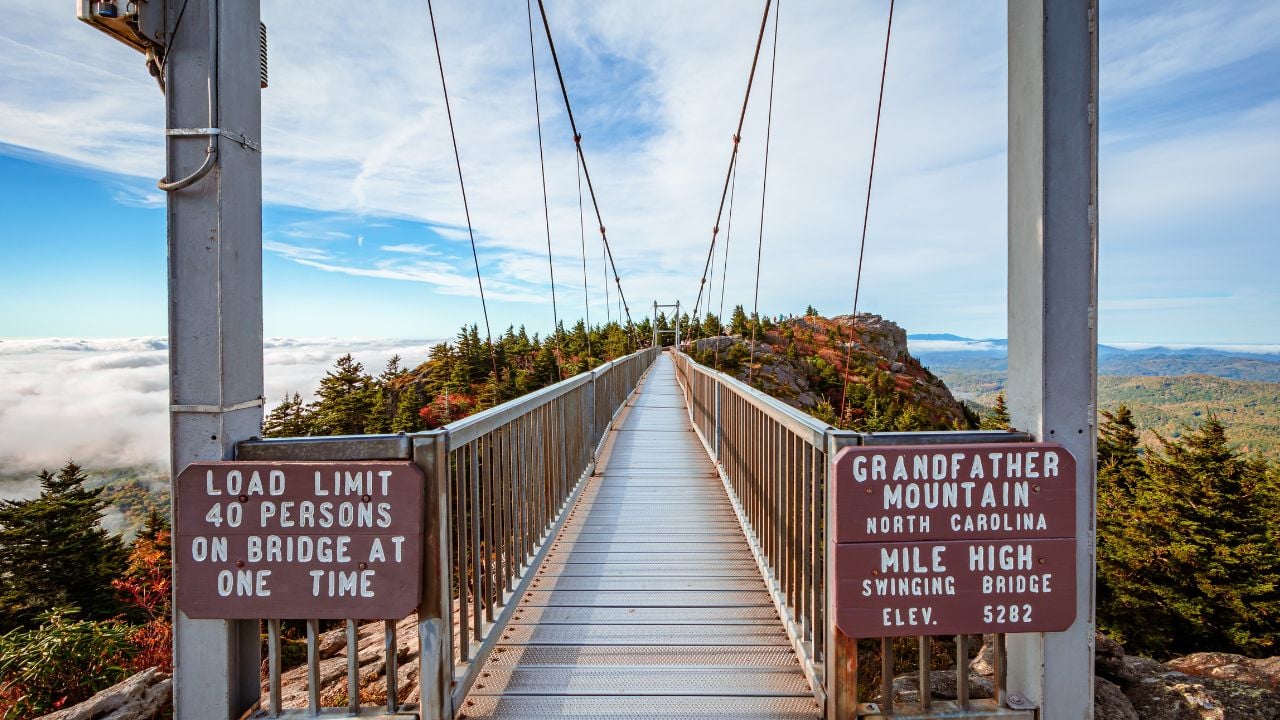
10. Mile-High Swinging Bridge
Grandfather Mountain's Mile-High Swinging Bridge was dedicated on September 2, 1952.
Greensboro architect Charles Hartmann Jr. designed the 228-foot suspension bridge, and Hugh Morton was the man behind it.
Walk across it and you're only 80 feet above the ground.
The mile refers to elevation.
11. K&W Cafeterias
K&W Cafeterias opened its first Winston-Salem location in the 1930s.
The chain closed all of its locations effective December 1, 2025.
Business NC called it an 88-year run.
There were eight remaining locations in North Carolina and one in Virginia.
When it closed, diners remembered long Sunday lines after church.
12. The Lost Colony
The Lost Colony began as a one-season celebration in 1937, and playwright Paul Green wrote it.
A cast of locals debuted it at Waterside Theatre in Manteo.
As of 2024, only World War II, a fire at the theater and the pandemic had interrupted the play.
The show went on.
The Lost Colony announced a June 4 to August 22 run for its 2026 season, its 89th.
If you grew up visiting Roanoke Island, you may remember that stage, which was built as a home for the play.
Members of a Civilian Conservation Corps camp in Manteo helped build the theater.
Some of those workers also appeared as extras on stage.
9 Grocery Items That Shrank, and North Carolina Shoppers Are Upset
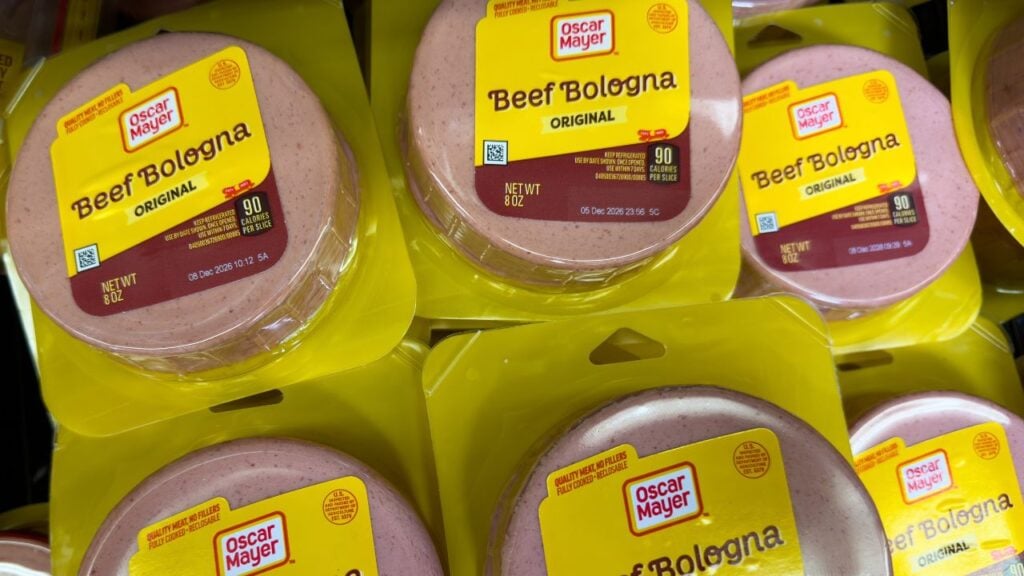
You reach for the same box you always buy, and it looks about the same.
There can be less inside, and your grocery bill doesn't shrink with it.
9 Grocery Items That Shrank, and North Carolina Shoppers Are Upset
8 Documents a North Carolina Private Car Sale Falls Apart Without

Handing over your keys doesn't finish a private car sale in North Carolina.
A notary's stamp and a few other documents can decide whether the DMV accepts it.
8 Documents a North Carolina Private Car Sale Falls Apart Without
