
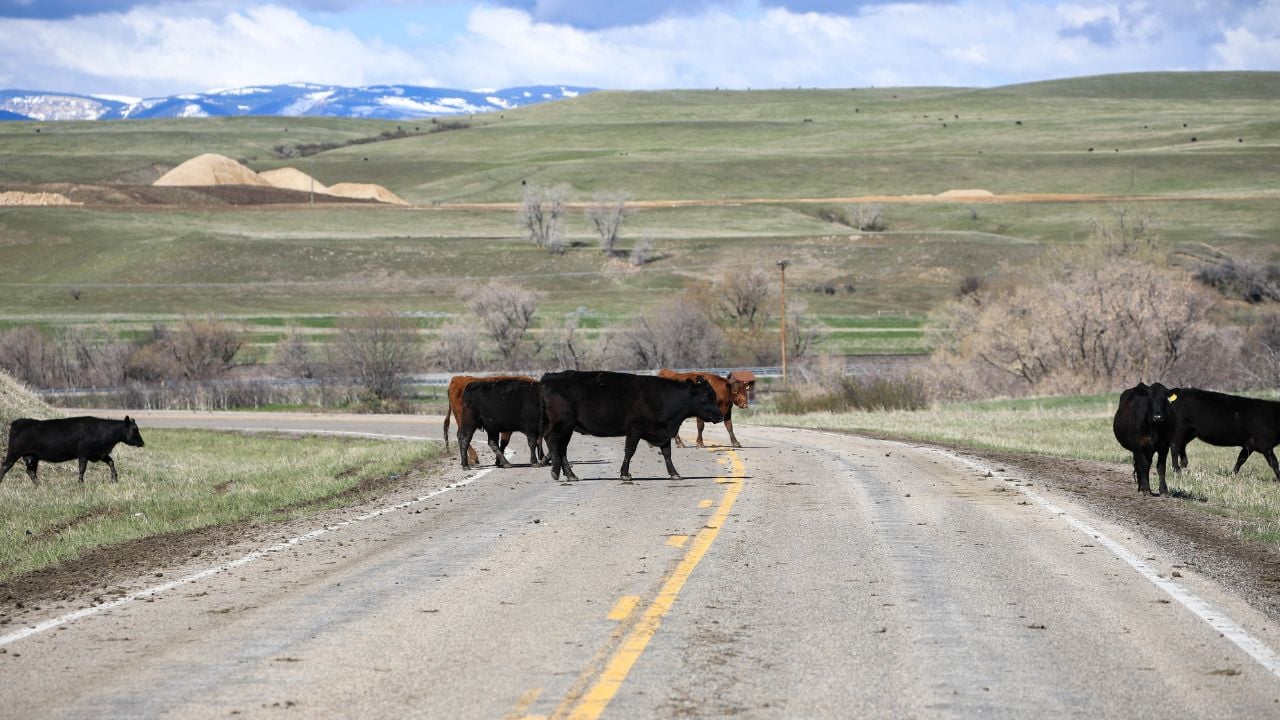
6 Things Montana’s Open Range Means When a Cow Is Standing in the Road

Hit a cow on a Montana road, and a civil court doesn’t start out assuming you were careless.
Montana’s open range law tries to balance ranch tradition and road safety.
Here’s what Montana’s open range means when a cow is standing in the road.
Note: This is general information, not legal or insurance advice. Driving and livestock laws are subject to change.
1. No Duty to Keep Livestock off Highways
A person who owns, controls or possesses livestock has no duty to keep those animals from wandering on highways, under Montana law.
So the cow you’re braking for doesn’t automatically mean a careless owner.
In open range country, you can’t count on a fence between you and the cattle.
That means a cow can drift onto the road with nothing in the way, so slow down early when you see animals near the shoulder.
What Counts as Open Range
Open range is a legal term in Montana’s highway code, not a nickname for the whole state.
The code defines it as areas where livestock are raised in sufficient numbers to be a significant part of the local or county economy.
In those areas, livestock graze and move about generally unrestrained by fences.
The code sorts the highways you drive through open range into high-hazard and low-hazard stretches.
A high-hazard stretch is one where livestock pose a significant traffic safety hazard.
2. Owner Liability Limits
A livestock owner is hard to blame for a crash under Montana law.
The same liability law says an owner isn’t liable for property damage or personal injury from a crash between a motor vehicle and livestock.
The exception is an owner who was grossly negligent or engaged in intentional misconduct.
If you hit a cow, comprehensive coverage typically covers an animal collision, though your policy sets the terms.
Read your coverage terms before you ever need them.
3. Interstates and Primary Highways
On certain interstates and federal-aid primary highways, a cow in the road can mean a misdemeanor for its owner.
Livestock owners may not let animals graze, remain on or occupy the right-of-way of those interstates and federal-aid primary highways.
It’s a misdemeanor.
The fine starts at $5.
The owner protection from section 2 carves those highways out, too.
If you meet cattle there, exclusions may apply, including livestock under the charge of herders and stretches the Department of Transportation designates as impractical to keep livestock off.
4. Herd Districts
An owner who willfully lets cattle run at large inside a herd district commits a misdemeanor, with a fine of $50 to $250 for each offense.
Willfully is the key word.
Landowners create a district by petitioning the county commissioners, and the petition names the months the district is in effect.
It needs owners of 75% of the land, or 55% if at least a quarter of that land is farmed or lived on.
If you drive through a herd district, the months its petition names set when it’s in effect.
Psst! How much do you know about Montana ranch country? Take our quiz and see if you can ace it.
Quiz
Big Sky Range IQ
Answer these questions on Montana ranching and range law. We bet you can’t get them all right. Prove us wrong?
Which of these animals isn’t on the list of livestock in Montana’s open-range highway law?
5. Flag Escorts and Night Bans
A herd of more than 10 on an interstate or state primary highway needs flag escorts in front of and behind the animals.
If you meet one, those escorts are there to warn you.
Slow down and give them room.
Herding on those roads at night is banned except in an emergency, and then the escorts need adequate warning lights.
The section doesn't apply during daytime at posted livestock crossings.
Stay alert at dusk and dawn, when the state transportation department says wildlife collisions tend to happen.
6. No Presumption of Fault
If you hit a cow, a civil court doesn't start from the assumption that you were negligent.
Under Montana law, a collision between a motor vehicle and a domestic animal carries no presumption of negligence on either side.
That covers claims by drivers and by livestock owners alike.
Neither side starts ahead.
That can matter when everyone tells a different story about what happened.
Highway Fencing
The Department of Transportation must fence the right-of-way of a primary or secondary highway through open range when livestock present a hazard to motorists.
That duty applies to roads built or rebuilt after July 1, 1969.
High-hazard stretches are supposed to get fences as promptly as possible.
Wherever a fence goes up, stock gates or stock passes must go with it, so you may spot gates where livestock cross.
Even where a fence isn't required, you may still see cattle guards and stock underpasses, which can go in where safety calls for them.
A secondary highway through a county park can stay unfenced if livestock aren't grazing there from Memorial Day to Labor Day, among other conditions.
Don't assume a fence is there.
After a Collision
A crash with a cow can fall under Montana's ordinary accident-notice rules.
Pull over somewhere safe first, then sort out the paperwork.
If the damage looks like $1,000 or more, you have to give notice right away.
If no officer investigates and the damage tops that line, you owe a written report within 10 days.
6 Things Montana Loggers Do Before the First Big Snow
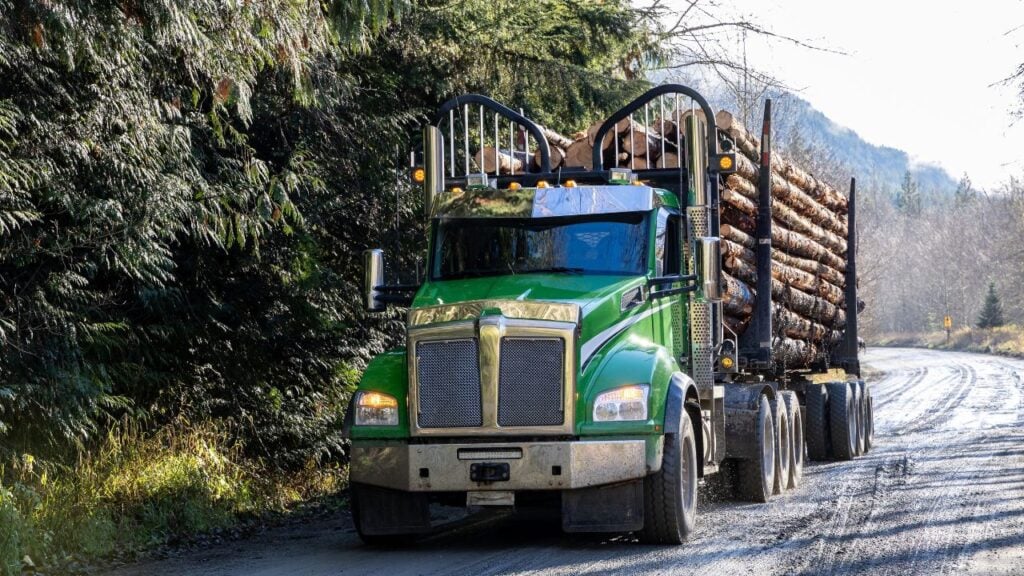
Logging crews start prepping for snow as the leaves turn.
Some of the prep jobs may surprise you.
