
6 Unwritten Rules of a Louisiana Boucherie

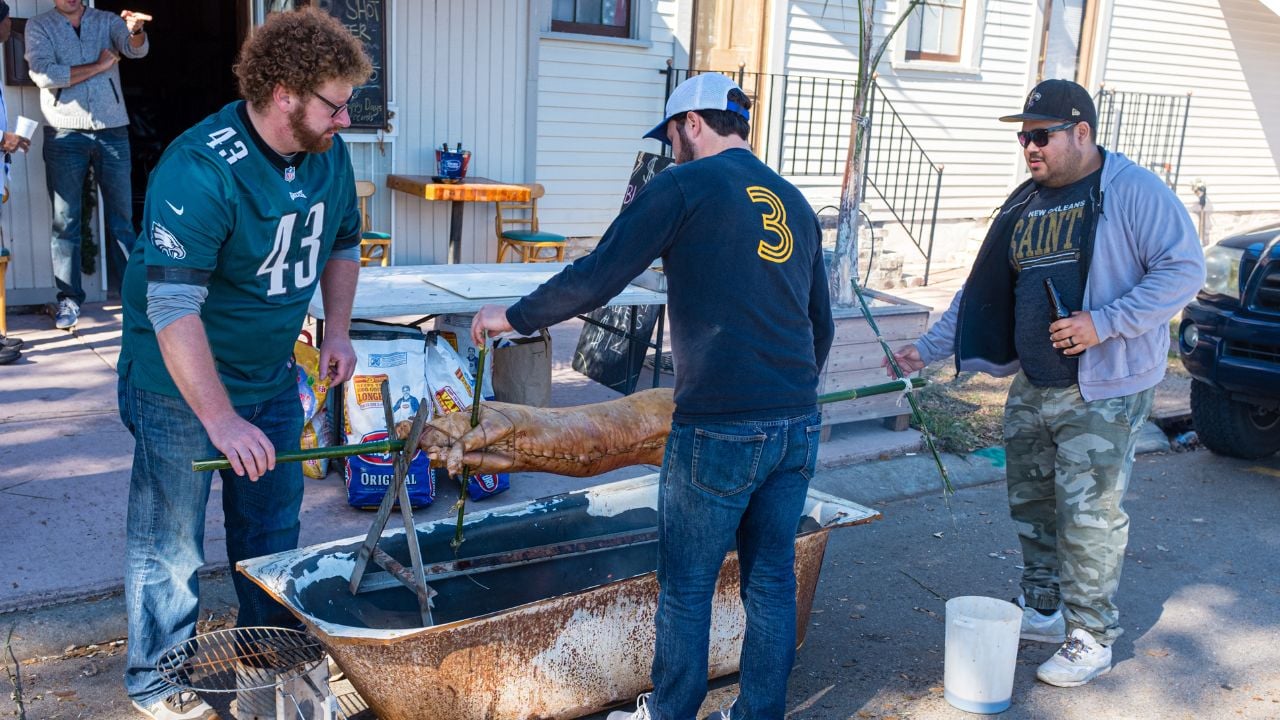
Boucheries in south Louisiana happened every few weeks from October to February, when it was cool enough to butcher.
Invited to one? You won’t get a rulebook, but the day still follows a pattern.
Here are the unwritten rules of a Louisiana boucherie.
1. Your Assigned Role
Boucherie participants accepted assigned roles.
Butchers divided the meat, with some cured into hams and some ground into sausage, while cooks prepared a communal feast.
At a boucherie near Arnaudville, the group arranged itself in a circle of five cooking stations and took on assigned dishes.
At the annual Cravins family boucherie near Mallet, the physically demanding tasks tend to fall to male attendees.
Women are often the boudin-makers, and both men and women cook throughout the day.
The men there have usually learned their skills from years of watching older brothers and fathers, before inheriting a role such as scratching the hair off the hog.
2. Taking Turns
Betty Olivier remembers boucheries rotating between households in Pécanière in the 1930s and 1940s, Country Roads Magazine reports.
One household held a boucherie one week, and someone else held the next.
When the meat ran out, another neighbor slaughtered a pig.
Louisiana Historic and Cultural Vistas says each family took a turn providing the animal in the interest of fairness, while everyone involved shared the work of slaughtering, butchering, and cooking.
Families and neighbors also came together on a rotational basis to take on a task too difficult to do alone.
In Louisiana French, the tradition also went by boucherie de bloque, boucherie de quartier, and boucherie de société, all names that point to its communal side.
3. Waiting for Cool Weather
Boucheries took place every few weeks from October to February, Garden & Gun reports.
Winter was a good time to slaughter a pig that had spent the summer and fall fattening up.
The custom comes from the time before refrigeration, when killing a hog meant you needed a crowd to eat it.
Preserving the meat was a way to ensure it lasted through the lean months of winter or when work was scarce, 64 Parishes says.
Only dishes that would spoil fast, like a stew, were eaten that day.
Winter also helped with storage, since people stashed food on the north side of the house, made cooler by winter winds and increased shade, or in cisterns or wells.
Even with smoking and salting, the meat would only last a few weeks in Louisiana’s mild climate.
Psst! How much do you know about Cajun traditions and Acadian history? Take our quiz and see if you can ace it.
Quiz
Cajun Country IQ
Answer these questions on Mardi Gras runs, Acadian history, and boudin. See how much of south Louisiana’s story you know.
At a courir de Mardi Gras, costumed revelers chase down which live animals for the communal gumbo?
4. Using the Whole Hog
At a boucherie, participants used every possible part of the hog from nose to tail, and nothing went to waste.
They cut the hog into parts, cooked them over a fire, stuffed some into casings, and twisted them into links.
Boudin packed rice, liver, meat, and seasonings into casing.
Tallow from the fat went into candles and soap, which gave families light and a way to stay clean.
Cooks smoked, heavily salted, or stored in the pig's fat in jars whatever they didn't eat fresh.
What's on a Boucherie Table
At a boucherie, cooks fried cuts of skin, fat, and meat to make gratons.
A stew called fraisseurs mixes heart, kidneys, and parts of the liver with tenderloin.
Hog's head cheese starts with the pig's head, cooked with onions, bell peppers, and spices into a gelatinous mass.
Backbone stew starts with the backbone, slow-cooked until the marrow melts out.
5. Sharing the Meat
At a boucherie, the meat was shared among neighbors so it wouldn't go to waste, Country Roads Magazine reports.
Olivier also remembers everyone from the area coming, and each family left with meat, boudin, and cracklins.
At a Slow Food New Orleans boucherie at Docville Farms in St. Bernard Parish, ravenous attendees heartily consumed all of the meat by day's end.
6. Starting Early
At the annual Mallet boucherie, the butchering of the hog is likely complete by daybreak, 64 Parishes reports.
A team of close to a dozen men works through killing, draining, scalding, scraping, and butchering.
Those first hours demand high concentration, and by around 8:30 a.m. the mood turns more jovial.
At a Grand Coteau boucherie, Texas Monthly reported in 2015, attendees came out of their tents at daybreak as propane burners whooshed into action.
At a boucherie near Arnaudville, one participant arrived as soon as it was light enough to see.
The group was already there, having coffee and setting cast iron pots on propane burners.
What Boucheries Mean Today
Boucheries still happen semi-regularly in rural Creole communities near Opelousas, though far less often than in previous decades, a 2022 64 Parishes article says.
In some Creole families and communities, the boucherie's origins could stretch back to the slavery era.
Many Creole participants describe the day as a way to celebrate pride in cultural identity, family, and the self-sufficiency and ingenuity of their ancestors.
As the boucherie evolved, it also came to mean companionship, storytelling, laughter, and stronger family and community bonds.
Boucheries also serve as a homecoming and a cultural touchstone for relatives and friends who've moved out of state.
Modern Boucheries
At the Mallet boucherie, zydeco music drifts through backyard speakers as workers set up stations for cutting the skin for crackling and seasoning the ribs.
The Arnaudville hosts first held a boucherie in 2019, when one of them slaughtered two pigs he had raised himself.
At that Arnaudville boucherie, musicians sat in the middle of the cooking circle with their accordions, fiddles, triangles, and guitars and played traditional songs.
When a dish was ready, a call went out and everyone lined up to taste.
Garden & Gun reported in 2018 that chef John Folse hosts a February workshop at his White Oak Plantation outside Baton Rouge.
Chefs from across the country learn there to slaughter a hog and use every part of it.
8 Louisiana Dishes That Change Two Parishes Over
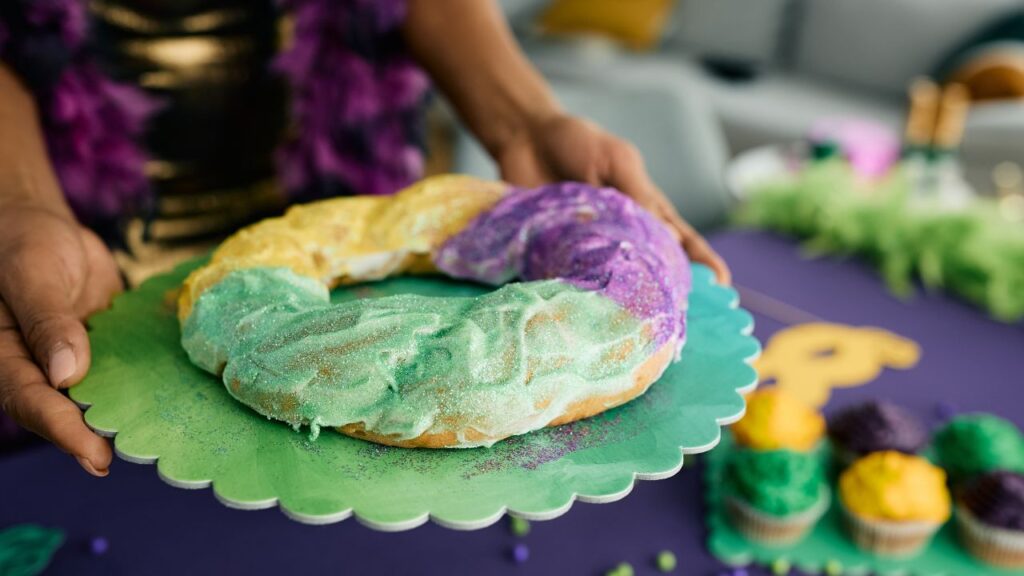
Think a bowl of gumbo tastes the same no matter which Louisiana parish it's ladled in?
Gumbo is only the start of how Louisiana cooking changes from one parish to the next.
8 Louisiana Dishes That Change Two Parishes Over
7 Things Louisianans Do Every Fall That Out-of-Staters Never Expect
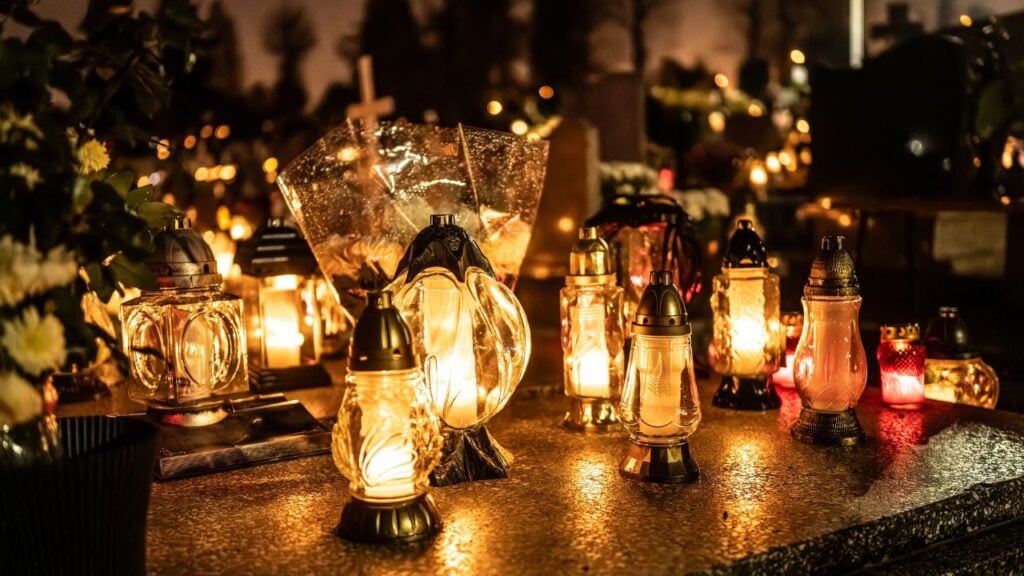
Fall arrives on a different schedule in Louisiana than the rest of the United States.
Some of what Louisianans do every fall may surprise an out-of-stater.
7 Things Louisianans Do Every Fall That Out-of-Staters Never Expect
