
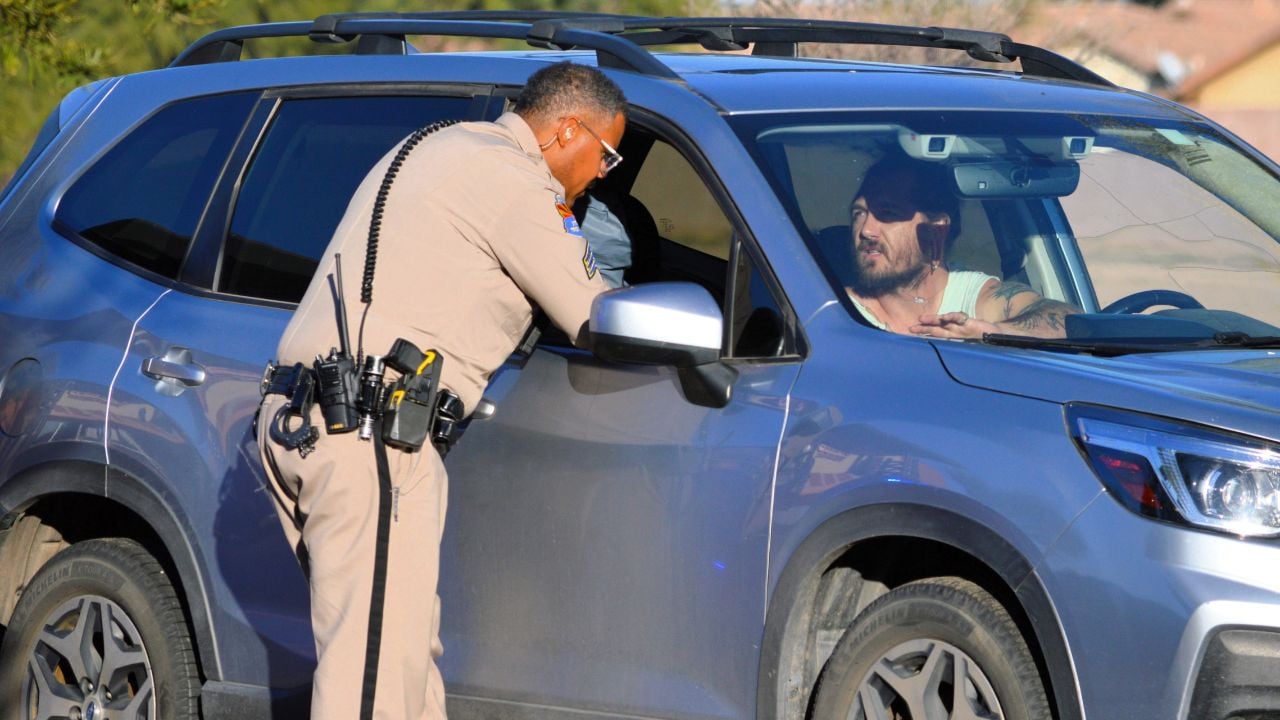
7 Iowa Driving Laws Most Drivers Have Never Heard Of

You passed your driving test, you’ve renewed your license and you’ve logged years on Iowa roads.
You’ve probably still never been told about a few of these rules.
Here are the Iowa driving laws that catch drivers off guard, and what each one asks of you.
Note: This is general information, not legal advice. Traffic laws and fines are subject to change, so confirm the current requirements with the Iowa Department of Transportation.
1. Funeral Processions
Iowa gives a funeral procession the right-of-way, and the driver of every other vehicle, except an authorized emergency vehicle, has to yield it.
The Code describes a procession as vehicles accompanying the body of a deceased person during daylight hours.
Its wording has the procession keep all other motor vehicles with lighted headlamps in close formation.
So when you meet one, you yield to the whole line of vehicles.
Drivers in a procession shall not be charged with violating traffic rules relating to traffic signals and devices, the Code says.
2. Stopped Vehicles With Flashing Lights
Slowing down for a police car on the shoulder is familiar, but the move-over law covers more than police cars.
It also applies to a stopped tow truck, utility truck, road maintenance or construction vehicle, or trash or recycling truck with its lights flashing.
The law also names a stopped motor vehicle that is continually displaying its emergency signal lamps flashing simultaneously.
Approaching one of these vehicles gives you two choices.
You can move into a lane that isn’t next to the vehicle, if the road and traffic allow it.
If you can’t, you slow to a speed below the posted limit and stay ready to stop.
What a Move-Over Violation Can Cost
Iowa’s move-over law is a simple misdemeanor.
A violation that causes a crash can add a $500 fine for an injury or a $1,000 fine for a death.
A conviction tied to a crash also brings a license suspension of 90 days for property damage, 180 days for an injury, or one year for a death.
3. School Bus Stop Arms
Iowa law makes traffic stop for a school bus with its stop arm extended, including drivers on a private road or driveway.
Behind the bus, you stop at least 15 feet away and stay stopped until the arm is retracted.
When you meet a school bus showing flashing amber lamps, you slow to 20 miles per hour or less.
The Code also says that on a highway with two or more lanes in each direction, you need not stop upon meeting a school bus traveling the opposite way, even when that bus is stopped.
If you pass a stopped bus, a first offense can bring a fine of $345 to $930.
4. Headlight Rules
After dark, the Code requires lighted headlamps on every motor vehicle on a highway from sunset to sunrise.
Fog, snow, sleet and rain count too, whenever they keep you from clearly seeing people and vehicles 500 feet ahead.
Dimming comes with distances, and you dim your high beams within 1,000 feet of an oncoming vehicle and within 400 feet when you follow another vehicle.
5. Reflective Devices on Slow Vehicles
Farm tractors, road graders and horse-drawn vehicles, along with other vehicles built mainly for off-highway use, fall under a reflective device rule.
The device has to be visible from the rear whenever the vehicle travels at 35 miles per hour or less.
Above 35, it has to come off or be hidden from view.
Woodbury County’s roads department said in a 2024 notice that fall harvest season brings increased farm equipment movement on the roadways you drive.
6. Child Restraints Under Age 18
Any passenger under 18 who rides with you falls under the child restraint law.
A baby under one year old who weighs less than 20 pounds has to ride rear-facing.
A child under six needs a child restraint system, and that definition includes a booster seat.
Children from six through 17 can use either a child restraint system or a safety belt.
Teenagers count.
Psst! How much do you know about Iowa’s road history? Take our quiz and see if you can ace it.
Quiz
Iowa Road History IQ
Answer nine questions on Iowa’s roads, rules, and transportation milestones. We bet you can’t get them all right. Prove us wrong?
In which year did Iowa first require motor vehicles to be registered?
7. Hands-Free Driving Law
Iowa's hands-free law took effect July 1, 2025, but fines didn't start until January 1, 2026.
The first six months were a warning period.
Iowa Capital Dispatch reported on January 2, 2026, that drivers now face a $100 fine for violating the handheld ban.
The same report says the fine rises to $500 if the violation causes an injury and to $1,000 for a death.
The Iowa Department of Public Safety says you cannot hold your phone, type, scroll, or enter GPS (global positioning system) coordinates while you drive.
It lists phone mounts, auxiliary cables, speakerphone features, Bluetooth and other voice command systems as hands-free options.
10 Foods and Drinks Iowans Grew Up On That Horrify Out-of-Staters

Growing up in Iowa can leave you with food habits that look perfectly normal at home.
Bring them to a dinner table full of out-of-staters, and you may get a raised eyebrow.
10 Foods and Drinks Iowans Grew Up On That Horrify Out-of-Staters
7 Things Fareway Does Differently Than Hy-Vee That Iowans Notice
Many Iowans have a favorite grocery store, and they stick with it.
The two chains can look alike from the road, but step inside and the differences start to show.
7 Things Fareway Does Differently Than Hy-Vee That Iowans Notice
