
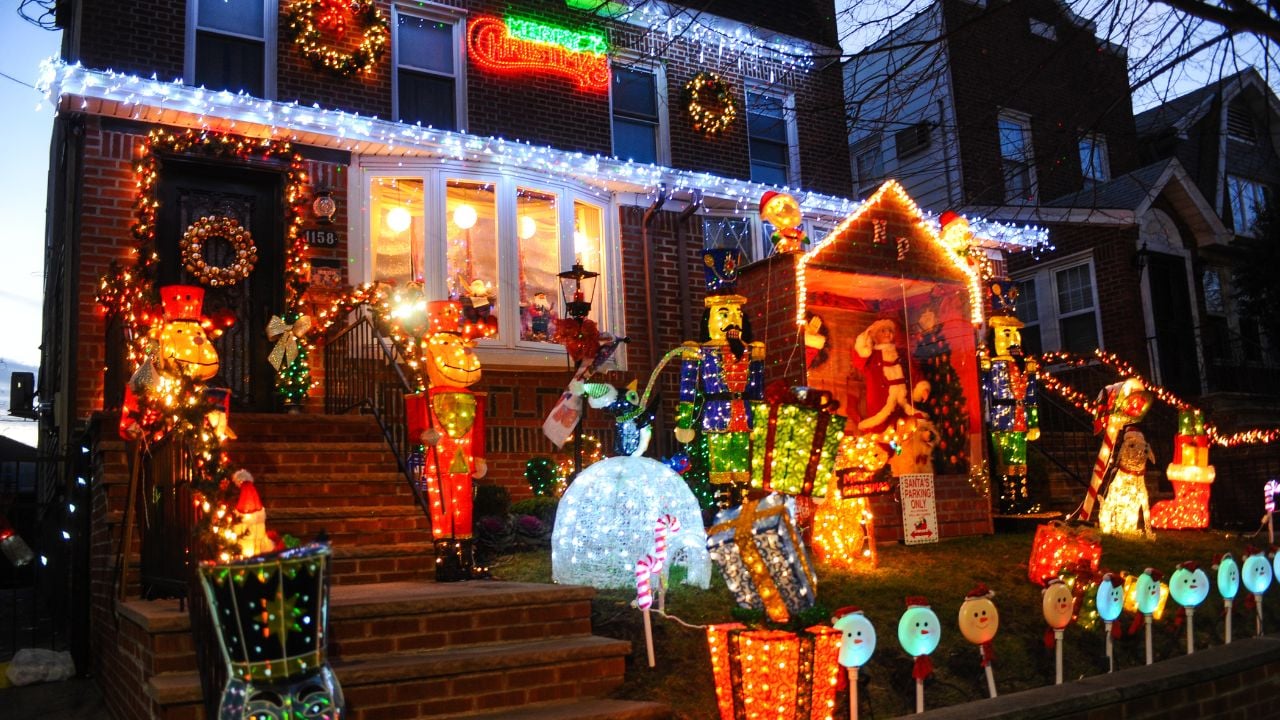
6 Rules That Allow HOAs to Fine Georgia Homeowners Over Holiday Decorations

You hang your holiday lights the weekend after Halloween, and a letter from your HOA shows up the next week.
Whether you owe anything depends on a document you probably haven’t read.
Here are the rules that allow HOAs to fine Georgia homeowners over holiday decorations.
Note: This is general information, not legal advice. Association rules vary by community and are subject to change, so check your governing documents.
1. Covenants Versus County Code
Your HOA may fine you over decorations your county’s code allows.
Gwinnett County, for one, says HOA covenants are often more restrictive than city or county codes.
It also says local governments can’t enforce association covenants.
That leaves the HOA, which can take you to court.
Where your declaration allows fines, the HOA can fine you, too.
2. Fine Clauses
A fine over holiday decorations starts with the documents recorded for your neighborhood.
Georgia’s Property Owners’ Association Act governs the communities whose declarations adopt it.
Under the Act, an association can impose fines only if and to the extent its instrument provides.
The instrument is the declaration, plats and plans recorded for your neighborhood.
No fine clause, no fine.
If your declaration has the clause, the law requires you and anyone else who occupies your lot to follow its lawful provisions.
The Act extends that duty to the lawful provisions of the association’s bylaws.
Breaking the instrument is grounds for an action to recover sums due, damages or an injunction.
The association can bring that action, or, in a proper case, one or more aggrieved lot owners can.
Before it seeks an injunction, the association generally has to give notice as the instrument provides, or ten days’ written notice if the instrument says nothing.
3. Calendar Clauses
Holiday decorations can come with a calendar attached.
Camden Place Homeowners Association in Marietta says exterior holiday decorations can go up no earlier than 30 days before the event.
They have to come down no later than 14 days after each holiday.
If you leave your decorations up past the second deadline, you’ve broken the community’s design standards.
The standards’ enforcement section lists fines among the association’s remedies for a violation.
Other communities may set different windows.
Camden Place’s Holiday Windows for 2026
The 30-day and 14-day rule counts from the holiday itself, so each holiday has a separate window.
For Thanksgiving Day, Nov. 26, the window runs from Oct. 27 to Dec. 10.
For Christmas Day, Dec. 25, it runs from Nov. 25 to Jan. 8.
Your community may count differently, so read the exact wording in your standards.
4. Complaints Over Fines
A decoration fine doesn’t have to be the last word.
The Secretary of State’s office will start acting on owner complaints about an association on Jan. 1, 2027, and you can then challenge the association’s actions in an administrative hearing.
You have 180 days from the alleged issue to file the complaint.
The losing party in a hearing pays a $100 administrative fee.
Appeals of a hearing result go to magistrate court for claims under $15,000 and to superior court for claims over that.
5. Fines That Become Liens
An unpaid fine over holiday decorations can turn into a lien on your home.
Under the Act, any sum an association lawfully assesses against your lot, fines included, becomes a lien on that lot.
The debt is also your personal obligation from the day it comes due.
The lien ranks ahead of other liens, with exceptions that include property tax liens and first mortgages.
Until Jan. 1, 2027, an association can’t file to foreclose unless the lien is at least $2,000.
The association also has to send you notice by certified mail or statutory overnight delivery.
Then it has to wait at least 30 days.
Until Jan. 1, 2027, the lien lapses four years after the sum first came due.
Psst! How much do you know about HOA fines? Tap each card and see how many you get right.
6. Board-Adopted Rules
A holiday decoration rule doesn’t have to be in the original declaration.
The Act also requires you to follow reasonable rules or regulations the association adopts under its instrument.
The Act covers rules the association has given lot owners.
A limit on inflatables, for example, could arrive as a board rule instead of a declaration amendment.
A board rule has to be adopted under your instrument, so check any new one against your declaration.
Where Flags Fit
Holiday decorations don’t get the protection federal law gives the American flag.
The federal flag act of 2005 bars a covered association from adopting or enforcing any policy that would restrict or prevent a member from displaying the flag.
It still allows reasonable restrictions on the time, place or manner of the display that are necessary to protect a substantial interest of the association.
If you hang a wreath beside your flag, only the flag has the federal protection.
A light-up Santa or an inflatable snowman isn’t a flag of the United States either.
Your declaration decides those.
What Changes January 1
Georgia’s Property Owners’ Bill of Rights Act changes how associations collect fines, and its main protections start Jan. 1, 2027.
Governor Brian Kemp signed Senate Bill 406 on May 12, 2026.
Starting Jan. 1, 2027, an association that isn’t registered with the Georgia Secretary of State can’t collect fines or fees, record liens or start a foreclosure.
From then on, the Secretary of State’s office can limit the fines an association may impose or collect when there’s appropriate cause.
The same law stretches the life of an association’s lien from four years to six, starting Jan. 1, 2027.
Starting Jan. 1, 2027, fines stop counting toward the balance an association needs before it can foreclose on your home.
A complaint to the Secretary of State also triggers an automatic stay that keeps the association from collecting fines or fees.
7 Trees Georgia Homeowners Should Never Plant Within Twenty Feet of Their House
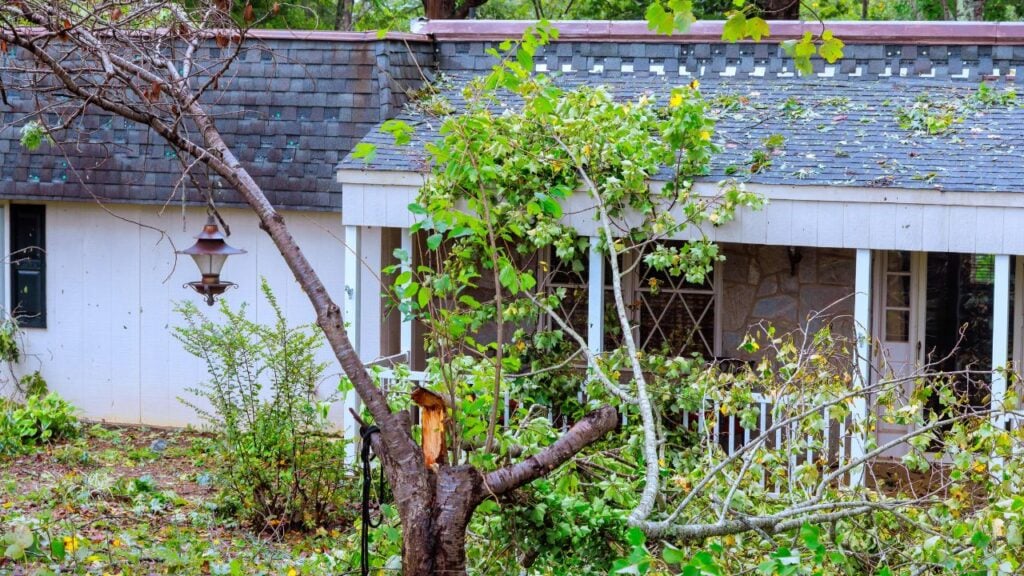
That small tree at the garden center rarely stays small.
Some of the trees Georgians plant grow fast and big, and they can cause trouble when the weather turns.
7 Trees Georgia Homeowners Should Never Plant Within Twenty Feet of Their House
8 Things Only a Georgia Childhood Teaches You

Some of what you learned growing up in Georgia never came from a textbook.
Those lessons can look different once you meet people who grew up in other states.
