
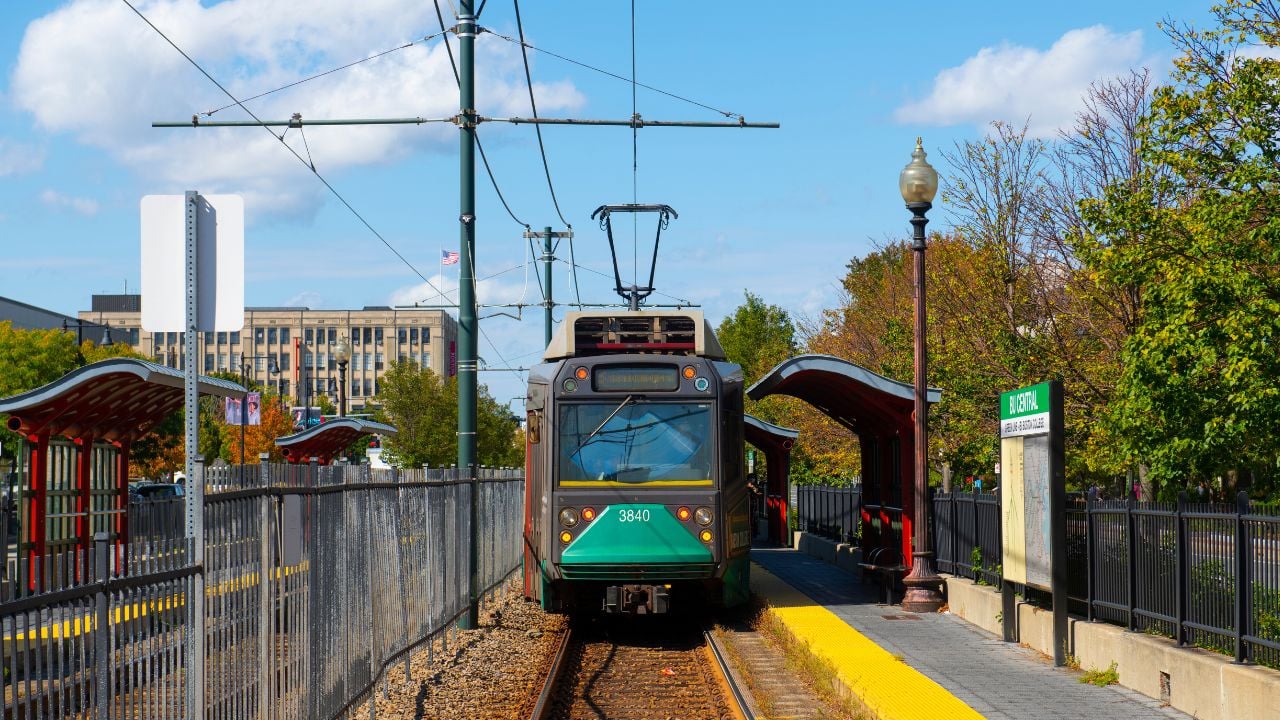
12 Things About Riding the T That Only Bay Staters Understand

You’ve ridden the T long enough to read a station sign without thinking.
The out-of-staters standing next to you are still guessing.
Here are the things about riding the T that only Bay Staters understand.
1. Tremont Street Subway
The Tremont Street subway opened in 1897 as North America’s first subway tunnel, according to the T.
It’s still in use today.
Ride between Park Street and Boylston and you’re in that tunnel.
Under Boston Common, it connects Government Center, Park Street and Boylston stations.
2. Inbound and Outbound
On the subway, your train is inbound when it heads toward the four downtown stations near Boston Common, per the T’s guide.
Those stations are Park Street, State Street, Government Center and Downtown Crossing.
Outbound is the opposite.
3. Line Names by Color
Four of the line colors come with an explanation in the T’s subway guide.
Harvard University, home of the Crimson, gives the Red Line its name, since the line travels through it.
Ride the Blue Line and you travel underneath Boston Harbor and along the Atlantic Ocean, the route behind its name.
For the Orange Line, the guide points to its route under Washington Street, which was formerly named Orange Street.
The Green Line takes its name from the park system it travels through.
4. Green Line Branches
One color, four branches.
They run to the west and north of Boston, and the T letters them B, C, D and E.
You’ll take the B branch to Boston College, while Northeastern University and Medford/Tufts are on the E branch.
All Green Line trains stop at Park Street, Boylston, Arlington and Copley.
5. Silver Line Bus
The Silver Line shows up alongside the T’s train routes, but it’s a bus.
Some Silver Line stops are underground and use fare gates, just like subway stations.
Underground, it’s still a bus.
Your fare depends on the route: SL1, SL2 and SL3 riders pay the standard subway fare, while SL4 and SL5 riders pay the standard bus fare.
6. Red Line Fork
The Red Line runs south from Cambridge into Boston and South Boston.
South of JFK/UMass, it branches into two sections.
You’ll want the Braintree branch for Quincy on the South Shore.
The Ashmont branch travels through Boston’s Dorchester neighborhood.
Psst! How much do you know about American transit history, from Boston’s horsecars to the transcontinental railroad? Take our quiz and see if you can ace it.
Quiz
Transit History IQ
Answer these questions on Boston and American transit history. We bet you can’t get them all right. Prove us wrong?
In 1913, Bostonians gave the new articulated streetcars, which bent in the middle, what nickname?
7. Mattapan Trolley
Light rail from Dorchester to Mattapan comes from the Mattapan Trolley, an extension of the Red Line.
Its trains are from the Presidential Conference Car fleet, built in 1945-46.
They're about 80 years old.
You can transfer to the trolley at Ashmont, but cash payments don't allow transfers.
To request a stop, you pull the cable near the ceiling.
8. Fare Card Named for a Song
Your CharlieCard takes its name from a song, according to the T's history page.
"Charlie on the MTA" tells the story of a subway rider named Charlie, stuck on an endless train ride underneath the streets of Boston.
It was written in 1949 as a campaign song for a mayoral candidate.
On December 6, 2006, an East Boston woman bought the last token the T ever sold.
The T's release called the sale the end of an 80-year-old tradition.
9. Commuter Rail Zones
Commuter Rail stations fall into zones numbered 1A through 10, based on how far each station is from Boston.
Stations in Boston and nearby communities are in Zone 1A, while stations at the end of each line are in Zones 8, 9 or 10.
Your zone matters.
You need to know which zone you're traveling to before you buy a ticket.
Conductors sell tickets after boarding too, though the T says that option isn't always available.
How to Pay When Riding Commuter Rail
Riders can buy Commuter Rail tickets for every zone in the mTicket app, and ticket windows sell them too.
Contactless payment, like tapping a card or phone, isn't valid on Commuter Rail.
1-day and 7-day passes on a paper CharlieTicket cover Commuter Rail Zone 1A, the T's subway guide says.
10. Ferry Routes
The T runs boats too.
Its ferry guide lists routes to Hingham, Hull, East Boston, Charlestown, Lynn, Winthrop and Quincy.
The Hingham/Hull Ferry, route F1, travels year-round between Hingham and Rowes Wharf.
The East Boston Ferry, route F3, runs from Lewis Mall to Long Wharf from spring to fall.
Neither ferry sells tickets onboard, so you buy before you board.
11. Slow Zones
Slow zones are areas where trains must run at slower-than-normal speeds, which the T's track page calls speed restrictions.
In December 2024, a T release announced the completion of its Track Improvement Program and described it as the removal of slow zones for the first time in 20 years.
Since 2023, the T says it removed more than 220 speed restrictions and replaced 250,000 feet of rail across the system.
Whichever of the Red, Orange, Green or Blue lines you ride, the program covered its track.
12. Orange Line Shutdown
A 30-day full closure of the Orange Line from Oak Grove to Forest Hills began at 9 p.m. on Friday, August 19, 2022.
The T's diversion plan offered free shuttle buses between Oak Grove and Haymarket/Government Center and between Forest Hills and Back Bay/Copley.
The plan also added Commuter Rail stops at Forest Hills, Ruggles, Back Bay, North Station, Malden Center and Oak Grove.
Riders in Zones 1A, 1 and 2 could ride Commuter Rail at no charge by showing a CharlieCard or CharlieTicket to conductors.
8 Highway Habits That Instantly Tell a Massachusetts Driver From a New Hampshire One
Could you tell a Massachusetts driver from a New Hampshire driver in under a minute?
A few habits on the highway can give it away fast.
8 Highway Habits That Instantly Tell a Massachusetts Driver From a New Hampshire One
9 Reasons Bay Staters Keep Crossing Into New Hampshire and Staying
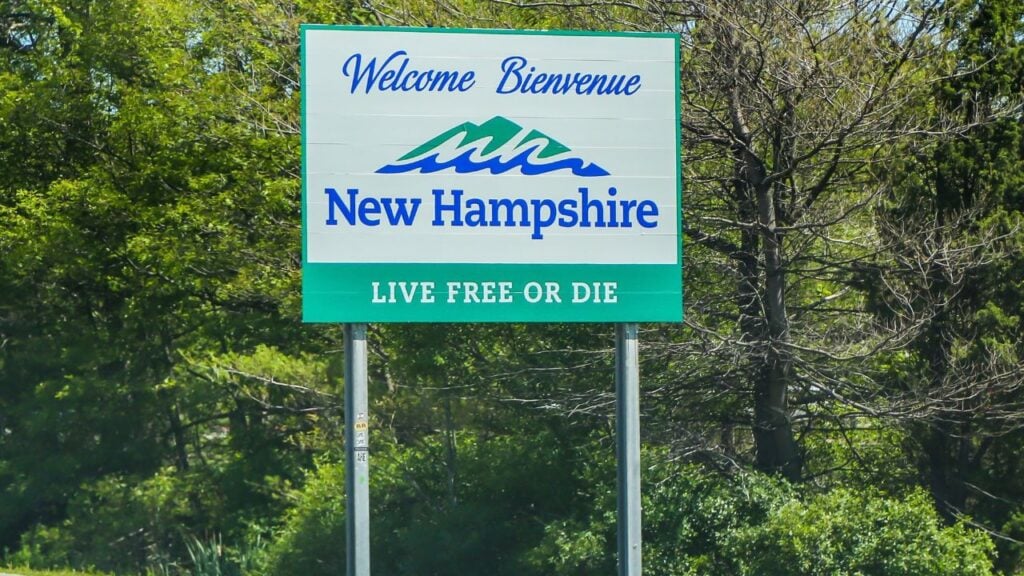
Many Bay Staters have crossed the border into New Hampshire for good.
These are the reasons they keep crossing and why so many end up staying.
9 Reasons Bay Staters Keep Crossing Into New Hampshire and Staying
