
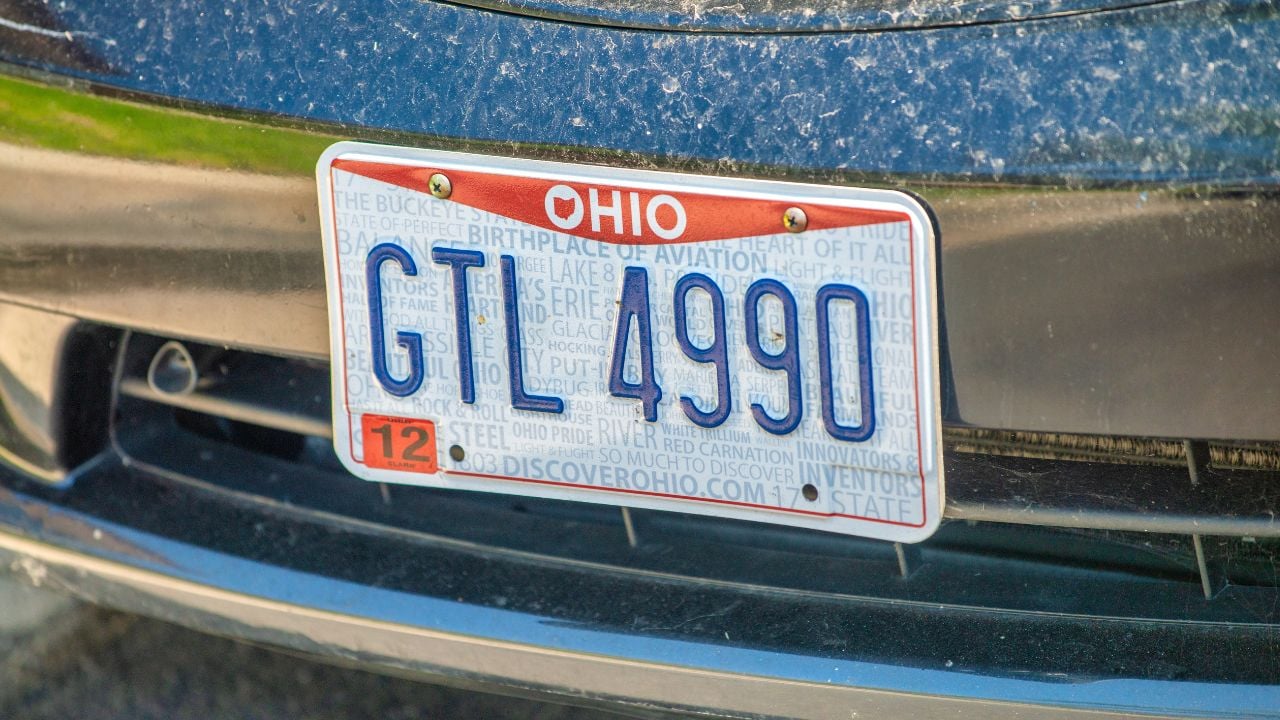
5 Ohio Vehicle Registration Fees Many Drivers Don’t See Coming

Between gas and car insurance, keeping a car on the road is already a big expense for Ohioans.
Then your registration renewal comes due, with more lines on the bill than you may expect.
They add up.
These are the Ohio vehicle registration fees many drivers don’t see coming.
Note: This is general information, not legal advice. Registration rules and fees are subject to change, so confirm the current fees with the Ohio Bureau of Motor Vehicles (BMV).
1. Fuel-Type Fee
Your registration renewal carries a fuel-type fee, and the amount depends on what powers your passenger vehicle.
Gas vehicles pay nothing.
Hybrids owe $100 a year, plug-in hybrids owe $150, and electric vehicles owe $200.
Ohio law prorates each of these fees by how many months you register your vehicle.
So if you register an electric vehicle for only part of a year, you pay a share of the $200 instead of the full amount.
2. Deputy Registrar Fee
On a registration renewal, the Deputy Registrar fee, which Ohio law calls the service fee, sits apart from the state’s base charges.
The fee is $8 for a one-year registration.
A multi-year registration may run from two to five years, and it covers passenger cars, non-commercial trucks, motor homes and motorcycles.
The Deputy Registrar fee runs from $12 for two years to $24 for five.
In between, three years costs $16 and four years costs $20.
Five one-year renewals would cost $40 in Deputy Registrar fees, so a five-year registration saves $16.
The catch is timing: You pay the regular registration fees for every year at the start.
Expect one big bill.
3. Late Fee
Ohio’s registration late fee is $10 for most vehicles, and it applies when you haven’t renewed within 30 days after your expiration date.
You can avoid it.
For a passenger vehicle, your expiration date generally lands on your birthday.
Renewals open 90 days before that date.
Renew inside that window, and you’re nowhere near the 30-day late mark.
4. Special Plate Fees
Nearly every specialty plate carries an annual fee, though military and accessible plates don’t.
The Ohio Statehouse and American Red Cross plates each list a $10 BMV fee and a $25 contribution, but the Alpha Kappa Alpha Sorority plate lists only the $10 fee.
Some plates include a yearly fee of up to $50 that goes to a particular organization.
If you choose a personalized plate, you pay a $50 fee on top of your other registration charges.
It comes due every year.
Psst! How much do you know about driving in Ohio? Take our quiz and see if you can ace it.
Quiz
Ohio Driving IQ
Answer these questions on Ohio roads, laws and licenses. We bet you can’t get them all right. Prove us wrong?
Under Ohio’s hand-held device law, what’s the maximum fine for a first offense?
5. Plate Retention Fee
Ohio's plate retention fee adds $10 to your registration costs when you replace your license plates and want to keep the same number.
The BMV charges it in addition to your standard registration fees.
You can keep the number only within the same general plate class, such as standard to standard or motorcycle to motorcycle.
Not every swap qualifies.
The rule doesn't cover a single duplicate plate you need because of loss, mutilation or destruction.
2026 Increases
Two charges on your registration renewal rose under the state budget, and the BMV's fee page, last updated on January 5, 2026, shows the newer amounts.
The additional annual fee on a noncommercial vehicle went from $11 to $16 on January 1, 2026.
The Deputy Registrar fee went from $5 to $8 in the same budget.
Together, those two increases add $8 to a one-year renewal.
Local Permissive Tax
Your registration can also carry a local permissive tax, which is a tax rather than a BMV fee.
Counties, cities and townships pass the levies, and each levy is $5.
Eleven of those $5 levies exist, but a single taxing district can have only six at a time.
That makes $30 the top permissive tax on a registration in any one taxing district.
Your district decides.
A new levy takes effect the next registration year only if a copy reaches the BMV by July 1.
The money goes to roads, streets, bridges and viaducts.
If you register for seven months or less, the district may charge half.
Adding Up a Registration Renewal
The Ohio BMV's base fee for a one-year passenger-car registration renewal is $36.
Add the $8 Deputy Registrar fee, and a gas-powered car comes to $44 before any local permissive tax.
A permissive tax of the full $30 brings that same car to $74.
A hybrid adds $100, so the range runs from $144 to $174.
A plug-in hybrid lands between $194 and $224, and an electric vehicle between $244 and $274.
Paperwork Fees
Your registration paperwork has a separate price list, and the BMV shows each amount with the Deputy Registrar fee already included.
If you move a plate or registration to another vehicle, you pay $9.
A duplicate registration costs $9, and so does a replacement sticker.
A temporary tag costs $23, and a plate mailing fee exists too, though the BMV lists it only as based on current rates.
Replacing one license plate costs $15.
Replacing both plates costs $16.25, only $1.25 more.
13 Things Ohioans Do at a Tailgate That Confuse Everyone From Out of State

Tailgating takes a parking lot, a game and something on the grill.
Ohioans often take it further, and fans from other states don't always know what to make of it.
13 Things Ohioans Do at a Tailgate That Confuse Everyone From Out of State
6 Things Ohio Law Lets a Neighbor Do With a Shared Driveway

Could a neighbor gain a legal say over your driveway?
Here's what a neighbor may be able to do with your shared driveway.
