

8 Everyday Things From the 1950s That Maryland Doesn’t Allow Anymore

If you grew up in Maryland in the 1950s, you may remember a glass thermometer tucked under your tongue whenever you ran a fever.
Back then, nobody thought twice about what was inside it.
Here are the everyday things from the 1950s that Maryland doesn’t allow anymore.
Note: This is general information, not legal advice. Laws and penalties are subject to change.
1. Smoking in Restaurants and Bars
Smoking was so common in the 1950s that, in 1955, 54 percent of U.S. men and 24 percent of U.S. women smoked cigarettes, the Centers for Disease Control and Prevention reports.
Maryland lawmakers ended indoor smoking in 2008.
The Clean Indoor Air Act took effect on February 1, 2008.
It covers virtually all indoor public places, including bars and restaurants.
If you light a cigarette at an indoor table today, you’re almost certainly breaking the law.
2. Mercury Fever Thermometers
Maryland law now bars sellers from selling or providing a mercury fever thermometer to a consumer except by prescription.
That means you can’t buy a mercury fever thermometer off a store shelf.
The rule took effect on October 1, 2002.
Before then, mercury fever thermometers were a medicine-cabinet staple for decades.
Hospitals and other places where medical professionals work are exempt, but consumers need a prescription.
3. Leaded Gasoline
Leaded gasoline was a normal part of filling up your car in the 1950s, when the industry average hovered around 2.4 grams of lead in a gallon.
Under the federal Clean Air Act, selling leaded gasoline for on-road vehicles became illegal on January 1, 1996.
That rule covers every Maryland gas station you pull into.
Leaded fuel can still be sold for off-road uses, including aircraft, racing cars, farm equipment and marine engines.
Cars aren’t on that list.
4. Paddling in Public Schools
Maryland law now bars principals and other school employees from using corporal punishment to discipline a student in a public school.
Paddling was an ordinary form of school discipline for generations.
American public schools widely accepted corporal punishment in the late 1800s and early 1900s, Human Rights Watch reports.
As late as 1988, it was still legal in the great majority of states.
That year, Maryland lawmakers approved a limited ban that protected about 85 percent of the state’s schoolchildren from being paddled.
The ban left out four rural counties.
If you have a child in public school today, your school can’t use a paddle.
5. Lead House Paint
Before 1955, a significant amount of white house paint sold and used was 50 percent lead.
In 1955, manufacturers adopted a voluntary limit of 1 percent lead in house paint.
But house paint with higher lead levels continued to be manufactured.
Then came 1978.
That year, a federal ban on lead paint for consumer use took effect.
If you buy a can of house paint today, it has to meet that federal lead limit.
What the Lead Paint Ban Doesn’t Cover
The federal lead paint ban doesn’t reach the paint that’s already on your walls.
It regulates consumer paint at the point of manufacture, not the coats already applied to a home.
6. DDT in the Garden
The insecticide dichlorodiphenyltrichloroethane (DDT) was in wide use on crops and around homes and gardens in the 1950s.
Americans used nearly 80 million pounds of it in 1959, the peak year, according to the Environmental Protection Agency (EPA).
In 1972, the EPA issued an order cancelling nearly all remaining federal registrations of DDT products.
Today, the U.S. has no registration for DDT, so it can’t legally be sold or distributed anywhere in the country, Maryland included.
That covers your backyard.
7. Cigarette Commercials on TV
Cigarette commercials were a staple of American television for more than twenty years, including the 1950s.
Then they stopped.
Federal law made it unlawful after January 1, 1971 to advertise cigarettes on any medium of electronic communication under Federal Communications Commission jurisdiction.
That covers the broadcast television stations that air your local news, so no cigarette commercial can legally run on them.
8. Riding Without a Seat Belt
Riding without a seat belt was the norm in the 1950s.
If you bought a 1956 Ford, seat belts were a $9 option.
The Henry Ford museum notes that most customers were indifferent to their safety benefits in the mid-1950s.
Every new passenger car came with some form of seat belt beginning in 1964.
New York passed the nation’s first statewide seat belt use law in 1984, with other states soon following.
Maryland law now requires drivers to buckle up, and every occupant under 16 has to wear a belt too.
Passengers 16 and older have to buckle up in the front outboard seats and in the back seat.
The fine runs up to $50.
Psst! How much do you know about Maryland? Take our quiz and see if you can ace it.
Quiz
Maryland and Bay IQ
Answer nine questions on Maryland’s state symbols, the Chesapeake Bay, and Fort McHenry. We bet you can’t get them all right. Prove us wrong?
Which everyday drink did Maryland name its official state drink in 1998?
Backyard Burning That's Still Legal
Backyard burning is still legal across much of Maryland, under state regulations that cover leaves and household trash.
In Frederick, Charles, Talbot and 13 other counties, you may burn leaves from your yard where there's no public leaf collection.
Ordinary household trash is allowed too, but only where there's no public trash collection and the fire doesn't make dense smoke.
In those counties, the fire has to stay at least 200 feet from neighboring homes and places where people work or gather.
Baltimore City and seven counties, including Anne Arundel, Montgomery and Prince George's, allow backyard burning only from September 1 through May 31.
In those places, the fire has to stay at least 300 feet away.
Both sets of rules require that the fire not create a nuisance or air pollution.
Check with your county before you burn anything.
7 Maryland Blue Crab Rules That Turn a Weekend Catch Into a Fine
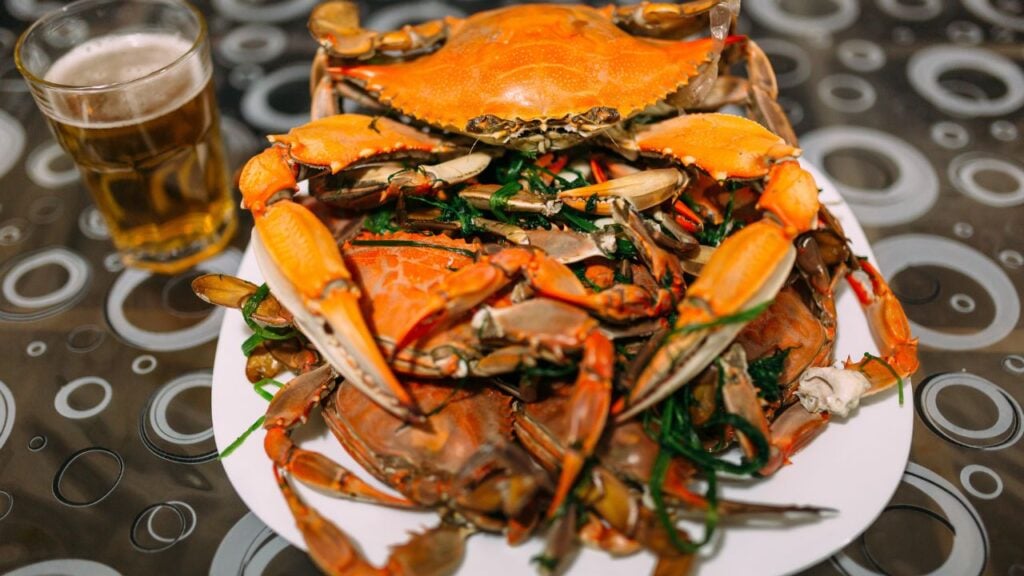
A weekend on the water can end with a good catch of blue crabs.
But a good catch isn't always a legal one in Maryland, even if you're only crabbing for fun.
7 Maryland Blue Crab Rules That Turn a Weekend Catch Into a Fine
6 Royal Farms Orders Marylanders Defend to Anyone Who'll Listen
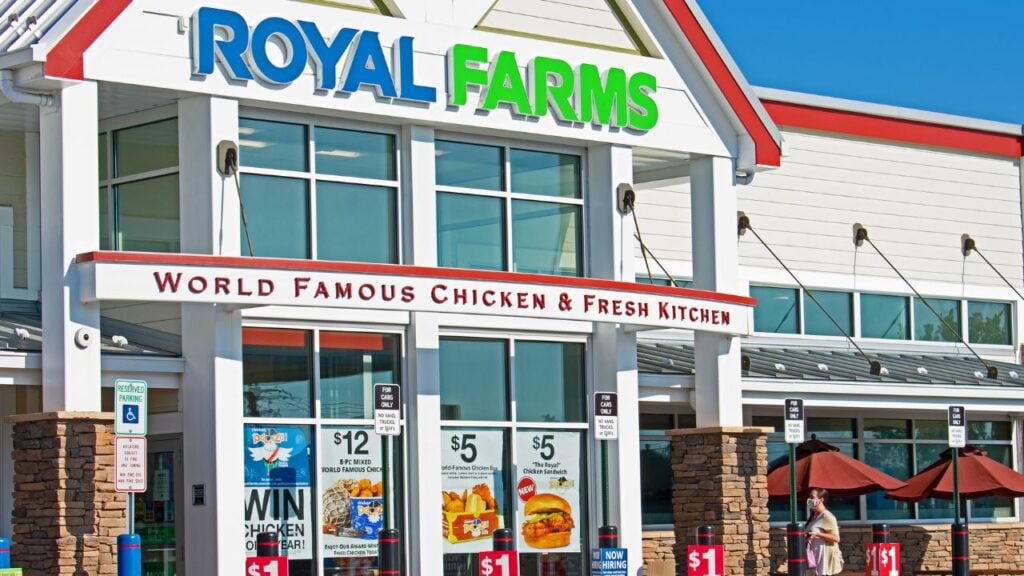
Ask a Marylander for their Royal Farms order, and you'd better have a few minutes.
Everyone's got a pick, and they'll tell you exactly why it's the right one.
6 Royal Farms Orders Marylanders Defend to Anyone Who'll Listen
