

Upstate Delawareans and ‘Slower Lower’ Delawareans Disagree on These 6 Things

If you’re driving below the canal for Thanksgiving dinner, you won’t even need to leave Delaware.
It might feel like you did, though.
Here’s where upstate Delawareans and ‘Slower Lower’ Delawareans don’t see things the same way.
Note: This is general information, not legal or tax advice. Assessment rules and tax rates are subject to change, so confirm the current details with your county’s assessment office.
1. Property Assessments
In this article, upstate means New Castle County, and “Slower Lower” means Kent and Sussex counties.
Part of New Castle County, including Middletown, sits south of the canal, but the comparisons here follow county lines.
Upstate and Slower Lower counties went decades without reassessing property.
Before this round, New Castle (1983) and Kent (1987) hadn’t reassessed since the 1980s, and Sussex hadn’t since 1974.
Sussex’s gap was 50 years.
A 2018 lawsuit argued the old system let wealthier homeowners carry less of the tax burden, and in 2020 the Court of Chancery ordered every property assessed.
State law now requires each county to reassess every five years.
Kent County finished first, in 2024.
New Castle County’s tax bills went out in July 2025, and for some residents they doubled.
If you own a home in New Castle County, your bill may have jumped.
Lawmakers answered with a one-day special session in August.
A Slower Lower County’s Tax Rate After Reassessment
Kent County finalized its reassessment in 2024.
Its county tax rate dropped from 36 cents to 5.72 cents per $100 of assessed value.
Counties promised the change would be revenue neutral, meaning a lower rate would offset higher assessed values.
State law still lets a county raise up to 15% in new revenue through a reassessment.
2. Older Residents
Slower Lower Delaware has a bigger share of older residents than upstate does, led by Sussex County.
In the Census Bureau’s 2025 estimates, 32.8% of Sussex County residents were 65 or older.
In New Castle County, the share was 18.8%, and in Kent County it was 20.3%.
That’s a 14-point gap with New Castle County.
Delaware Today reported in 2009 that large numbers of people began moving to Kent and Sussex in the late 1980s and early 1990s to plan their retirement.
If you’re 65 or older, you’ll find company in Sussex County, where about one in three residents is in your age group.
3. Population Density
Population density is far higher upstate than in Slower Lower Delaware.
New Castle County had 1,338.7 people per square mile in the 2020 Census, while Kent County had 310.3 and Sussex County had 253.6.
That’s more than five times Sussex County’s density.
Sussex County has 936 square miles of land, more than twice New Castle County’s 426.
So if you live in New Castle County, you have far more neighbors per square mile than someone in Sussex County does.
4. DuPont vs. Chicken Houses
DuPont started in upstate Delaware, with a gunpowder works founded on the Brandywine River in Wilmington in 1802.
If you drive from Wilmington to Ocean View, you go from that powder works site to a state historical marker for the birthplace of the commercial broiler industry.
Cecile Long Steele started a flock of 500 chicks there in 1923.
At 16 weeks, those birds weighed 2¼ pounds and sold for 62 cents a pound.
By 1989, the marker says, growers raised birds of twice that weight in half the time, and Sussex County led the nation in broiler production.
In 2009, Delaware Today wrote that New Castle County had long had little in common with its siblings to the south, where agriculture and tourism still fuel the economy.
5. Home Building
Slower Lower Delaware pulled far more building permits than upstate Delaware in 2025.
Sussex County had 3,885 of them, nearly three times New Castle County’s 1,322.
Kent County had 1,261.
If you look at growth, you’ll see Sussex County’s population grew 16.8% from April 2020 to July 2025, while New Castle County’s grew 3.0%.
If you compare median values of owner-occupied homes for 2020 through 2024, you’ll find Sussex County’s $382,600 above New Castle County’s $352,200.
Kent County’s median was lower than both, at $316,600.
6. Hotels and Restaurants
In Slower Lower Sussex County, lodging and food service businesses took in about $1 billion in 2022.
New Castle County’s total was about $1.76 billion, with more than twice as many residents.
If you look at totals alone, upstate looks bigger.
If you divide by residents, though, those sales work out to roughly $4,200 in Sussex County and $3,100 in New Castle County, using 2020 Census population counts.
Kent County’s $584 million works out to roughly $3,200 per resident, just above New Castle County’s.
Psst! How much do you know about Delaware’s history and geography? Take our quiz and see if you can ace it.
Quiz
First State Pop Quiz
Answer these questions on Delaware’s history, counties and coast. We bet you can’t get them all right. Prove us wrong?
North Murderkill and South Murderkill are old subdivisions of which Delaware county?
Return Day
Return Day is a Slower Lower tradition held in Georgetown, the Sussex County seat.
A 1791 state law moved the county seat there from Lewes, so voters had to travel to the courthouse to cast their ballots.
Two days later, voters returned to hear the results.
That return trip started a tradition, and Georgetown has celebrated Return Day for more than 200 years.
Elected officials from across the state make the trip to Sussex County every two years.
If you go, you'll see candidates who faced each other in the election ride in the parade together.
Losers traditionally ride facing backward.
After the Sussex County vote tally is read in front of the courthouse, party leaders bury a hatchet in sand from Lewes.
If you go on Return Day, the ox roast is free.
Where the Nicknames Come From
If you've heard Slower Lower, Technical.ly reported in 2017 that Slower Lower Delaware begins below the canal.
Delaware Business Times ran a story that year on Kent County, which people had long called "below the canal," and which was defying the nickname.
If you look up the nickname, the slang definition that story quoted covers any area of Delaware below the C&D Canal.
A 2009 Delaware Today story put Kent County's population at 155,000, up from 127,000 in 2000.
5 Delaware Traditions That Only Make Sense to Locals
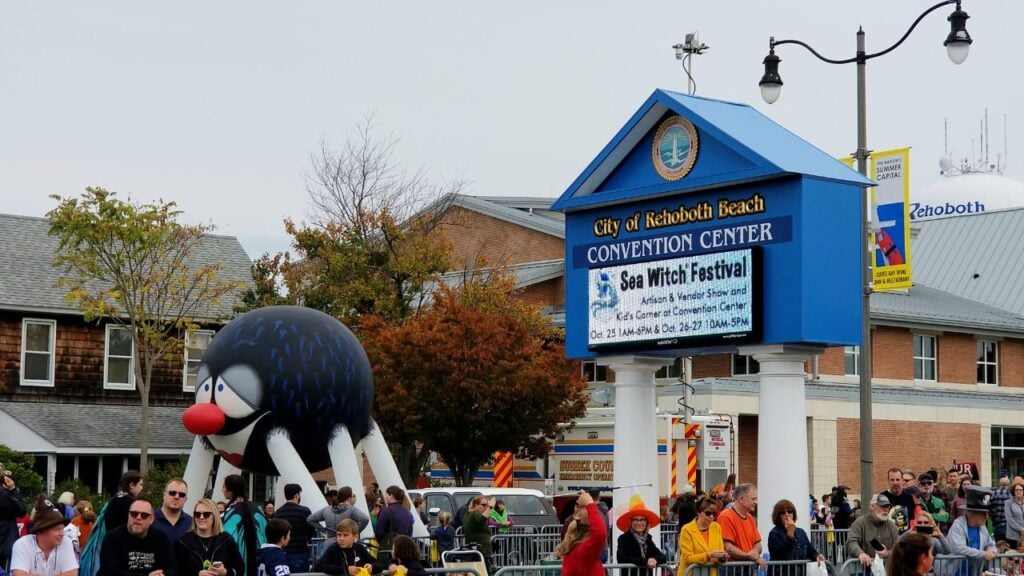
Delaware may be small, but its traditions are anything but.
Locals take them in stride, while visitors may wonder what on earth is going on.
5 Delaware Traditions That Only Make Sense to Locals
Delawareans Don’t Think Their State Has Room for People Who Want to Downsize, a 2026 Survey Found

Trading a big house for a smaller one sounds easy until you start looking at the listings.
Delawareans weighed in on whether the state has room for people who want to downsize.
Delawareans Don’t Think Their State Has Room for People Who Want to Downsize, a 2026 Survey Found
