
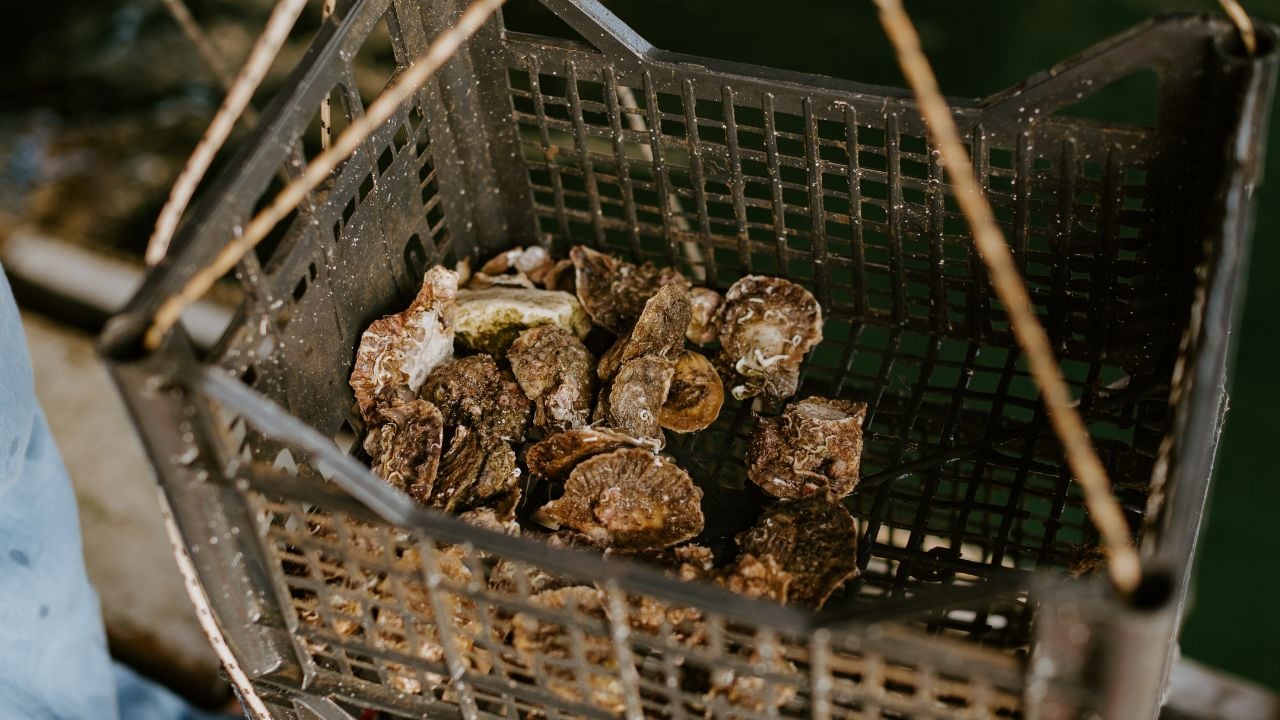
6 Oyster Rules Marylanders Should Know Before Harvesting From the Bay This Winter

If you’re planning to pull a bucket of Bay oysters for your holiday table, a free morning on the water might sound like all you need.
There’s more to the rules than how many you bring home, though.
Even the hour you head out matters.
Here are the oyster rules Marylanders should know before harvesting from the Bay this winter.
Note: This is general information, not legal advice. Confirm the current rules with the Maryland Department of Natural Resources (DNR) before you harvest.
1. A $10 Oyster License
Before you harvest a single oyster in Maryland, the state requires a $10 recreational oyster license.
DNR’s oyster page says you buy it under the Sport Fishing menu on MD Outdoors.
DNR’s license page says the recreational oyster license allows Maryland residents to harvest oysters, so out-of-state harvesters should ask DNR before planning a trip.
2. Noon Cutoff
Recreational oyster harvesting starts at sunrise and stops at noon.
Pull oysters at 12:01, and you’re outside the rules.
A full morning on the water means launching before the sun comes up.
3. Season Dates and Open Days
Maryland’s recreational oyster season opened October 1 and runs through March 31, 2027, and the season is closed on all other dates.
Within that stretch, you can harvest oysters only from Monday through Saturday.
Saturday is the only weekend day open.
Sunday stays closed.
Psst! How much do you know about harvesting oysters in Maryland? Tap each card and see how many you can get right.
4. 100-Oyster Daily Limit
Maryland’s 2026-2027 public notice sets the recreational catch limit at 100 oysters per person per day.
If you’re legally harvesting oysters from an aquaculture lease, the notice’s rules don’t apply to you.
5. Three-Inch Minimum and Culling
Maryland’s oyster regulation sets a minimum size of three inches, measured from hinge to bill, before an oyster is marketable.
The same regulation requires a person who catches oysters, commercial or not, to cull them on the natural bar where they were caught.
Culling means returning shells and oysters under three inches to that bar.
It allows you to possess no more than 5 percent shells and oysters under that size.
Marketable oysters can stay in your bucket with undersized oysters attached when the two can’t be separated without destroying the smaller ones, and with spat attached too.
Oyster Size Terms
Maryland’s oyster regulation measures all three size terms from hinge to bill.
An undersized oyster measures at least 1 inch and less than 3 inches.
Spat are oysters that measure less than 1 inch.
6. Sanctuaries and Closed Waters
Maryland’s recreational oyster rules apply only in open oyster harvest areas.
That leaves out sanctuaries, harvest reserve areas and submerged aquatic vegetation protection zones.
It also leaves out areas restricted by the Maryland Department of the Environment (MDE).
DNR says you can’t harvest wild oysters in a sanctuary.
DNR’s oyster page tells harvesters to start with the State of Maryland Shellfish Closure Area book, which has maps and coordinates for the Sanctuary and Reserve areas.
Other closed areas appear on DNR’s Public Notice page under the Shellfish Closures/Openings tab.
Same Rules as Last Season
Maryland’s recreational oyster rules for 2026-2027 match the previous season on the limit, the days and the hours.
The 2025-2026 notice gave you the same 100-oyster daily limit, Monday-through-Saturday harvesting and a sunrise-to-noon window.
The 2024-2025 notice had the same limit, days and hours.
Sanctuary Acreage
DNR’s sanctuary page says Maryland’s oyster sanctuaries covered only 1,475 acres of bottom habitat before 2009.
In 2009, three new sanctuaries brought the protected area to 2,581 acres, or 9% of geographically dispersed oyster habitat.
A 2024 DNR news release counts the 2010 expansion as 24% of historic oyster habitat, about 9,000 acres, a different baseline than the 9% you just read.
Water Classes and What They Allow
MDE sorts shellfish harvesting waters into approved, conditionally approved, restricted and prohibited classes.
Approved waters allow direct harvesting, while restricted waters require relay, which means moving shellfish to cleaner water first.
DNR’s oyster page says you’ll find restricted areas always closed to harvest.
Prohibited waters are the class where no growing or harvest is permitted.
MDE monitors these areas monthly and reevaluates all areas as needed.
A conditionally approved area must meet the approved standard on the days it’s open to harvest.
Rain Closures
DNR’s oyster page says conditional areas are closed if there’s 1 inch or more of rain in any 24-hour period.
MDE’s conditional areas page says oysters and clams can’t be harvested for three days following a rainfall event of one inch or greater over 24 hours.
MDE’s shellfish program page words the trigger as more than one inch in 24 hours, so the threshold differs slightly between pages.
You can harvest again after those three days unless another rainfall occurs.
Seasonally conditional areas allow direct harvest only during the months when the area is in open status.
DNR’s oyster page lists 410-537-4450 for finding out which conditional areas are closed after a rainfall.
For pollution closures, the same page refers harvesters to MDE’s website.
9 Maryland Habits That Make No Sense Outside Maryland
Some Maryland habits make perfect sense until you try them anywhere else.
These are the everyday customs that confuse many who didn’t grow up in Maryland.
9 Maryland Habits That Make No Sense Outside Maryland
8 Dog Rules That Change From One Maryland Town to the Next

Owning a dog in Maryland comes with an unusual problem.
A quick trip across town can turn something acceptable into an expensive mistake.
