
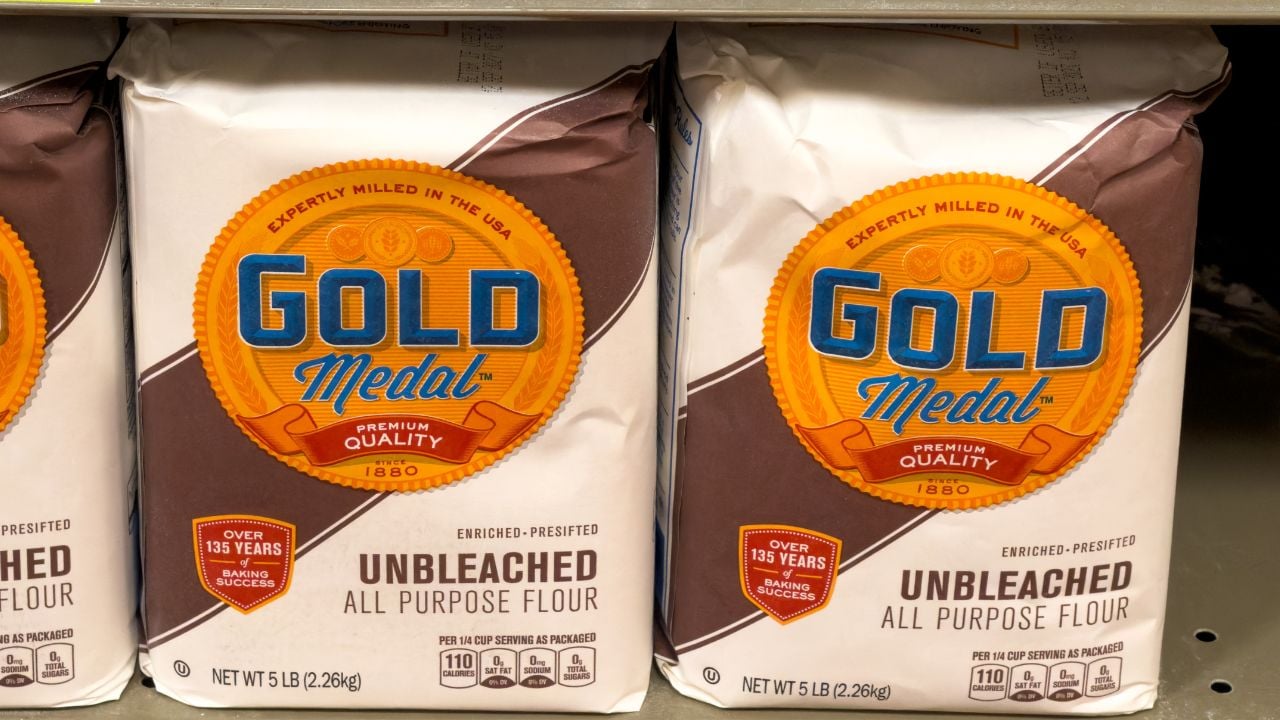
Flour Is Up 21% Since 2019, but Butter Isn’t. Here’s What Kansans Baking Pie Should Know

If you’re rolling out pie crust for Thanksgiving this week, you probably measure the flour without a second thought.
Living in wheat country doesn’t make that cup any cheaper, though.
Here’s how much more Kansans pay for pie crust now that flour’s up about 21% since 2019.
Flour, Then and Now
Flour cost $0.449 a pound in September 2019, according to the Bureau of Labor Statistics (BLS).
By September 2026, that same all-purpose white flour cost $0.545 a pound.
That’s a 21% increase in seven years.
Both figures are U.S. city averages, so they describe the whole country, not one state.
A five-pound bag would have cost about $2.25 at the 2019 average. At the 2026 average, it’s about $2.73.
That’s roughly 48 cents more.
BLS prices flour by the pound, not by the finished crust, so a crust price has to come from a different source.
Other Ways to Count Flour’s Rise
Pick a different starting month and the answer changes.
November 2019 was flour’s cheapest month that year at $0.417, so counting up from there to September 2026 gives about 31%.
Average all twelve monthly prices of 2019 and you get about $0.441, which puts the rise near 24%.
BLS’s series notes say average prices work best for measuring the price level in a given month, and point to its price indexes for change over time.
The 2022 Jump
Flour rose from $0.424 a pound in January 2022 to $0.556 in September.
That’s a 31% jump in eight months.
The rise ran month after month, with $0.498 in June, $0.533 in July and $0.549 in August.
Since January 2023, the monthly price has stayed between $0.538 and $0.575 a pound.
Of the months since 2019, the cheapest was June 2021 at $0.356, and the dearest in the full St. Louis Fed run was June 2024 at $0.575.
September 2026’s $0.545 sits about 5% under that peak.
It’s also about 3% under September 2025, when flour averaged $0.563.
Today you’re paying about a penny a pound less than in January 2024, when flour was $0.554.
In 2026, the price peaked at $0.565 in January, then held between $0.543 and $0.549 from February through September.
Checking each September shows you the path: $0.449 in 2019, $0.556 in 2022, $0.573 in 2024, $0.563 in 2025 and $0.545 in 2026.
Psst! How much do you know about Kansas wheat and the flour it becomes? Take our quiz and see if you can ace it.
Quiz
Kansas Wheat IQ
Answer these questions on wheat, flour, and Kansas farms. We bet you can’t get them all right. Prove us wrong?
Many Kansans credit German Mennonite settlers from Russia with bringing which wheat to the state in 1874?
Pie Crusts at Thanksgiving
Pie crust prices come from a different count, the American Farm Bureau Federation's yearly Thanksgiving dinner survey.
Its 2019 national average for two pie shells was $2.52.
Its 2025 average for two frozen pie crusts was $3.37.
The survey's label for the item has changed over the years.
That's 85 cents more, or about 34%.
Those crusts are one line on a feast for 10 people that totaled $55.18 in 2025.
Two crusts cost $3.50 in 2023 and $3.40 in 2024, so the price has eased each year since.
The 2025 averages draw on prices from all 50 states and Puerto Rico.
Thanksgiving is Nov. 26. If you're buying frozen crusts, you can check your store's tag against that $3.37 average.
What Flour Adds to a Crust
King Arthur Baking's classic double pie crust recipe uses 2 1/2 cups, or 300 grams, of all-purpose flour to make two crusts.
If you bake from that recipe, 300 grams is about 0.66 pound of flour.
At the September 2019 average of $0.449 a pound, you'd have spent about 30 cents on it.
At the September 2026 average of $0.545, the same flour runs about 36 cents.
That's roughly a 6-cent increase.
If two store-bought crusts hold about as much flour as that recipe, the flour explains only a few cents of the 85-cent rise in the Farm Bureau's price for two crusts.
Where the Wheat Grows
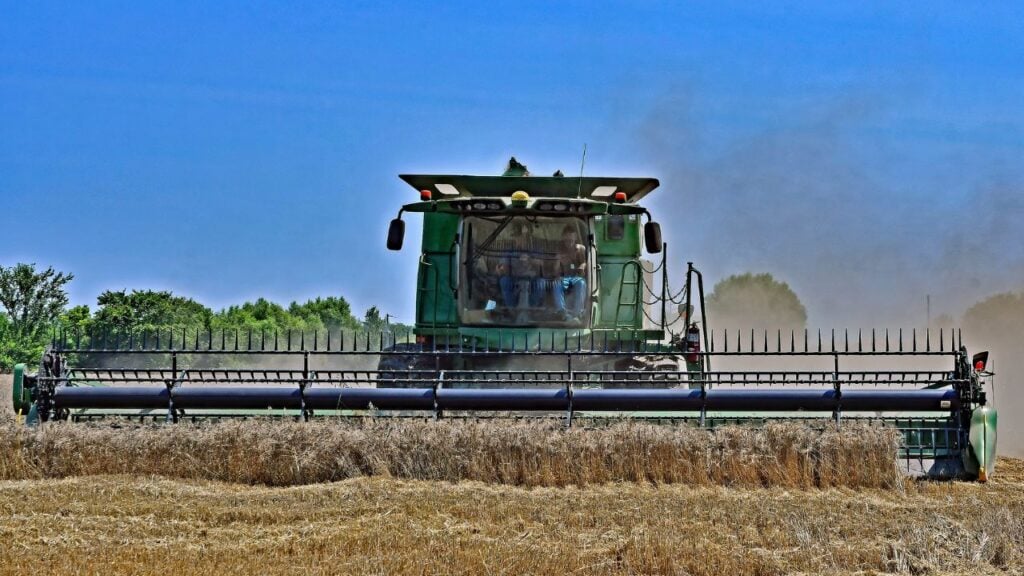
Flour starts as wheat. Kansas grew more winter wheat than any other state in 2026.
The state produced 200.6 million bushels, according to the U.S. Department of Agriculture (USDA).
If you're picturing a Kansas wheat field, the harvest covered 5.9 million acres at an average of 34.0 bushels an acre.
That's roughly a fifth of the national winter wheat crop of 1.02 billion bushels.
It's also about 42% below the 346.8 million bushels Kansas produced in 2025.
Farm-level wheat is a different price from the flour you buy.
The Economic Research Service's September forecast has farm-level wheat prices up 18.3% in 2026.
The Butter Exception
If you bake an all-butter pie crust, your butter bill looks different from your flour bill.
Stick butter averaged $3.954 a pound in September 2019 and $3.959 in September 2026, a difference of half a cent.
In between, it peaked at $5.004 in September 2024.
September 2026's price sits about a fifth below that peak, and about 17% under September 2025's $4.787.
Butter came down.
Butter's 2026 low was $3.816 a pound in June.
By August it was back to $4.021, before easing to $3.959 in September.
5 Things Kansans Do Every Year Once Wheat Harvest Starts
Kansas grew more winter wheat than any other state in 2024.
That top spot isn't a one-time thing, and every year harvest sets off the same set of habits.
5 Things Kansans Do Every Year Once Wheat Harvest Starts
5 Reasons a Kansan Won't Buy a Bierock Out of State

Spotting something that reminds you of home on a menu should be good news.
But if you're a Kansan craving a bierock, you might hesitate.
