
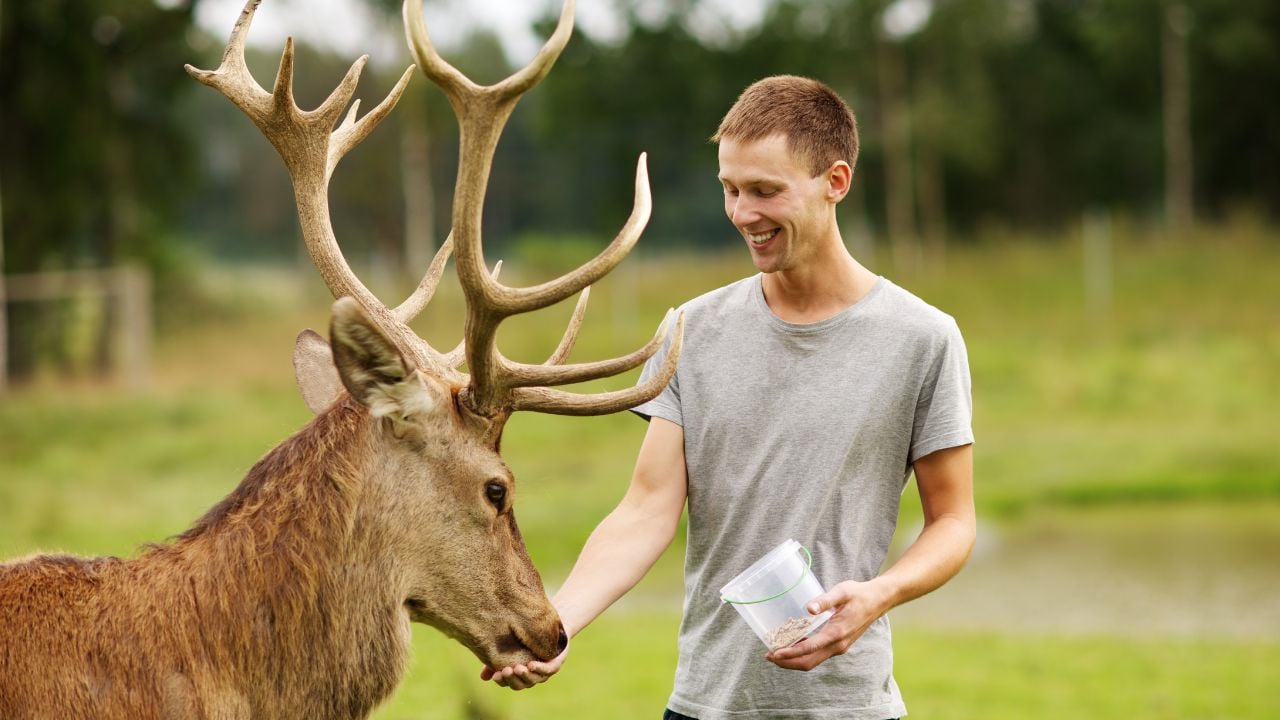
5 Wildlife-Feeding Rules That Can Cost Michiganders a Fine

If you’re tossing leftover dinner rolls to the ducks at a park this Thanksgiving weekend, it probably feels like a harmless family tradition.
Whether it’s allowed depends on where you’re standing, though.
Here are the wildlife-feeding rules that can cost Michiganders a fine.
Note: This is general information, not legal advice. Feeding rules, local ordinances and fine amounts are subject to change, so confirm the current rules with the Michigan Department of Natural Resources and your city.
1. Two-Gallon, 300-Foot Limits
Michigan’s new feeding law sets two limits: Your feed has to sit within 300 feet of a residence, and the total can’t top two gallons.
The governor approved House Bill 4350 on July 21, 2026, and the law took effect immediately.
The Senate passed it 36 to 0, and the House agreed 76 to 32.
Before that, feeding deer in a Lower Peninsula backyard had been banned since 2018, according to Bridge Michigan.
Violating a state order on supplemental feeding of deer is a state civil infraction with a fine of up to $150.
How the Two-Gallon Cap Adds Up
The two-gallon feeding cap counts everything still on the ground, not just what you put out today.
Say you scatter a gallon of corn on Monday, and half a gallon is still there Tuesday morning.
That leaves room for a gallon and a half, not two gallons.
2. Upper Peninsula Winter Feeding
If you feed deer through the winter in the Upper Peninsula, you can’t start before Jan. 1 or keep going past May 15.
The DNR’s order names 15 counties where winter feeding is allowed, including Marquette and Houghton.
Your feed also has to sit a quarter mile or more from the nearest paved public highway.
It has to sit at least a mile from livestock, wheat and potato fields, commercial orchards, and nursery or Christmas tree plantings.
The feed has to consist solely of grains, second-cut alfalfa and clover, or pellets with no animal protein.
Spread it no deeper than three inches, and don’t use it as bait.
Break those winter feeding rules, and the same state civil infraction, with a fine of up to $150, can apply.
3. Feeding Bears at Porcupine Mountains
Feeding a bear, or luring one with food, is banned at Porcupine Mountains Wilderness State Park unless you first obtain written permission from the DNR.
The ban doesn’t apply to lawful bear baiting.
Break the DNR’s land use order, and you’re responsible for a state civil infraction, which carries a fine of up to $500.
Psst! How much do you know about Michigan’s state symbols? Take our quiz and see if you can ace it.
Quiz
Michigan Symbols IQ
Answer these questions on Michigan’s official state symbols. We bet you can’t get them all right. Prove us wrong?
Michigan’s state gem, chlorastrolite, gets its name from words meaning what?
4. Feeding Birds at Belle Isle
Belle Isle State Park lets you watch the geese and seagulls, but the DNR's land use order for state parks bars you from feeding them or any other birds.
The penalty is a state civil infraction, with a fine of up to $500, the same as at Porcupine Mountains.
5. Feeding Waterfowl in Port Huron
Feeding ducks, geese or seagulls is unlawful in any public area in Port Huron.
You can still feed songbirds and squirrels, as long as waterfowl can't get to the food.
On private property, the ordinance says feeding waterfowl should happen only when it doesn't cause a nuisance.
The city adopted the waterfowl ordinance in 2005.
The waterfowl section lists no penalty.
The city's general penalty for ordinance violations is a civil fine of $25 to $500, and a violation can also be a misdemeanor.
Port Huron's rule probably still stands under the new state law, but check your city's rules too.
What Counts as Feeding
Under the new law, feeding means depositing, distributing or tending feed where birds and other wildlife gather, either to keep them from starving or for recreational viewing.
The earlier definition covered only deer and elk feeding, and the new one adds birds and other wildlife.
So the seed you put out for birds and the corn you scatter for deer can both count as feeding.
The act leaves a few things out of that definition.
It excludes feed scattered solely as the result of normal logging or agricultural practices.
If you farm, feed you store or use for agricultural purposes is excluded when livestock are actively eating it daily.
Agricultural feed is also excluded when it's covered to keep deer and elk away or used daily.
It's excluded when it's in a storage facility or stored the way normal agricultural practices call for.
Feed Versus Bait
Deer feeding and deer baiting are different things in Michigan law, and the new law covers only feeding.
Bait is food that helps you hunt deer, while feed is food for any other reason.
The DNR says baiting is banned in the Lower Peninsula, with limited exceptions such as hunters with disabilities who meet certain requirements during the Liberty and Independence Hunts.
In the Upper Peninsula, you can bait from Sept. 15 to Jan. 1, with no more than two gallons at each hunting site.
That window includes the 2026 firearm season, which runs Nov. 15 to 30.
The DNR recommends against putting bait in the same spot over and over, since that raises the risk of spreading disease.
A baiting violation can be a misdemeanor under state law.
So the pile of food you leave out for a hunt is bait, not feed.
Where Bans May Linger
DNR spokesperson Ed Golder told Bridge Michigan in July that some areas will be able to feed and others won't.
That means wildlife feeding may still be off limits in parts of the state, even if you stay under the new limits.
Your county could be among the places where feeding stays off limits.
As of February, chronic wasting disease had been identified in wild deer in at least 18 Michigan counties, the DNR reported when it announced Gladwin County's first positive deer.
Bridge Michigan reports that concentrated feeding sites, like bait piles, have been shown to be more likely to spread disease.
Bridge Michigan also points to bovine tuberculosis, which it describes as a respiratory disease found in animals such as deer and cattle that can spread to humans.
DNR deer specialist Brent Rudolph told Bridge Michigan that the DNR's agreements with agriculture officials commit it to maintaining and enforcing bans.
Those bans aim to prevent bovine tuberculosis from passing between deer and cattle.
Before you put out a scoop of feed, check your county's rules with the DNR and your city's rules with city hall.
5 Michigan Winter Habits That Baffle Anyone From Below the Mason-Dixon Line

Tell someone from the South what a Michigan winter looks like, and you may get a long pause.
Michiganders take winter in stride, but their habits can baffle many people who've never lived with this much snow.
5 Michigan Winter Habits That Baffle Anyone From Below the Mason-Dixon Line
8 Things Michiganders Do at a Tailgate That Confuse Many People From Out of State

To many Michiganders, a tailgate feels normal.
Then you bring someone from out of state.
8 Things Michiganders Do at a Tailgate That Confuse Many People From Out of State
