
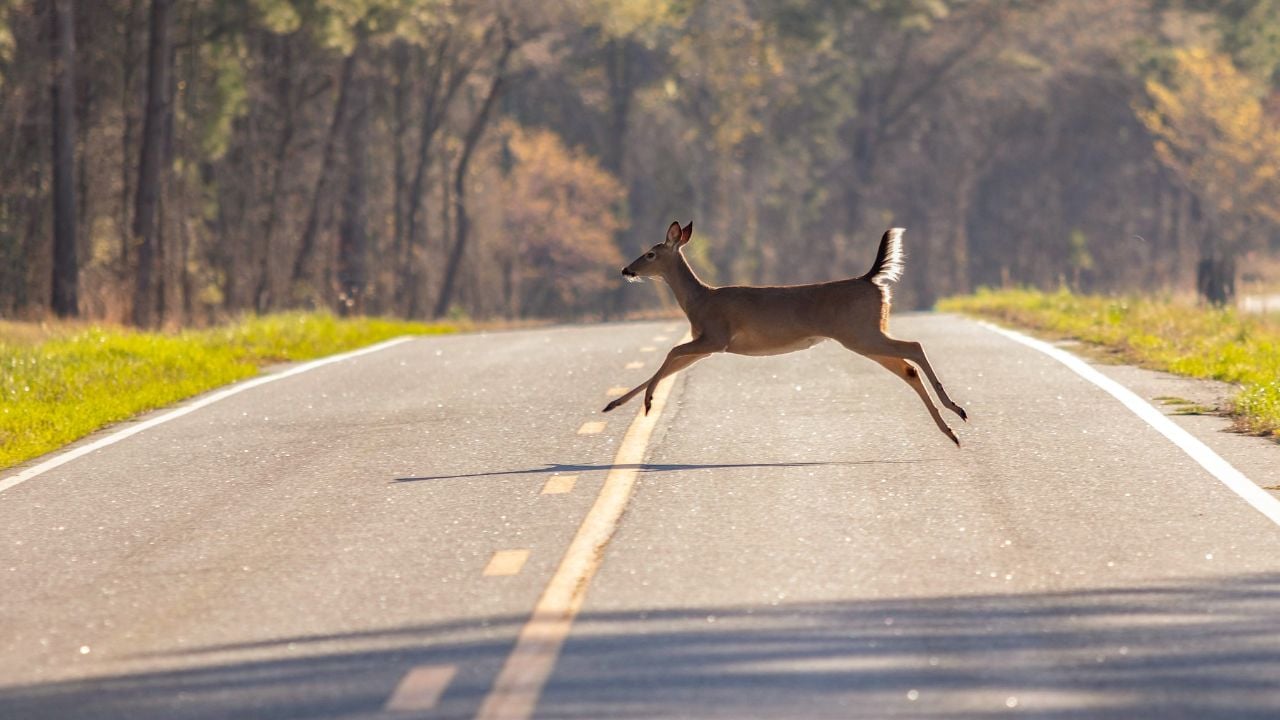
6 Rules Iowans Learn at the Worst Time After Hitting a Deer

If you’re driving to Thanksgiving dinner on a dark Iowa road this week, a deer is probably the last thing you want to see in your headlights.
If you hit one, deciding what to do with the deer isn’t as simple as it looks.
Here are the rules Iowans learn at the worst time after hitting a deer.
Note: This is general information, not legal or insurance advice. Rules and coverage terms are subject to change, so confirm the details with the Iowa Department of Natural Resources, the Iowa Department of Transportation or your insurer.
Where the One-in-Five November Figure Comes From
Iowa State University’s Institute for Transportation studied deer collisions across Iowa from 2013 through 2022, according to The Gazette.
The study counted those deer collisions month by month.
About 21% of all deer collisions in that decade happened in November.
October came in at 13%, and December had 10%.
August was the lowest month, at 4%.
In 2025, the Iowa Department of Natural Resources (DNR) put peak deer movement around the first week of November.
That peak falls during the breeding season known as the rut.
These are the rules, starting with what to do right after a crash.
1. Hazard Lights After the Crash
After a deer crash, State Farm advises moving your vehicle to a safe location when possible and turning on your hazard lights.
Iowa’s move-over law covers any stationary vehicle that is continually displaying its hazard lights, according to the Iowa Department of Transportation (DOT).
Drivers approaching you have to change lanes or slow down.
Drivers who don’t move over or slow down face a $135 fine, plus any surcharge and court costs.
2. Calling Authorities
After a deer crash, the Iowa Insurance Division says to make sure everyone is safe, then call authorities.
The DOT says you should contact the nearest law enforcement agency so the crash can be investigated.
State Farm adds that you should call police if the deer is blocking traffic or creating a hazard.
Stay away from an injured or frightened deer.
3. $1,500 Crash-Report Line
According to the DOT, a deer crash in Iowa has to be reported when anyone is hurt or killed, or when the total property damage reaches $1,500 or more.
That’s total property damage, so a crumpled hood and a cracked headlight can cross the line quickly.
In 2023, the DOT counted 8,023 reported crashes between vehicles and animals on Iowa roads.
Five people were killed and 23 suffered serious injuries in those crashes.
More than 260 others had minor injuries listed on crash reports.
What Iowa’s Crash-Report Deadline Means
If no law enforcement agency investigates a crash that meets that line, the DOT says it must be reported on an Iowa Accident Report form.
The completed form is due within 72 hours of the crash, according to the DOT.
Failing to return it in time can lead to suspension of your driving privileges.
The DOT requires the insurance information on page four to be completed, and leaving it incomplete may result in suspension of your driving and registration privileges.
4. Documenting the Scene
After a deer crash, take photos of the damage, note the time and location, and gather any witness information.
The Iowa Insurance Division calls that documentation crucial for insurance purposes.
Before you drive away, State Farm says to check for leaking fluids, damaged tires, broken lights or other hazards.
5. Comprehensive Coverage
Comprehensive coverage is the part of your policy that typically pays for hitting a deer.
The division says it may help pay for repairs minus your deductible.
If you carry only the liability coverage Iowa requires, an animal strike isn’t covered.
File a claim if the damage costs more than your deductible.
In a 2024 consumer note, the division said animal and deer collisions account for 13.8% of reported motor vehicle crashes in Iowa.
Psst! How much do you know about Iowa’s roads and wildlife? Take our quiz and see if you can ace it.
Quiz
Iowa Road IQ
Answer these questions on Iowa roads, deer and driving rules. We bet you can’t get them all right. Prove us wrong?
In 2023, how many people were killed in Iowa crashes between vehicles and animals?
6. Salvage Tags for Road-Killed Deer
Iowa lets you keep a deer your car killed, but only after you get a salvage tag.
Under Iowa's salvage rule, you request the tag from the nearest conservation officer, Iowa state trooper, sheriff's department or police department.
If several people ask for a salvageable deer, the rule puts the people involved in the accident first, then public institutions, then nonprofit organizations and everyone else.
Spotted fawn deer aren't considered salvageable.
You have to request and receive the tag before you take the deer home.
The DNR points drivers to the local sheriff's office for the tag.
Taking only the antlers is illegal, so the whole deer has to come with you.
How the State Ranks on Animal Crashes
State Farm ranked the states by the odds of an animal collision, using its claims from July 2025 through June 2026.
West Virginia was first, at 1 in 46.
Montana, Wisconsin, Pennsylvania and Michigan followed, at 1 in 54, 1 in 62, 1 in 64 and 1 in 68.
Iowa wasn't among State Farm's five riskiest states that year.
8 Harvest Season Rules That Change How Iowans Drive to Work
Harvest season can turn a familiar Iowa road into a different kind of drive.
Drivers who treat it like an ordinary commute can make an expensive mistake before they reach the next turn.
8 Harvest Season Rules That Change How Iowans Drive to Work
9 Things That Confuse Everyone Who Moves to Iowa
Move to Iowa, and even a trip to the grocery store can raise questions.
Even the receipt may hold a surprise or two.
