
5 Things Many Granite Staters Never Learned About the Woman Who Lobbied Lincoln for Thanksgiving

Who’s the one to thank for Thursday’s turkey, besides the cook?
Chances are you’ve been reciting one of her rhymes since you were small, without ever learning her name.
These are the things many Granite Staters never learned about the New Hampshire woman often credited with talking Lincoln into making Thanksgiving a holiday.
1. A Newport Childhood
Sarah Josepha Hale was born in Newport on October 24, 1788, the daughter of Gordon Buell, a Revolutionary War officer turned tavern keeper, and Martha Whittlesey.
If you picture a girl of that era with only a few years of schooling, the National Park Service tells a different story.
Her parents believed in equal education, so she learned at home from her mother and from her brother Horatio, a Dartmouth graduate.
She went on to teach.
You may know her for a single nursery rhyme, yet the American Library Association says she wrote nearly 50 volumes over her lifetime.
2. Widowhood in Black
When her husband, David Hale, died in 1822, Hale was left with five children and turned to poetry for income.
Her 1827 novel, Northwood, then led the Rev. John Lauris Blake to ask her to edit his new Ladies’ Magazine in Boston, which is how a Newport widow became an editor.
You can see the mourning in Newport.
The Richards Free Library says the black granite pillar beneath her bronze bust stands for the black clothing she wore through 57 years of widowhood.
Psst! How much do you know about New Hampshire’s firsts and landmarks? Take our quiz and see if you can ace it.
Quiz
Granite State IQ
Answer these questions on New Hampshire history, firsts and landmarks. We bet you can’t get them all right. Prove us wrong?
In April 1934, observers on Mount Washington measured a gust that stood as a world record for more than 60 years. How fast was it?
3. The Lamb Rhyme
The rhyme "Mary Had a Little Lamb" is credited to Sarah Josepha Hale, and you may have known it long before you knew her name.
The National Women's History Museum says the rhyme appeared in her book Poems for Our Children and was instantly popular.
The Smithsonian Libraries says it's generally accepted that Hale wrote the original poem.
Where the lamb came from is less settled. A tradition ties the characters to Mary Sawyer of Sterling, Massachusetts, though the Smithsonian Libraries calls the rhyme's origins murky and conflicting.
The same Smithsonian Libraries post notes that Thomas Edison read and recorded the poem in 1877.
4. The Bunker Hill Appeal
Hale financially supported the construction of the Bunker Hill Monument, according to the National Women's History Museum.
The National Park Service calls her the women's fundraising coordinator for the effort.
Her tool was the Ladies' Magazine, and the ask was for women to contribute one dollar.
The park service says many men pushed back, arguing women had no right to donate money from household resources.
By 1840, that women's fund had reached $2,937.90, well short of the $30,000 a later women's fair set out to raise.
The park service's profile of Hale says a Boston sewing circle she led came up with the fair.
In September 1840 it took over the second floor of Faneuil Hall Market in Boston.
If you had gone, you would have climbed a temporary stairway built in the street to reach it.
About 35,600 people attended over five days, the fair had 63 tables run by women from 17 local groups, and its profit of more than $33,000 cleared the goal.
Local newspapers reprinted and discussed Hale's writing on the monument, the park service adds.
The top stone was laid in July 1842, and the museum says she also helped preserve George Washington's home.
5. Her Stand on the Vote
If you only know Hale as the woman behind Thanksgiving, her view of the ballot may surprise you.
She pushed for women's education and property rights, yet she didn't support the women's suffrage movement, the National Women's History Museum says.
The museum says she believed women's participation in politics would limit their influence in the home.
The museum says she used her magazine to support abolishing slavery and, later, colonization, which it describes as freeing Black Americans and sending them to Africa.
Lincoln's Proclamation
As editor of Godey's Lady's Book, Sarah Josepha Hale launched a letter-writing campaign for a national Thanksgiving in 1846.
The National Park Service says she had been writing essays calling for the holiday since 1827.
If you're wondering whether the idea was catching on, more than 30 states and territories had Thanksgiving celebrations by 1854, the museum says.
On September 28, 1863, she wrote directly to President Lincoln.
His proclamation followed on October 3, asking the country to celebrate November 26, 1863, as an official day of Thanksgiving.
The park service adds that Secretary of State William Seward wrote the proclamation, and the sources below differ on how much her letter mattered.
How Sources Credit Hale's Letter
The Library of Congress says Sarah Josepha Hale used her skills as a writer to persuade Lincoln to proclaim a national day of thanksgiving.
The National Women's History Museum says her letter is often cited as the main factor in his decision.
The National Park Service says the proclamation may never have been issued without her, yet it says Lincoln receives the credit.
The Years After 1863
The holiday didn't unite the country right away, since Confederate states didn't consider themselves subject to Lincoln's proclamation, the Library of Congress says.
In 1870, Congress made Thanksgiving a paid holiday for federal workers in Washington, D.C., the Congressional Research Service says.
Lincoln's proclamation had named the last Thursday of November, and in 1941 Congress set the fourth Thursday instead.
If you do the math, that change came 62 years after Hale died in 1879.
This year, you won't notice the difference, since Nov. 26 is both the fourth and the last Thursday of the month.
Hale in Newport Today
Newport honors Hale at the Richards Free Library, where the memorial park sits at the corner of North Main Street and Belknap Avenue.
The library dedicated the park on November 23, 2013, 150 years after Lincoln's proclamation.
According to the American Library Association, it was the first Literary Landmark dedicated in New Hampshire.
The library's page on the park says three paths lead to a central circle.
If you visit after dark, a lamp casts a silhouette of Hale beside an image of the characters from her poem.
A pen and scroll commemorate her campaign for the holiday.
The library also presents the Sarah Josepha Hale Award, a literary prize it has given annually since 1956.
Its award page says nominees must have been born in New England, live there for at least part of the year, or be tied to it mainly through their work.
Robert Frost was the first recipient, according to a 2018 Nashua Telegraph staff commentary.
As of this fall, the library's award page lists a bronze medal and a $2,500 honorarium for the winner.
9 Things New Hampshire Natives Miss Most Once They Live Somewhere Else
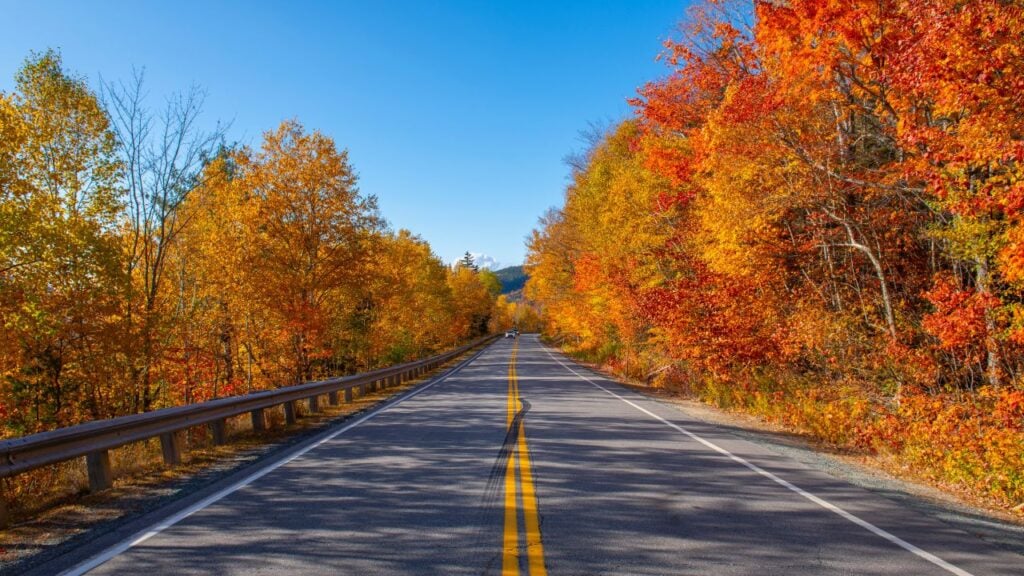
Some things don't travel when a Granite Stater moves away.
These are the things New Hampshire natives miss most once they live somewhere else.
9 Things New Hampshire Natives Miss Most Once They Live Somewhere Else
9 Things Everyone Gets Wrong About New Hampshire, According to People Who Live There
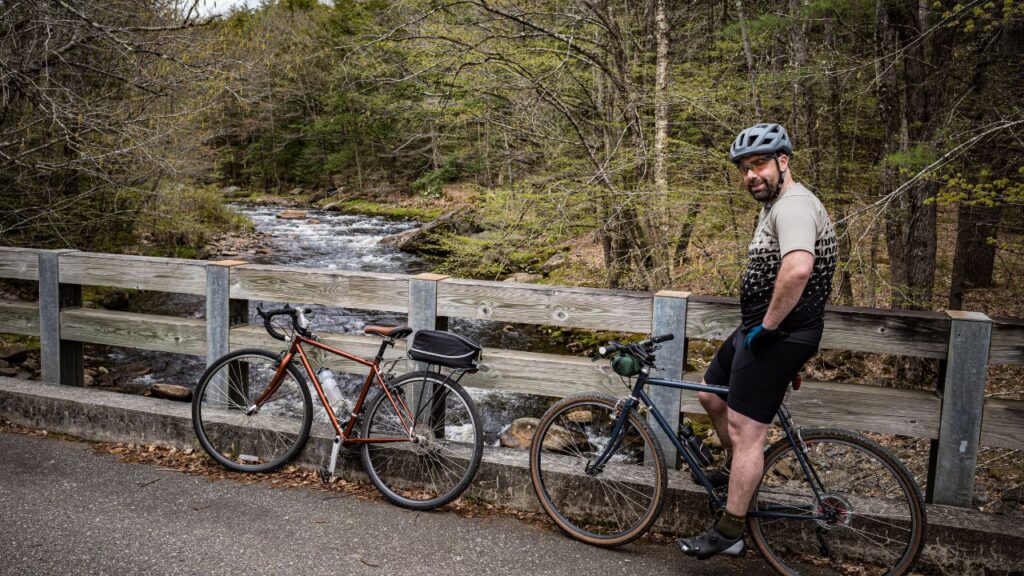
Think you know New Hampshire because you've driven through the White Mountains?
Granite Staters hear the same confidently wrong assumptions from many people passing through.
9 Things Everyone Gets Wrong About New Hampshire, According to People Who Live There
