
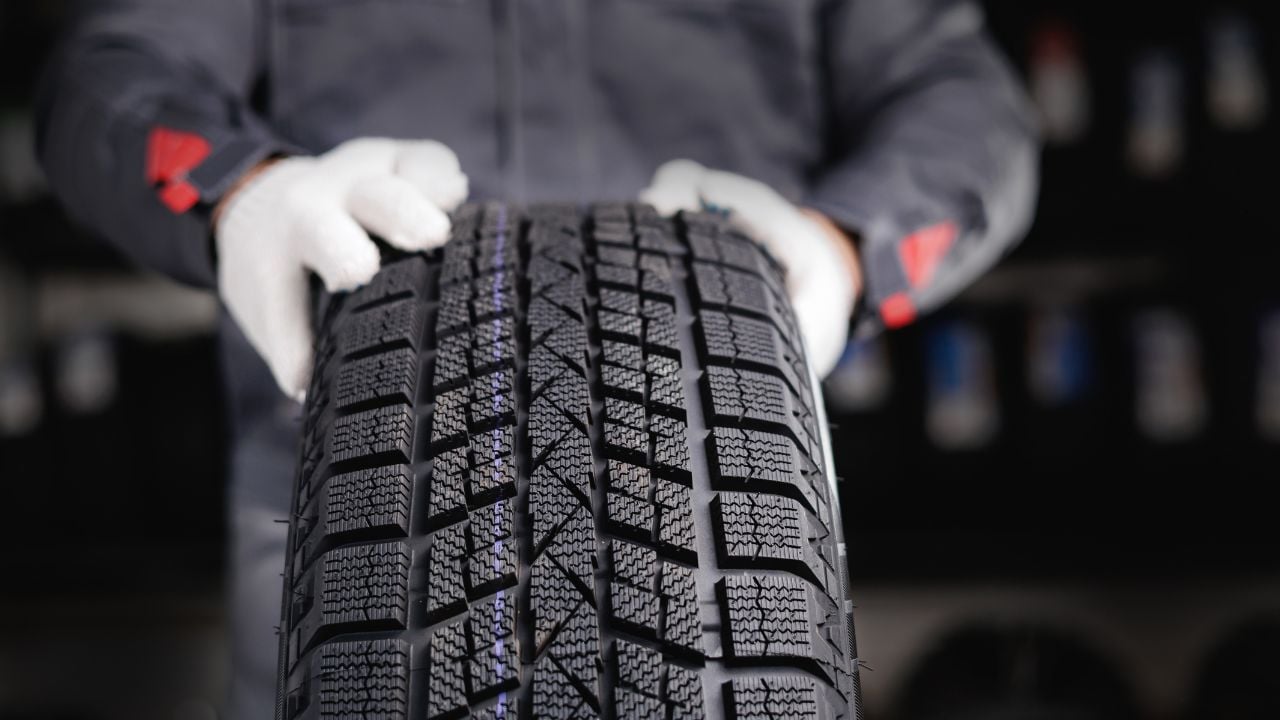
6 Winter Tire Rules Some Washingtonians Get Terribly Wrong

“Just have them stud the old set,” your brother-in-law says when the forecast for the pass turns snowy.
Your tire shop might not go along with it.
Here are the winter tire rules some Washingtonians get terribly wrong.
Note: This is general information, not legal advice. Equipment rules and fines are subject to change, so confirm the current requirements with the Washington State Patrol.
1. Chain Signs and Studs
Studded tires don’t count as chains when a chain requirement is posted.
Many drivers assume studs let them skip the chains.
They don’t.
The state’s chain rule applies to all types of tires, studded ones included.
The Washington State Patrol (WSP) says the same thing: If chains are required, you install them even with studs on.
Chain requirements can take effect at any time, for all types of vehicles.
If you ignore the requirement, you face a $500 penalty, assessments included.
2. All-Wheel Drive and Chain Signs
Washington’s winter tire rules let your all-wheel drive (AWD) vehicle skip installing chains when a sign requires them, but only on conditions.
The catch?
All of your wheels have to be in gear, and your vehicle has to carry approved traction devices, which can be chains, studded tires or traction tires.
You also have to carry chains for at least one set of your drive tires.
If the chains stay in your garage, the exemption doesn’t apply.
A heavier AWD or 4WD vehicle, rated over 10,000 pounds gross vehicle weight rating (GVWR), has to install chains.
What Each Sign Level Means
The Washington State Department of Transportation (WSDOT) posts four levels on its chain and traction signs.
At Traction Tires Advised, oversize loads are prohibited from roadways.
At Traction Tires Required, all passenger vehicles must have approved traction tires.
Vehicles over 10,000 pounds GVWR need chains at that level, too.
At Tire Chains Required, all vehicles must have approved chains, except four-wheel-drive (4WD) and AWD vehicles.
Chains Required On All Vehicles is posted in extreme weather, and 4WD and AWD vehicles install chains then, too.
3. Traction Tire Requirements
Washington’s traction tire requirements go beyond a tread check.
The tread has to measure at least 4/32 inch in the center of the tire.
Its ribs, lugs, blocks or buttons must have edges at an angle greater than 30 degrees.
On at least one side, the shoulder lugs protrude at least 1/2 inch.
A sidewall also has to carry a mud and snow marking, such as M+S, or the mountain and snowflake symbol.
A tire sold as all-season, all-weather or snow-rated still needs that marking.
Install approved chains, though, and WSDOT’s winter driving guide says any tire becomes a traction tire.
A tire that qualifies can stay on your car year-round, as long as it keeps meeting the tread and marking rules.
4. Studs and Vehicle Weight
Metal studs can’t go on tires for any vehicle rated 10,000 pounds GVWR or more.
The exceptions are school buses and fire department equipment.
The stud ban starts at 10,000 pounds, while the chain rules for heavier vehicles start just above it.
That weight class includes large passenger trucks, SUVs and RVs.
If you drive one of those vehicles, you must carry chains from Nov. 1 to April 1 on a list of routes, whatever the road conditions or advisories say.
The list includes I-90 between North Bend and Ellensburg and State Route 410 from Enumclaw to Naches.
Psst! How much do you know about winter tires and chains? Take our quiz and see how many you can get right.
Quiz
Winter Tire IQ
Answer these questions on studs, chains and snowplows. We bet you can’t get them all right. Prove us wrong?
How far back does WSDOT’s winter driving guide say to stay from a snowplow?
5. Retractable Studs
Tires with retractable studs can stay on your vehicle year-round.
The studs have to retract below the tire's wear bar when they're not in use.
They can be metal or another material.
You can engage them only between Nov. 1 and April 1.
The law words that window as Nov. 1 and April 1, while WSDOT's deadline for regular studs is March 31.
6. Putting Studs on Old Tires
Metal studs can go only into a new or newly recapped tire with pin-holes molded into the tread.
Your old tires don't qualify.
Once a tire has been driven on a vehicle, it can't take new studs.
A tire sold as studded needs at least 70 metal studs spaced evenly around the tread, and it has to keep at least 56 to count as a studded tire.
The studs also have to be tipped with tungsten carbide.
Your tire dealer can install studs in a qualifying tire, working to the manufacturer's specifications.
The March 31 Deadline
Your studded tires have to come off by March 31, and WSDOT says there are no individual exceptions or out-of-state waivers.
Starting April 1, WSP may issue tickets to drivers still using studded tires.
The fine is $137.
State law lets WSDOT extend the deadline if conditions warrant.
Oregon uses the same dates.
Idaho runs Oct. 1 through April 30.
Studs and Pavement
Studded tires cause $20 million to $29 million in damage to state-owned roads each winter, WSDOT says.
The agency says studs damage the city and county roads you drive, too, which that figure doesn't count.
A WSDOT research brief says studs strip aggregate from the pavement surface, and that loss shows up as ruts.
The same brief estimates asphalt statewide loses between 0.75 and 1 year of life.
7 Washington Runoff and Drainage Rules Homeowners Get Fined For

Where the water goes after your weekend project can matter more than you think.
In Washington, homeowners can run into trouble over runoff, and it varies by city and county.
7 Washington Runoff and Drainage Rules Homeowners Get Fined For
9 Reasons People Are Leaving Washington, According to Those Who Left
Some Washington employers say they're thinking about moving out of state.
People who've already left gave their own reasons for going.
9 Reasons People Are Leaving Washington, According to Those Who Left
