
6 Rules Floridians Break on the Highway, Frustrating Drivers Around Them

During Thanksgiving week, a lot of Floridians hit I-4 and I-75 at the same time.
A sudden afternoon shower is all it takes to show who knows the rules and who doesn’t.
These are the rules some Floridians break on the highway, frustrating drivers around them.
Note: This is general information, not legal advice. Traffic laws are subject to change, so confirm the current rules with the Florida Department of Highway Safety and Motor Vehicles.
1. Lingering in the Left Lane
The left-lane rule applies on any road, street or highway with two or more lanes going your way.
Once you know, or reasonably should know, that a faster vehicle is coming up behind you, you can’t stay in the furthermost left lane.
The exceptions are overtaking another vehicle and preparing for a left turn at an intersection.
If you’re moving slower than the normal speed of traffic, the same statute sends you to the right-hand lane.
Check your mirror.
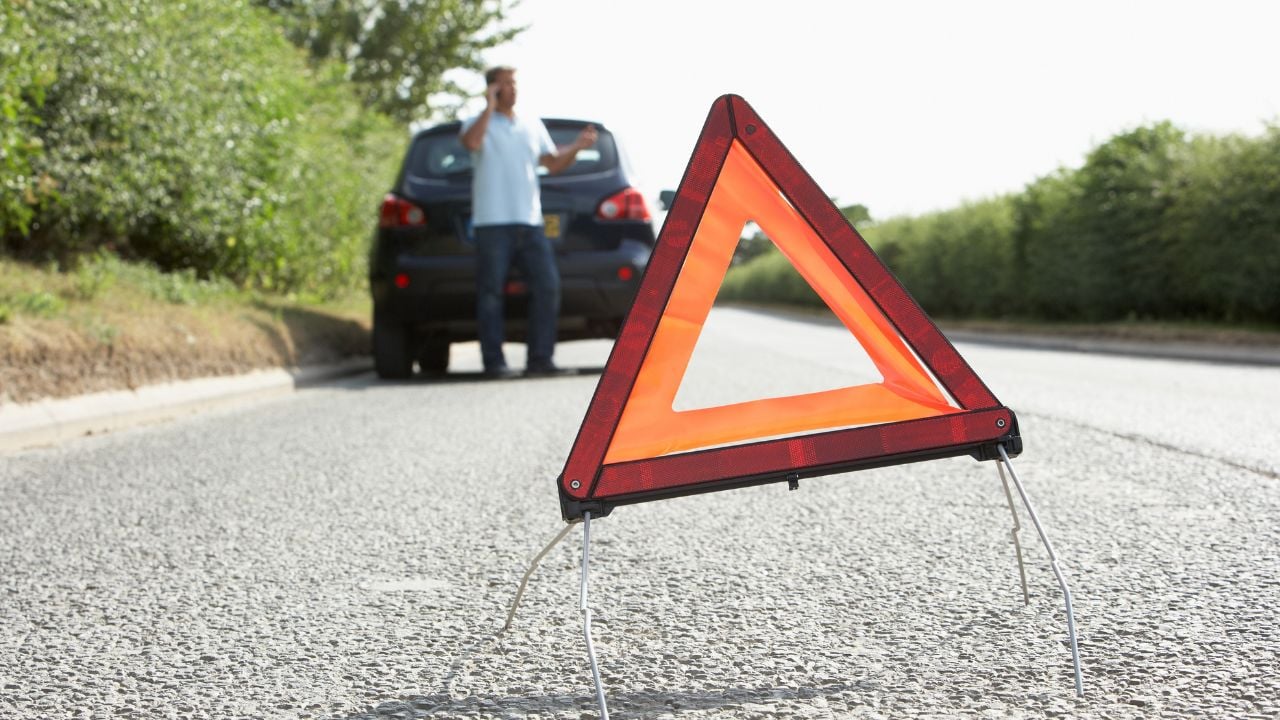
2. Moving Over for Roadside Breakdowns
The Move Over law covers more than emergency vehicles.
Since Jan. 1, 2024, you also have to move over for a disabled vehicle that’s stopped and showing warning lights or hazard lights.
Emergency flares or emergency signage trigger the rule too.
So does a stopped, disabled vehicle with one or more people visibly present.
On an interstate or other highway with two or more lanes going your way, you have to leave the lane closest to the vehicle as soon as it’s safe.
Florida recorded 170 crashes and 14,130 citations for failing to move over in 2022, before the disabled-vehicle rule took effect.
Many drivers pass a car with its hazards on without changing lanes.
What a Move Over Ticket Is
A Move Over ticket is a noncriminal traffic infraction.
If you get one, it counts as a moving violation.
Florida’s highway safety department says the penalty is a fine, fees and points on your driving record.
Your ticket under the left-lane, headlight or bicycle-passing rule is classified the same way.
3. Headlights in the Rain
The headlight rule covers more than night driving.
Headlights have to be on during any rain, smoke or fog, as well as from sunset to sunrise.
On I-4 or the Turnpike, a passing shower is your cue to turn your headlights on.
4. Texting While Driving
Typing on your phone is barred by the texting law, which covers manually entering multiple letters, numbers or symbols while you’re driving.
Many drivers send a quick reply on the highway anyway.
The ban doesn’t apply while you’re stopped at a red light, since a stationary vehicle isn’t being operated.
A first offense is a nonmoving violation, but a second one within five years counts as a moving violation.
A handheld phone is also off-limits in a work zone when construction personnel are present.
Psst! How much do you know about Florida’s roadside rules? Take our quiz and see if you can ace it.
Quiz
Florida Roadside IQ
Answer these questions on Florida’s roadside and highway rules. We bet you can’t get them all right. Prove us wrong?
Florida’s seat belt law covers which passengers in the back seat?
5. Stopping on the Pavement
Stopping, parking or leaving a vehicle on the paved or main-traveled part of a highway outside a municipality is barred when it's practicable to leave it off that part.
Even then, you have to leave a clear width for passing traffic and keep a clear view of your vehicle available from 200 feet in each direction.
A disabled vehicle is exempt when it's impossible to avoid stopping and temporarily leaving it in that position.
If an officer finds a vehicle left there in violation, the officer can move it or order you to move it off the paved or main-traveled part.
An officer can also have an abandoned vehicle towed if it obstructs traffic.
If your vehicle sits on the public right-of-way within 30 feet of the pavement edge for more than 48 hours, outside designated parking areas, it can be towed too.
6. Passing Bicycles
The bicycle-passing rule requires at least 3 feet of clearance when you overtake a bicycle in the same travel lane.
If you can't leave that much room safely, you have to stay back until you can.
The same 3 feet applies beside a bicycle lane, except a separated one.
An electric bicycle or any other nonmotorized vehicle you overtake gets the same space.
On a two-lane highway, that can mean slowing down behind a cyclist until you have room.
Slowing Down on Two-Lane Roads
The Move Over law works differently on a two-lane road, where you can't change lanes away from the vehicle.
Instead, you have to slow to a speed 20 mph under the posted limit as soon as it's safe, when that limit is 25 mph or greater.
A posted 55 means 35.
On a multi-lane road, you slow down by those same amounts if you can't change lanes safely.
The statute makes an exception when a law enforcement officer directs you to do something different.
Other Vehicles the Law Covers
The Move Over law protects more than disabled cars.
You have to move over for an authorized emergency vehicle displaying visual signals while it's parked on the roadside.
Sanitation and utility service vehicles count when they're performing a task on the roadside.
Tow trucks count too.
The statute calls them wreckers, and you have to move over for one displaying amber rotating or flashing lights while it performs a recovery or loading on the roadside.
Road and bridge maintenance or construction vehicles displaying warning lights are covered too when they're on the roadside without advance signs and channelizing devices.
Florida recorded 205 crashes and more than 17,500 citations in 2024 for drivers who failed to move over.
4 Florida Speed Trap Towns Drivers Learn About the Hard Way
How does a tiny Florida town become famous among drivers for all the wrong reasons?
For a few of them, it started with how many tickets their officers wrote.
4 Florida Speed Trap Towns Drivers Learn About the Hard Way
7 Things Florida Gives Residents Over 65 That Go Unclaimed

Turning 65 in Florida can come with perks you have to ask for.
Some are state programs and some are local options, and it's easy for them to go unclaimed.
