
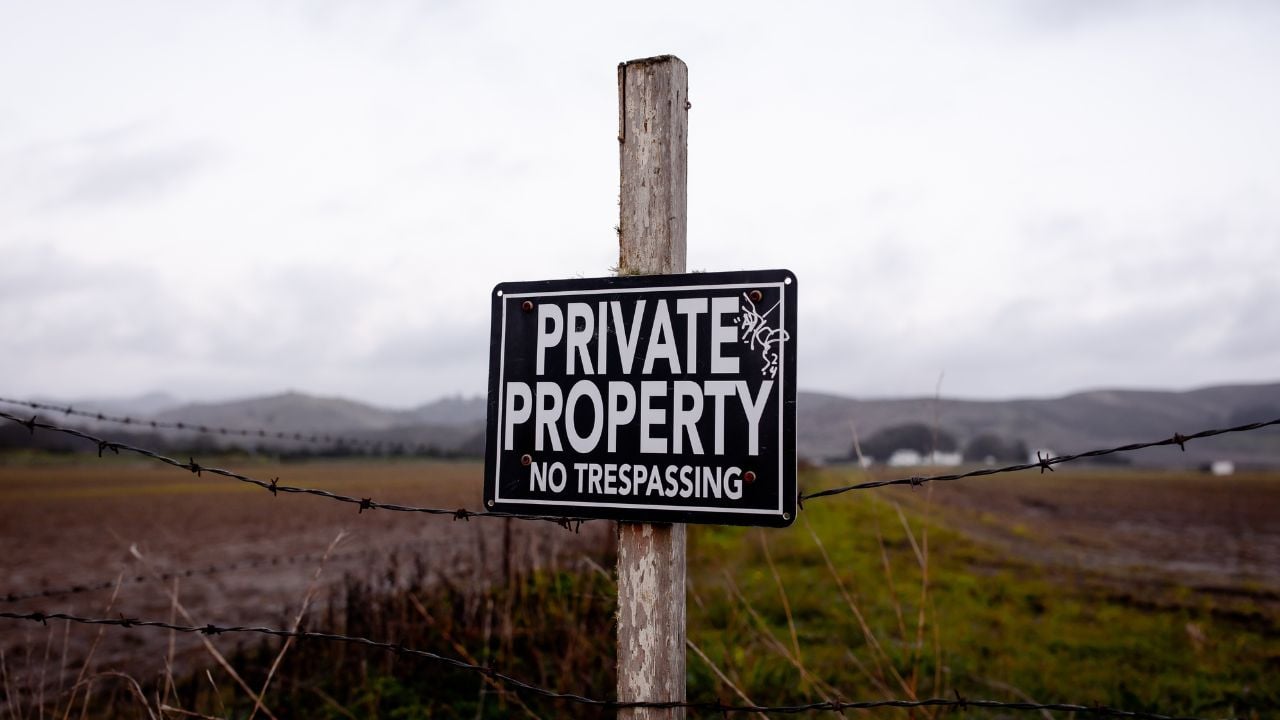
6 Things Pennsylvanians Can’t Legally Do to a Trespasser

If a stranger cuts across your back field this holiday weekend, your first instinct might be to march out and stop them.
How you do it could leave you in more trouble than they’re in, though.
Here’s what Pennsylvanians can’t legally do to a trespasser.
Note: This is general information, not legal advice. Self-defense and trespass laws are subject to change.
1. Rigging a Booby Trap
Pennsylvania law lets you use a device to keep a trespasser off your land, but only on strict terms.
The device can’t be designed to cause death or serious bodily injury, and it can’t be known to create a substantial risk of causing either.
Booby traps are out.
Even a milder device has to clear more tests.
Using it has to be reasonable under the circumstances.
It has to be a device people customarily use for that purpose, or you have to take reasonable care to let likely intruders know it’s there.
2. Using Force Before Asking
Pennsylvania law generally expects you to ask a trespasser to stop before you use any force to protect your property.
If you use force first, the law may not call it justified.
You can skip the request if you believe it would be useless, dangerous to you or someone else, or too late to prevent substantial harm to the property.
3. Using Deadly Force to Guard Property
Pennsylvania law limits deadly force against a trespasser to a short list of situations.
Deadly force can be justified when someone has entered your dwelling and you have no reason to think the entry is lawful or that lesser force would be enough.
Deadly force can be justified against someone with no claim to the home who is trying to push you out, or when it’s necessary to stop a felony underway inside.
A yard doesn’t count.
Neither does a shed, a woodpile or an empty truck.
What Counts as Deadly Force Against a Trespasser?
Pennsylvania’s Crimes Code defines deadly force as force that is readily capable of causing death or serious bodily injury, given the circumstances in which it’s used.
Protecting yourself from death or serious injury falls under the Crimes Code’s self-protection section, which has different rules.
4. Keeping a Trespasser Confined
Pennsylvania law lets you confine a trespasser as protective force, but only on one condition.
You have to take all reasonable measures to end the confinement as soon as you know you can do so with safety to the property.
That condition doesn’t apply to a person who has been arrested on a charge of crime.
Psst! How much do you know about trespassing in Pennsylvania? Take our quiz and see if you can ace it.
Quiz
Keystone Trespass IQ
Answer nine questions on Pennsylvania trespass and property laws. We bet you can’t get them all right. Prove us wrong?
Under Pennsylvania’s criminal trespass law, what happens to an unarmed person who enters posted property for the sole purpose of retrieving a hunting dog?
5. Assuming the Castle Doctrine Always Protects You
Pennsylvania's Castle Doctrine is a legal presumption, and it has limits.
The law's presumption applies when someone is unlawfully and forcefully entering a dwelling, a residence or an occupied vehicle, or has already done so and is inside.
In that case, the law presumes you reasonably believed deadly force was immediately necessary to protect yourself.
The presumption doesn't apply if the person has a right to be in the home, such as an owner or lessee, or if you're engaged in criminal activity.
It doesn't cover a peace officer doing official duties when you knew or should have known who they were.
6. Willful or Wanton Harm
A trespasser who gets hurt on your land can recover for those injuries only if you were guilty of willful or wanton misconduct.
Pennsylvania's Supreme Court applied that rule in 1998, in a case about a police officer who tripped on old fencing during a drug raid.
If you hurt a trespasser through willful or wanton conduct, you could face a lawsuit over it.
Who Counts as a Trespasser
Pennsylvania's Crimes Code calls someone a defiant trespasser when they enter or stay in a place where notice against trespass has been given.
That notice can be actual communication to the person, a posted sign where intruders are likely to see it, or a fence or other enclosure designed to keep them out.
If you tell a stranger to leave, that counts as actual communication.
Without one of the notices the law lists, a stranger on your land may not meet that definition.
What Counts as a Dwelling
A trespasser's location decides which rules you can lean on, so the definition of a dwelling matters.
Pennsylvania's Crimes Code defines a dwelling as a building or structure, including an attached porch, deck or patio.
A movable or temporary structure can qualify too, as long as it's the home or place of lodging for the time being.
Force the Law Does Allow
Pennsylvania law does let you use some force on a trespasser.
Force you believe is immediately necessary to end the trespass can be justified only after you've asked the trespasser to stop, unless an exception applies.
If a trespasser carries off your property, force to retake it can be justified when you act immediately or on fresh pursuit.
8 Hunting Season Rules Pennsylvanians Who Don't Hunt Still Need to Know

Hunting season can reach Pennsylvanians who don't hunt.
Here's what non-hunters should know before heading outdoors this season.
8 Hunting Season Rules Pennsylvanians Who Don't Hunt Still Need to Know
3 Things a Pennsylvania Neighbor Might Report That Are Usually Legal

There's always that one neighbor who notices everything and has opinions about it.
In Pennsylvania, what they notice is sometimes allowed, even when they report it.
3 Things a Pennsylvania Neighbor Might Report That Are Usually Legal
