
6 Things Nutmeggers Get Totally Wrong About Connecticut’s Harbor Seals

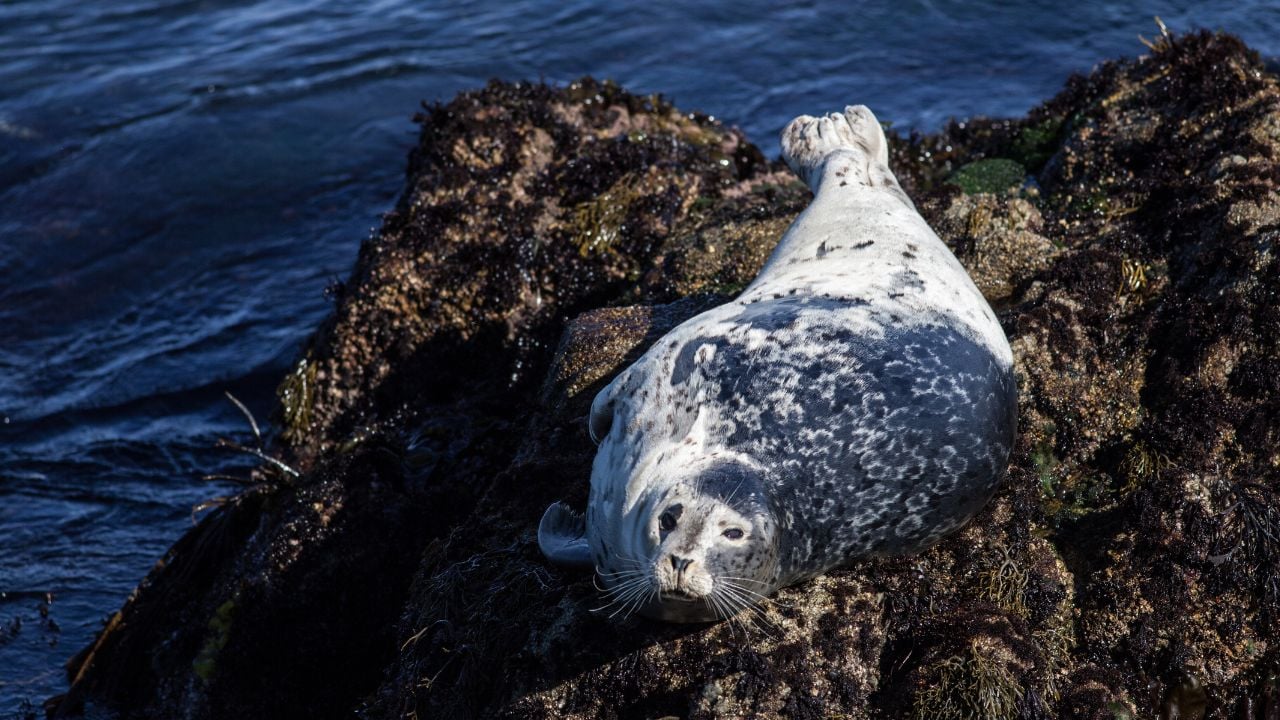
Have you ever spotted a seal resting on the rocks along Long Island Sound?
Getting a closer look for a photo is tempting, especially when it doesn’t seem to mind.
Here’s what many Nutmeggers get totally wrong about Connecticut’s harbor seals.
Note: This is general information, not legal advice. Seal-viewing rules and distances are subject to change, so confirm the current guidance with the National Oceanic and Atmospheric Administration (NOAA).
1. Year-Round Residents
Many people figure harbor seals live in Long Island Sound year-round.
That’s not the case.
Harbor seals migrate down from Maine and Canada.
They make that trip each winter, so you’ll find them in the Sound around November or December.
They typically stay through March or April.
In the Sound, seals find protection from storms and predators, plus open water that isn’t totally frozen over.
Outside winter, they’re probably around the Cape or in the Gulf of Maine.
The documented count on both sides of the Sound runs to a few hundred each year.
2. Gray Seal Mix-Up
Many people lump the Sound’s seals together as harbor seals.
Gray seals make the same trip from Maine and Canada, so the Sound has both species each winter.
If you’re watching from a distance, the two look very similar.
Harbor seals have round heads and spotted bodies.
Gray seals have more elongated faces.
You’ll often see harbor seals alone.
Gray seals are more likely to sprawl out in big groups on rocks or beaches.
That’s one clue.
3. Spots Beyond Norwalk
Some people assume Norwalk is the only place to see seals.
Seals have been reported hauled out on the rocks around Falkner Island, off the Guilford coast.
A video posted in February 2026 showed harbor seals resting on Cormorant Rocks in Greenwich Harbor.
One of the men who saw them said he’d never seen seals there before.
Seals use rocky shores as stop-off points to haul out.
Head out at low tide.
You’ll have a better chance of spotting seals resting on rocks and coastal areas then.
Psst! How much do you know about winter seals? Take our quiz and see if you can ace it.
Quiz
Winter Seal Quiz
Answer these questions on seals, the Sound and the people who rescue them. We bet you can’t get them all right. Prove us wrong?
A harbor seal can sleep underwater. About how often does it come up for air?
4. Pups Left Alone
A seal pup alone on the sand often looks injured or abandoned to the people who find it.
A mother seal can leave her pup alone on the beach for up to 24 hours while she feeds.
That's normal.
Gray seal pupping season typically peaks in winter, so a pup on a winter beach shouldn't surprise you.
Trying to put a pup in the water or chase it there can cost the pup its life.
If a curious pup approaches you, the right move is to back away.
5. Getting Close
NOAA's 50-yard rule applies even when a seal looks relaxed on a rock.
Some people figure a seal that stays put is okay to approach.
You should keep yourself and your pets at least 50 yards, or 150 feet, from a seal on shore.
That's about half a football field.
Keep your distance.
Connecticut Public's seal coverage cites 100 yards, so you're never wrong to stay farther back.
The federal Marine Mammal Protection Act makes it illegal to harass a seal.
Feeding a seal is harmful and illegal too.
You also shouldn't pet or touch a seal.
If you want a close-up, your camera's zoom is the way to get one.
Signs You're Too Close to a Seal
A seal that starts to stare, fidget or flee into the water means you're too close.
Move away at the first sign of disturbance or agitation.
If you're walking a dog, keep it on a leash around seals to prevent bites to the dog and the seal.
6. Who to Call
A seal pup on the Stratford shore drew a high volume of calls to animal control in February 2026.
People tend to call the police or animal control first when they find a seal in trouble.
Stratford Animal Control told people to leave the pup be, and the Mystic Aquarium rescue hotline was notified.
Mystic staff and volunteers monitored the pup and planned to step in only if it showed signs of injury, illness or danger.
Mystic has run its Animal Rescue Program since 1975, and a majority of its patients are seals.
NOAA's list names Mystic Aquarium as the contact for Connecticut, Rhode Island and Fishers Island, New York.
Save this number in your phone.
If you spot a seal in trouble, the aquarium's 24-hour hotline is (860) 572-5955, extension 107.
Pearl, a Gray Seal at Norwalk
If you visit the Maritime Aquarium at Norwalk, you're visiting the permanent home NOAA helped find for a gray seal named Pearl.
Pearl stranded as a five-week-old pup on a Rhode Island beach in January 2025.
Mystic Aquarium rehabilitated, tagged and released her in April 2025.
Her story didn't end there.
After a second stranding, NOAA determined Pearl was non-releasable.
Seal Cruises From Norwalk
The Maritime Aquarium at Norwalk runs seal-spotting cruises on select weekend dates, January through March.
The cruises sail aboard the R/V Sound Explorer from the aquarium's dock at 90 Water Street.
Each trip is timed around low tides, when seals are most likely to be hauled out on the low-lying rocks around the Norwalk Islands.
Passengers must be over 42 inches tall, so check the aquarium's cruise page for dates and tickets before you plan your trip.
Dress warmly.
The same trips are also a chance to spot loons, mergansers and long-tailed ducks.
9 Things That Only Make Sense to Someone From Connecticut

Some Connecticut details only click if you grew up there.
See how many of them you recognize.
9 Things That Only Make Sense to Someone From Connecticut
9 Things That Give a Nutmegger Away the Moment They Leave the State

Some habits give you away as a Nutmegger as soon as you cross the state line.
Find out which ones sound like you.
9 Things That Give a Nutmegger Away the Moment They Leave the State
