
9 Things a Pennsylvania Landlord Can’t Legally Do to Renters in 2026

Cold nights are here, and a working furnace isn’t optional in a Pennsylvania winter.
If a dispute with your landlord ever puts your heat or electricity on the line, it helps to know where the law draws the line.
These are the things a Pennsylvania landlord can’t legally do to renters in 2026.
Note: This is general information, not legal advice. Rental rules and fee limits are subject to change, so confirm the current requirements with the Pennsylvania Office of Attorney General.
1. Padding Application Fees
Starting in December, a landlord can charge only a rental application fee that’s reasonably related to the actual administrative expenses of processing your application.
Gov. Josh Shapiro signed House Bill 558 on October 22 as Act 67 of 2026, adding the rule to the Landlord and Tenant Act of 1951.
Your application fee can’t double as a general source of income for the landlord, either.
The act takes effect 60 days after it was signed, which falls in December.
2. Banning Your Visitors
Your lease can’t take away your right to have guests.
Under the Landlord and Tenant Act, you can invite family and visitors to your home for a reasonable period of time.
A written rental agreement can’t waive that right.
A landlord can’t charge you a fee, service charge or additional rent for guests, either.
Your shopping is covered too.
A landlord may in no way restrict your right to purchase goods and services.
A lease term that tries to limit that right is void and unenforceable in court.
3. Surcharges on Repair Bills
Pennsylvania’s Attorney General says a 15% administrative charge on top of damage, cleaning or painting costs is illegal under the Landlord and Tenant Act.
A 2022 case over that charge secured $25,000 in restitution for tenants, many of them students.
On a $400 repair bill, a 15% charge would add $60.
If your move-out statement lists a percentage on top of the repair costs, ask what it covers before you pay.
4. Oversized Deposits and Late Refunds
A security deposit can’t top two months’ rent in your first year.
After the first year, the cap drops to one month’s rent.
A lease can’t waive the cap either, since the law makes any waiver void and unenforceable.
When you move out, your landlord has 30 days to give you a written list of damages and pay back whatever balance you’re owed.
A landlord can still keep money for actual damage, but only through that written list.
Landlords who miss that deadline forfeit the right to withhold any part of your deposit.
Landlords who don’t return the difference owe double the amount by which your deposit exceeds the actual damages.
Your Address and the Deposit Penalty
A landlord’s penalty for holding your deposit depends on a step you take before you leave.
If you don’t give the landlord your new address in writing, the landlord isn’t liable under the deposit-return section.
So put your forwarding address on paper, and keep a copy.
5. Landlord Utility Shutoffs
A landlord who shuts off your utilities to force you out is carrying out a self-help eviction, which Spotlight PA reports is illegal in all 50 states.
A landlord who changes the locks or hauls out your belongings is doing the same thing.
If it happens, you can call the police.
A lease or rent receipts may help prove you live there.
Under the Utility Service Tenants Rights Act, a utility has to give affected tenants written notice at least 30 days before it cuts service over a landlord’s unpaid bill.
Tenants who pay the utility to keep service on can recover that money, including by deducting it from rent they owe.
6. Forcing an As-Is Lease
A landlord can’t compel you to accept an apartment as is, even if you sign a lease that says you do, according to Spotlight PA.
Your signature doesn’t change it.
A 1979 Pennsylvania Supreme Court decision, Pugh v. Holmes, built an implied promise into residential leases that the home is fit to live in.
A leaking roof, no heat, faulty wiring or an infestation can all make a home uninhabitable.
Under Pugh, a tenant may keep rent back in a serious case.
A court has discretion to order that money paid into escrow.
Before withholding rent, tenants must give the landlord written notice, which can be a letter, email or text.
7. Skipping the Lead Paint Disclosure
Landlords of most housing built before 1978 can’t skip the lead paint disclosure.
The rule is federal, not a Pennsylvania statute.
A landlord has to give you the Environmental Protection Agency (EPA) lead pamphlet, tell you what’s known about lead paint in the home, and hand over any records.
The lease has to carry a Lead Warning Statement.
In Philadelphia, owners of properties built before 1978 have to certify to tenants that the property is lead safe or lead free.
Landlords there need that certification to execute a new or renewed lease or to receive or renew a rental license.
8. Punishing You for Organizing
Your landlord can’t end your lease or refuse to renew it because you or a family member joined a tenants’ group.
A separate utility law adds protection for tenants who act to keep their service on.
A termination notice or rent increase within six months of a tenant acting to avoid a utility shutoff is presumed to be retaliation.
For utility-related retaliation, a landlord who loses can owe two months’ rent or the tenant’s actual damages, whichever is greater, plus court costs and reasonable attorneys’ fees.
Any lease clause that waives those utility rights is void and unenforceable.
Psst! How much do you know about Pennsylvania renter rights? Take our quiz and see if you can ace it.
Quiz
Renter Rights IQ
Answer these questions on Pennsylvania renter and landlord rules. We bet you can’t get them all right. Prove us wrong?
Under the federal lead paint disclosure rule, which pamphlet does a landlord of older housing have to give renters?
9. Writing Leases You Can't Read
Under Pennsylvania's Plain Language Consumer Contract Act, a landlord's residential lease has to be written, organized and designed so it's easy to read and understand.
In judging a lease, a court has to consider guidelines such as short sentences, active verbs and no double negatives.
A landlord who fails the readability test is liable for the tenant's actual loss, $100 in statutory damages, court costs and reasonable attorney fees.
Commercial leases are exempt, but your home lease isn't.
Consumer contracts involving more than $50,000 are excluded as well.
8 Pennsylvania Rent Increase Rules That Catch Renters by Surprise

Philadelphia has run some version of a rent control fight since 1955.
8 Pennsylvania Rent Increase Rules That Catch Renters by Surprise
8 Pennsylvania Eviction Steps That Renters Never See Coming
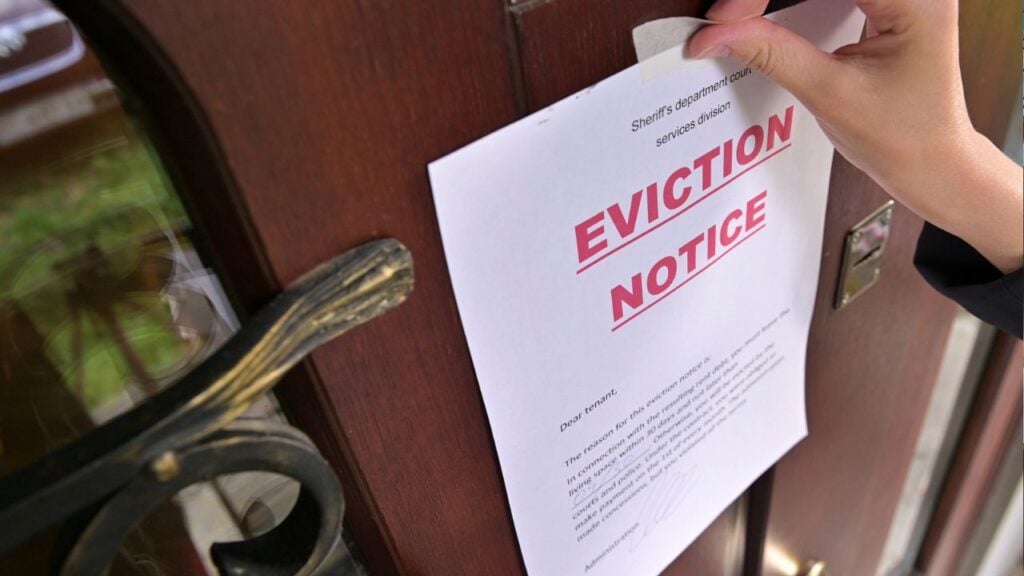
An eviction in Pennsylvania moves through a chain of deadlines.
Here's what each step looks like from the renter's side.
