
12 Ohio Habits That Make Total Sense Once You’ve Lived Through an Ohio Winter

The first cold snap of December can turn a mild Ohio morning into a frozen afternoon.
After a few winters, you stop trusting a warm forecast and start packing for the worst.
These are the habits that make total sense once you’ve lived through an Ohio winter.
Note: This is general information, not legal advice. Driving rules and city ordinances are subject to change.
1. Finding the Snow Emergency Level
Ohio’s county sheriffs issue snow emergency levels, and there are three of them.
Before you head out in a storm, check your county’s level with the sheriff’s office, as Spectrum News advises.
In Cuyahoga County, Level 1 means use caution and Level 2 means necessary travel only.
Hamilton County describes Level 1 as hazardous roads with blowing snow, and says roads may also be icy.
Counties don’t match.
So look up the level for the county where you’re driving, not the one you left.
What a Snow Emergency Level 3 Can Mean
Depending on the county, a winter snow emergency Level 3 can carry legal weight, according to Spectrum News.
Montgomery County’s Level 3 closes all roadways to non-emergency personnel.
Cuyahoga County’s Level 3 limits roads to emergency vehicles and says its travel advisory is strictly enforced.
Lucas County’s sheriff says nonessential drivers at Level III may face arrest and prosecution.
2. Shoveling the Sidewalk
Where you live decides how fast you have to shovel.
Cleveland’s rule, as Spectrum News lists it, is to clear the entire sidewalk of snow and ice before 9 a.m. every day.
Akron gives you 24 hours.
Springfield asks building occupants to have sidewalks cleared as of 10 a.m. the day after the event.
Ohio has no statewide law mandating that a property owner clear a sidewalk, Spectrum News reports, so the deadlines come from cities.
3. Space Heaters Three Feet Away
The Division of State Fire Marshal says to keep space heaters at least three feet away from anything that can burn.
That includes your couch.
Plug yours straight into a wall outlet, and skip the extension cord and the power strip.
The division also says never to leave a space heater unattended or running while you sleep.
4. Kitty Litter in the Trunk
Stuck in the snow?
The National Highway Traffic Safety Administration’s winter driving tips list sand or kitty litter in case your vehicle gets stuck in the snow.
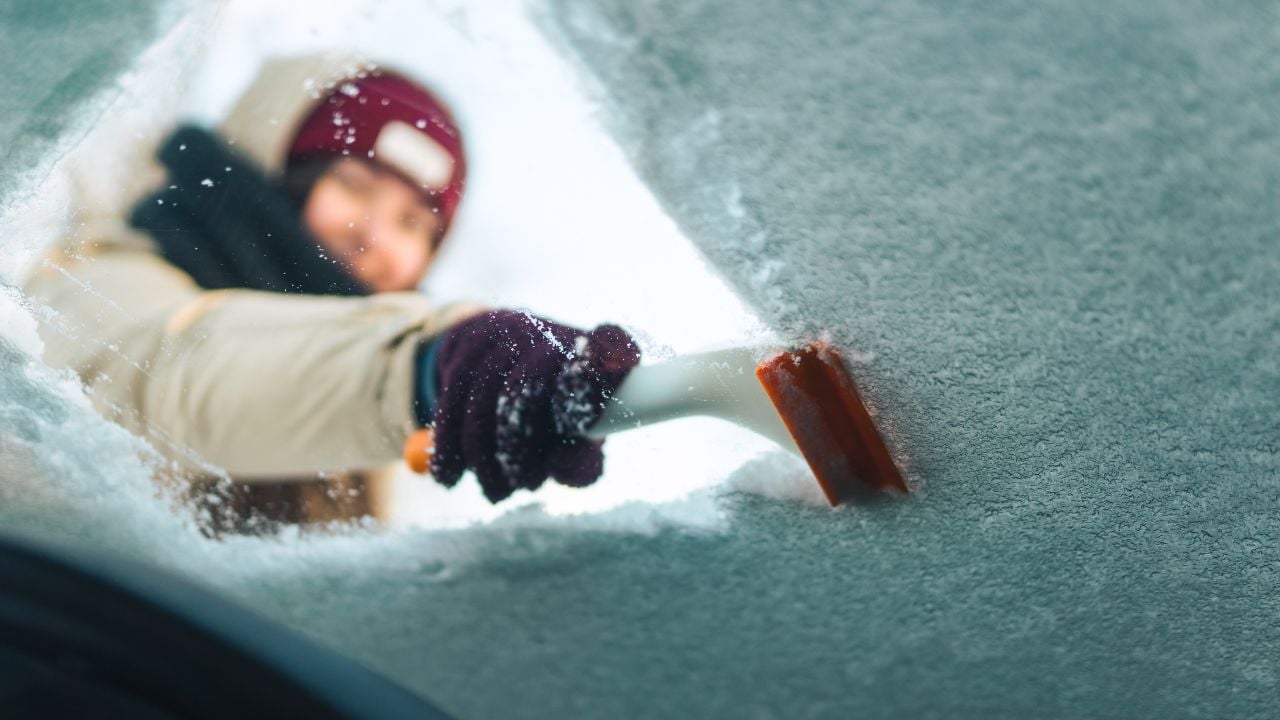
The same list adds a snow shovel, a broom and an ice scraper.
Toss a bag of litter in your trunk before the first storm, and keep the shovel and scraper in there too.
5. Letting the Faucet Drip
Spectrum News reports advice from the City of Toledo and the American Automobile Association (AAA) that repeat periods of below-freezing weather make it possible for pipes to freeze.
Their advice is for you to run faucets regularly in below-freezing temperatures, since it costs less than repairing a frozen or burst pipe.
Moving water resists freezing.
A Greater Cincinnati Water Works division manager told public radio station WVXU the same and recommended a steady drip once temperatures get that cold.
If the water stops, open the cabinet doors under your sink.
The manager’s other fix is to warm that area with a hair dryer.
6. Keeping a Coat in the Car
The National Weather Service recorded a sharp drop at Cleveland Hopkins Airport before Christmas 2022.
Temperatures fell from as high as 43 degrees around 1 a.m. to as low as minus 4 at noon.
That’s about a 47-degree swing.
The weather service’s write-up also describes any rain left on the ground freezing immediately in a flash freeze.
Many people learn to distrust a warm morning after a day like that.
Keep the coat in the car, and it covers you if you left the house in a light jacket.
Washington Township in Dublin, Ohio, lists a coat, hat, gloves and boots among the basic supplies for a winter car kit.
7. Checking the Road Cameras
The OHGO traffic site is listed on the Ohio Department of Transportation (ODOT) website.
It provides live traffic cameras, active incidents and closures, and other time-sensitive alerts.
You can also view current road conditions on OHGO, like icy, wet or snow-covered roads.
Pull up the cameras along your route before you pull out of the driveway.
Is that road plowed?
ODOT also posts an interactive map of the routes it is responsible for plowing.
8. Room for the Plows
Ohio’s winter driving tips include a short rule about plows: Don’t crowd the plow.
If you’re behind a plow, give it room to work.
Backing off is an easy habit for you to keep.
Plows get struck.
ODOT says 58 snowplows were struck in 2025.
9. Rinsing Road Salt Away
ODOT crews used nearly 813,000 tons of salt in 2025 and drove 9.8 million miles, according to Spectrum News.
Road salt and deicing fluid can cause rust and corrosion on a car, AAA says in a Columbus Dispatch report.
AAA’s advice is to wash your car often and check the undercarriage.
The same advice says to wash only when it’s above freezing and to dry the car right after, so water doesn’t refreeze.
Spring matters, too.
AAA also recommends a final cleaning in spring because leftover winter materials can keep corroding your car year-round.
10. Warming the Car
Lakewood police warned in December 2022 that an unattended, running car with the keys inside invites theft.
The same report adds that leaving a car unattended to warm up is illegal in Lakewood and other Ohio cities.
Ohio law generally bars you from leaving a vehicle unattended without first stopping the engine, locking the ignition and removing the key.
Using a remote starter?
A locked vehicle, or one parked on residential property, is exempt from the engine, ignition and key steps.
If you start your car from the kitchen, lock it first.
Psst! How much do you know about Ohio’s winter weather? Take our quiz and see if you can ace it.
Quiz
Ohio Winter IQ
Answer these questions on Ohio cold snaps, snowplows, heating safety and ice. We bet you can’t get them all right. Prove us wrong?
In December 2022, Cincinnati recorded its fastest 12-hour temperature drop on record, which goes back to 1947. How many degrees did it fall?
11. Headlights With the Wipers
Under Ohio law, your headlights must be on whenever your windshield wipers are in use because of precipitation on the windshield.
The hour doesn't matter.
The same law also requires lights from sunset to sunrise.
It also covers conditions that hide people and vehicles from view at one thousand feet.
Flip your headlights on the moment the wipers start.
12. Testing the Ice First
The Ohio Department of Natural Resources (ODNR) sets guidelines for new clear solid ice.
Four inches is the minimum if you're traveling on foot.
Driving onto it?
The same guide lists 8 to 12 inches for cars or small trucks.
The guide adds that no ice is 100 percent safe.
9 Normal Things From the 1950s That Are Banned in Ohio Today

Many everyday habits from decades ago would get you in trouble now.
Some of the changes may surprise you.
9 Normal Things From the 1950s That Are Banned in Ohio Today
4 Department Store Restaurants Ohioans Still Miss

A downtown shopping trip used to come with a proper sit-down lunch, right inside the store.
The article looks back at four of those dining rooms.
