
9 Things That Change the Second You Cross From Iowa Into Minnesota

Will you be driving the grandkids up to Minnesota for the holidays?
The car seat rules that work fine in Iowa might not hold up once you’re across the border.
Here are the things that change the second you cross from Iowa into Minnesota.
Note: This is general information, not legal or tax advice. Tax rates, fees and rules are subject to change.
1. Cannabis Possession
If you’re 21 or older, Minnesota lets you carry up to two ounces of cannabis flower in public.
At home, you can keep up to two pounds of flower.
You can also grow up to eight plants, with no more than four of them mature and flowering.
Those plants have to stay in a locked space that’s out of public view.
In Iowa, a first offense for marijuana possession can bring up to six months in county jail, a fine of up to $1,000, or both.
Cannabis is still off limits on federal property in Minnesota, such as courthouses, airports and national parks.
2. Clothing Sales Tax
Clothing is exempt from sales tax in Minnesota.
That covers jackets and coats, T-shirts, hosiery and rainwear.
Iowa taxes clothing at the 6% state rate, and many local jurisdictions add 1% more.
An $80 jacket carries $4.80 in state sales tax on the Iowa side.
Minnesota charges none.
If you’re shopping for handbags, jewelry, nonprescription sunglasses, helmets, ski boots or fur clothing, Minnesota still taxes them.
Iowa does give you a tax holiday for clothing under $100, held the first Friday and Saturday of August.
3. Booster Seat Rules
A child who is at least four and has outgrown a forward-facing car seat has to ride in a booster seat in Minnesota.
The booster stays until the child turns nine or outgrows the booster’s weight or height limit.
Iowa requires a child restraint system, which includes a booster seat, only until a child turns six.
From age six on, a regular seat belt satisfies the law.
That means a 7-year-old can legally ride in a seat belt in Iowa.
If you’re driving that child into Minnesota, the booster seat comes along unless the child has outgrown it.
Breaking the rule in Minnesota makes you guilty of a petty misdemeanor, with a fine of up to $50.
4. Cigarette Tax
Iowa taxes cigarettes at $1.36 a pack.
Minnesota’s excise tax is 15.2 cents per cigarette, or $3.04 a pack of 20 in 2026.
If you buy a carton of 10 packs, you pay $16.80 more in cigarette tax in Minnesota than in Iowa, before sales tax.
Minnesota adds a sales tax of 84 cents a pack, which is $8.40 more on a carton.
5. Ice Shelter Rules
Minnesota requires a license for any non-portable ice shelter on its inland waters.
A fish house on wheels counts as non-portable, and the license isn’t required on border waters shared with Iowa, Wisconsin and the Dakotas.
If you live in Iowa and haul a fish house north, the annual license costs $37 instead of the resident price of $15.
Iowa doesn’t ask for a separate license.
You mark the shelter with your assigned department number, or your full name, street address and city, in three-inch block letters.
That marking acts as your permit.
Iowa’s removal date is March 1, or ice melt if that comes first.
It applies to unattended shelters on state-owned lands and waters, including parking lots and boat ramps.
In 2026, Minnesota’s inland removal deadlines were March 2 in the south and March 16 in the north.
The line between them follows U.S. Highway 10, Highway 34, Highway 200 and U.S. Highway 2.
Iowa’s date covers only state-owned lands and waters, while Minnesota’s covers inland waters across the state.
6. Car-Buying Taxes
Iowa doesn’t charge sales tax on vehicles that need registration.
You pay a fee for new registration instead: $10 plus 5% of the price.
Minnesota charges 6.875% of the taxable sales price when the title transfers.
Say you buy a $30,000 car: Iowa’s fee comes to $1,510, and Minnesota’s tax comes to $2,062.50.
That’s a $552.50 gap.
Private Sales and the $20 Add-On
Iowa charges the same fee for new registration when you buy a car from a private seller.
Minnesota applies no local sales tax to vehicles.
In a county or city with a vehicle excise tax, the dealer collects $20 on the car.
You owe it even if you register the car in another state, as long as you take delivery there.
7. Fireworks Rules
Consumer fireworks go back on sale at Iowa’s permanent stores on December 10.
In summer, permanent stores sell from June 1 through July 8, and temporary stands open June 13.
Iowa law usually limits use to the hours between 9 a.m. and 10 p.m.
On July 4 and the weekends around it, the cutoff moves to 11 p.m.
On New Year’s Eve, you can keep going until 12:30 a.m.
A seller who hands consumer fireworks to anyone under 18 commits a simple misdemeanor.
Minnesota allows the public only non-explosive, non-aerial fireworks, such as sparklers, fountains, ground spinners and snappers.
Firecrackers, bottle rockets, Roman candles and any kind of mine or shell are illegal without a certified operator permit.
If you’re caught with illegal fireworks in Minnesota, you could face fines and jail time, and officers may seize them.
8. Minimum Wage
In 2026, if you work 40 hours at minimum wage, you earn $166.40 more a week in Minnesota than in Iowa.
Minnesota’s rate is $11.41 an hour, while Iowa’s is the federal $7.25.
Minnesota adjusts its rate for inflation, and it rises to $11.87 on January 1, 2027.
At 40 hours a week, you’d earn $184.80 more than Iowa’s minimum wage pays.
Psst! How much do you know about Iowa and Minnesota? Take our quiz and see if you can ace it.
Quiz
Iowa-Minnesota IQ
Answer nine questions on Iowa and Minnesota facts, from state symbols to landmarks. We bet you can’t get them all right. Prove us wrong?
Minnesota calls itself the Land of 10,000 Lakes. How many lakes of 10 acres or more does the state’s Department of Natural Resources list?
9. Income Tax Rates
Income tax on $50,000 of taxable income comes to $1,900 in Iowa.
If you file as single, the same $50,000 comes to about $2,917 in Minnesota.
You'd pay about $1,017 more.
Iowa taxes every level of taxable income at 3.8% in 2026.
Minnesota runs four brackets in 2026, starting at 5.35% and topping out at 9.85%.
Single filers pay 5.35% up to $33,310 and 6.80% up to $109,430.
The top rate of 9.85% starts above $203,150.
9 Things Iowans Miss Most After They Move Away
Ask someone who traded an Iowa commute for Chicago or Dallas traffic what they miss most.
The drive is only one answer on the list.
9 Things Iowans Miss Most After They Move Away
10 Foods and Drinks Iowans Grew Up On That Horrify Out-of-Staters
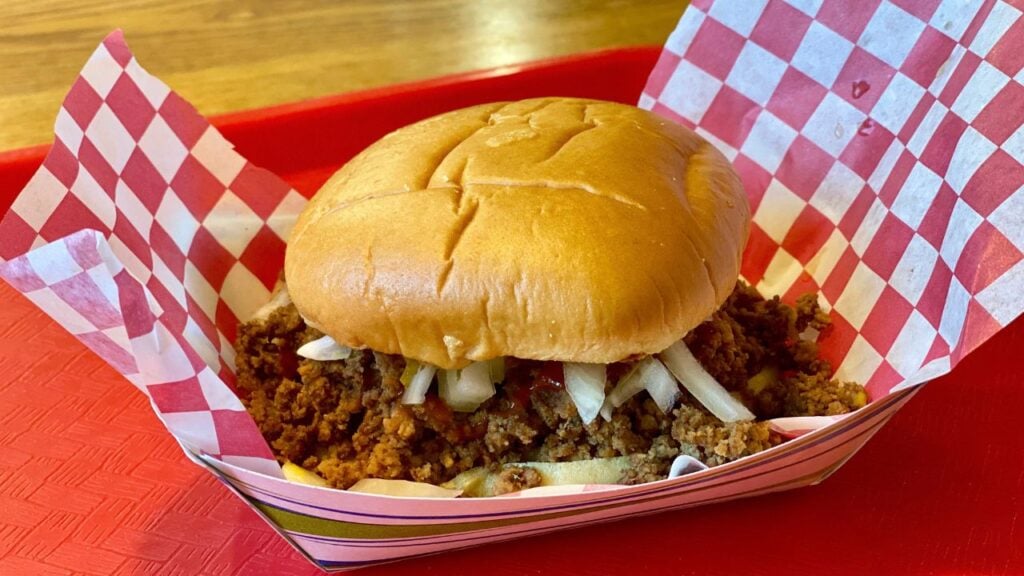
Growing up in Iowa can leave you with food habits that look normal to you and alarming to a guest.
Ask Iowans about them, and you may get a shrug or a long defense.
10 Foods and Drinks Iowans Grew Up On That Horrify Out-of-Staters
