
5 Kentucky Rules That Decide Who Pays When a Neighbor’s Tree Falls on Your House

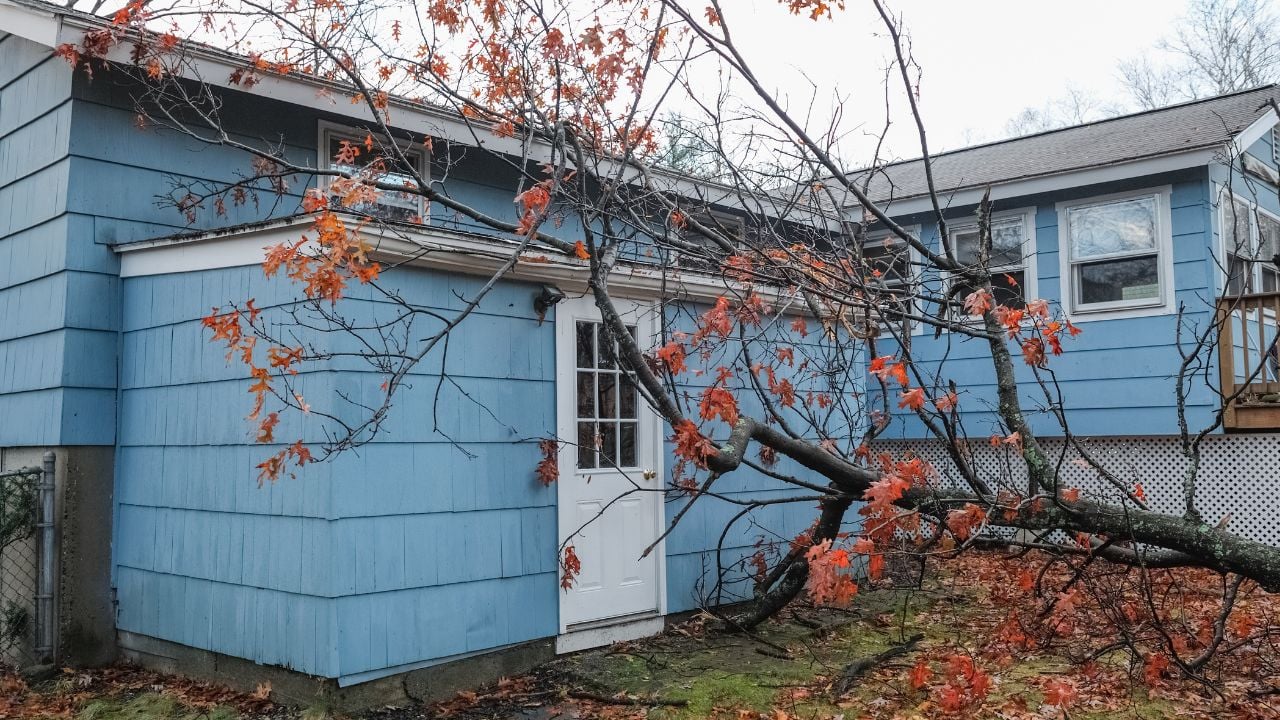
A suburban Louisville homeowner was once awarded $7,875 after a dead tree from the lot next door fell on his garage.
Then the Kentucky Supreme Court reversed it. The reason is one you’d want to know before a storm hits yours.
Here are the rules that decide who pays when a neighbor’s tree falls on your house.
Note: This is general information, not legal or insurance advice. Tree liability rules, coverage terms and claim deadlines are subject to change.
1. Healthy-Tree Rule
When a healthy tree next door topples in a storm, the bill usually isn’t your neighbor’s.
Kentucky’s traditional rule gives a landowner no duty to fix purely natural conditions on their land.
In 2008, the Kentucky Supreme Court refused to create a new duty for urban landowners.
The justices didn’t decide whether a private landowner in a city could be liable.
A 1961 decision involving a motorist found no duty to inspect rural land for defective trees.
2. Dead-Tree Knowledge Rule
The 1961 decision, Lemon v. Edwards, drew a line at what the landowner knew.
The court wrote that substantially all cases recognize a landowner’s liability if he knows the tree is defective.
The landowner in that case won because nothing showed he had actual knowledge of the danger.
Kentucky’s Court of Appeals suggested in a 1985 ruling that a dead tree likely to fall might support a negligence or nuisance claim.
The court added that the owner might have to remove all of it or pay damages.
Trimming to the line would leave a dead tree standing over your roof, the court reasoned.
The tree in that case wasn’t dead, so those comments weren’t part of the ruling.
A later Court of Appeals decision, Saufley v. Reed, calls those comments dicta too.
Campbell County’s attorney wrote in 2017 that you can sue to force removal of a dead tree likely to fall, or for the damage once it has fallen.
If you spot a dead tree next door, a dated letter can show your neighbor knew.
3. State-Owned Trees
A dead tree on vacant land owned by the state Department of Highways fell on a neighboring property in suburban Louisville.
It damaged a garage and destroyed a vehicle.
The property owner had known about the tree but hadn’t reported it.
Kentucky’s Board of Claims awarded the property owner $7,875.
The Court of Appeals backed that award in 2006, reasoning that even a quick look at the lot would have revealed dead trees.
The Kentucky Supreme Court reversed in Commonwealth v. Sexton, the same 2008 case behind the no-duty rule above.
The justices held that inspecting for and removing dead trees on highway department land was a discretionary act, so the state kept its immunity.
The opinion left open what happens when the state has actual notice of a dead tree.
If the tree next door sits on highway department land, that ruling is what your claim would face.
Before you count on a payout, check who owns the lot next door.
Psst! How much do you know about Kentucky’s storms and property lines? Take our quiz and see how many you can get right.
Quiz
Kentucky Storm Smarts
Answer these questions on Kentucky’s tornadoes, trees, property lines, and storm claims. We bet you can’t get them all right. Prove us wrong?
In December 2021, the National Weather Service said one tornado crossing from Tennessee into Kentucky stayed on the ground for about how many miles?
4. Tree-Removal Coverage
Kentucky's Department of Insurance says most homeowners policies cover tree removal when the tree falls on a covered structure.
Your policy won't pay to remove a tree that damaged nothing when it fell.
Kentucky Farm Bureau, an insurer, says damage from a tree that falls on your property is generally your responsibility, whichever yard the tree came from.
A diseased tree that the owner ignored is the exception, since the owner or their insurer could be responsible.
What Tree-Removal Coverage Pays
Removal coverage tops out at $500 when the tree damages a covered structure.
The value of the tree itself is usually not covered.
Debris removal can carry a separate dollar limit, so check your policy for the figure.
5. Insurer Payment Deadlines
Before an insurer pays, Kentucky's claim-settlement regulation sets the deadlines it must meet.
Your insurer has 15 business days (Monday through Friday, holidays excluded) to acknowledge your claim notice.
Once you send proof of loss, it has 30 calendar days to offer any payment due.
If it needs longer, it has to notify you within those 30 days and give its reasons.
If the investigation drags on, the insurer must write you 45 days after your claim notice and every 45 days after that.
Once it accepts liability for an undisputed amount, it has 30 business days (Monday through Friday, holidays excluded) to pay.
If an insurer makes no good-faith attempt to settle within 30 days, the final settlement earns 12 percent annual interest.
If the delay had no reasonable foundation, the insurer can owe your attorney's fees too.
Write the dates down.
You have a deadline too, since most policies require you to file within one year of the disaster, according to the Department of Insurance.
Your first check is often an advance, not a final payment.
If you disagree with a settlement offer, call your insurer first, then the department at 800-595-6053 if you're still unsatisfied.
Trimming to the Property Line
Before any tree falls, Kentucky lets you trim, but only up to the property line.
In that 1985 case, the Court of Appeals chose the Massachusetts rule.
The complaint there was leaves, twigs and seeds on a roof, and the court said the neighbor's remedy was self-help.
That later decision applied the rule to yew bushes that grew through a fence, and 15 cows died after eating them.
It found the landowner owed no duty.
Under that rule, you can cut the branches and roots that cross onto your side.
Cutting past the line can leave you liable for civil damages.
6 Kentucky Amusement Parks Kentuckians Still Talk About
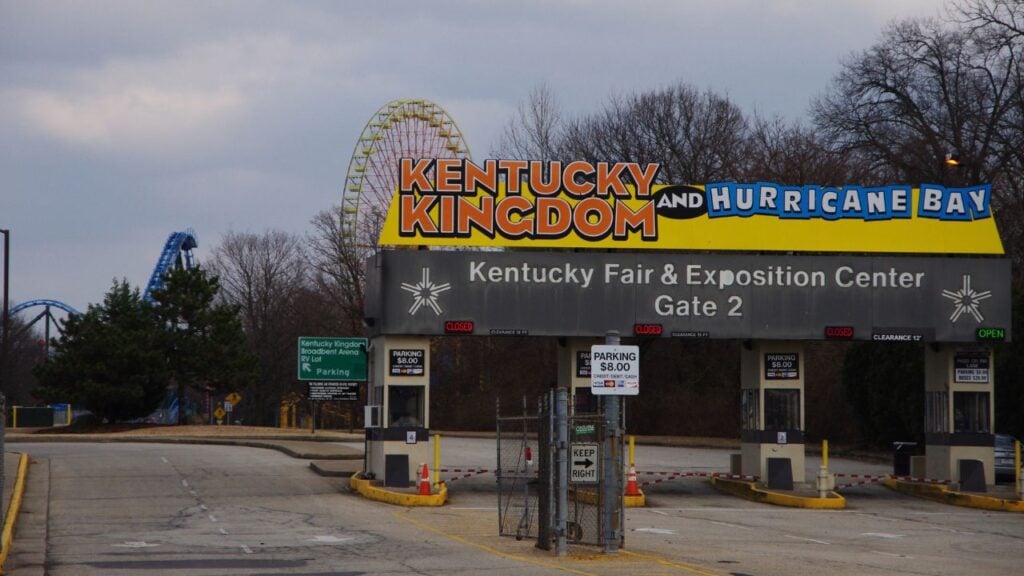
Ask Kentuckians about summers as a kid, and an amusement park comes up fast.
Those summers live on in old photos and family stories.
6 Kentucky Amusement Parks Kentuckians Still Talk About
7 Kroger Checkout Traps That Catch Kentuckians Every Week

Small catches at Kroger's checkout are easy to miss, and they add up over a trip.
Kentuckians who shop there can dodge many of those surprises by knowing where to look.
